The best probiotic for diarrhea depends on what's causing it. A strain that lowers the risk of diarrhea during antibiotics may do nothing for a stomach bug, and neither result applies to diarrhea that has lasted for months. This guide sorts the evidence by situation and strain, ranks the products with the most relevant data, and covers over-the-counter medicines and warning signs. For general gut health rather than diarrhea, see our overall probiotic rankings.
This article is for general education and isn't a substitute for advice from your own doctor.
Quick Answer
The best probiotic for diarrhea depends on the cause. Saccharomyces boulardii CNCM I-745 (Florastor) has the broadest evidence, mainly for preventing diarrhea from antibiotics, and LGG (Culturelle) helps too, especially in children. For a stomach bug, fluids matter far more than any probiotic.
Sources: PMID 26216624, PMID 26365389, PMID 33295643
First Things First: Rehydration Is the Treatment
No probiotic replaces fluids. The main risk of acute diarrhea is dehydration, and European pediatric guidelines state plainly that oral rehydration with a reduced-osmolarity solution is the major treatment for gastroenteritis in children and should start as soon as possible, with breastfeeding and normal eating continuing PMID: 24739189. The same guideline notes that dehydration is what reflects how severe the illness is PMID: 24739189. For adults with mild traveler's diarrhea, an expert panel concluded that simply increasing fluid intake, or using loperamide or bismuth subsalicylate, may be enough PMID: 28521004.
In practice, sip an oral rehydration solution from the pharmacy and keep eating as you're able. Everything else here, probiotics included, is an add-on.
Which Probiotic for Which Kind of Diarrhea?
Probiotic effects are strain-specific: a result for one strain doesn't carry over to another, even within the same species.
| Strains with the best evidence | What the evidence shows | Certainty | |
|---|---|---|---|
| Preventing diarrhea while on antibiotics | S. boulardii CNCM I-745; L. rhamnosus GG | Risk cut roughly in half. S. boulardii helped in both children and adults; LGG's benefit was significant in children | Moderate for children; low to moderate overall |
| Preventing C. difficile diarrhea | Various strains; S. boulardii significant only in children | Meaningful benefit mainly for people at high baseline risk, such as some hospitalized patients | Low to moderate |
| Children's stomach bugs (acute gastroenteritis) | S. boulardii; L. reuteri DSM 17938 (weak recommendations) | Two large 2018 U.S. and Canadian trials found no benefit. Pooled smaller trials suggest about 1 day shorter diarrhea | Low to very low |
| Adults with acute infectious diarrhea | None clearly proven | Probably little or no difference in diarrhea lasting 48 hours or more; very few adults studied | Moderate (no effect) to very low |
| Traveler's diarrhea prevention | S. boulardii CNCM I-745 | Modest reduction in a small number of trials | Limited |
| IBS with diarrhea (IBS-D) | See our IBS probiotic rankings | Chronic diarrhea needs a diagnosis first; evidence is IBS-specific | Varies by strain |
Best Probiotic to Take With Antibiotics
This is where probiotics have their most consistent track record.
In children, a 2019 Cochrane review of 33 trials (6,352 participants) found diarrhea in 8% of those given a probiotic versus 19% of controls (risk ratio 0.45; about 9 children treated to prevent one case). Trials using at least 5 billion colony-forming units (CFU) a day showed a stronger effect (risk ratio 0.37; 6 treated per case prevented) than lower-dose trials, and no serious adverse events were attributed to probiotics PMID: 31039287.
Looking at individual strains:
- Saccharomyces boulardii CNCM I-745: a meta-analysis of 21 randomized trials (4,780 participants) found it lowered the risk of antibiotic-associated diarrhea from 18.7% to 8.5% (risk ratio 0.47; about 10 people treated to prevent one case). The benefit held separately in children (20.9% to 8.8%) and in adults (17.4% to 8.2%) PMID: 26216624.
- Lactobacillus rhamnosus GG (LGG): a meta-analysis of 12 trials (1,499 participants) found LGG lowered the risk from 22.4% to 12.3% overall. Split by age, the benefit was significant in children (moderate-quality evidence) but not in adults, except in a subgroup taking antibiotics to treat H. pylori PMID: 26365389.
When a child has risk factors such as a long antibiotic course, hospitalization, other illnesses, or previous episodes, the European pediatric gastroenterology society (ESPGHAN) strongly recommends LGG or S. boulardii, citing insufficient evidence for other strains PMID: 26756877.
Saccharomyces boulardii vs Lactobacillus rhamnosus GG
These meta-analyses compare each strain with placebo, not with each other, so neither is proven better. S. boulardii showed a significant benefit in adults across more trials, while LGG's clearest data are in children PMID: 26216624 PMID: 26365389. S. boulardii is also a yeast, so antibacterial antibiotics aren't designed to kill it. That's why we lean toward it for adults; for children, either strain is reasonable.
How to Take a Probiotic With Antibiotics
- Start on day one. In hospitalized adults, probiotics started within 2 days of the first antibiotic dose cut C. difficile infection more (risk ratio 0.32) than later starts (risk ratio 0.70) PMID: 28192108.
- Pick a studied strain at a meaningful dose. Look for CNCM I-745 or GG on the label; in children, 5 billion CFU or more a day worked better PMID: 31039287.
- Consider spacing bacterial probiotics. Taking LGG a few hours apart from each antibiotic dose is a common practical suggestion, but the reviews cited here didn't test it. Follow your product's label.
- Continue through the course. Trials used different durations, so there's no established stopping point.
- Watch for warning signs. Severe or bloody diarrhea, fever, or belly pain during or after antibiotics needs a call to your doctor.
For what's known about how gut bacteria recover after antibiotics, see our gut microbiome guide. Fiber-based prebiotic supplements are a different category: they feed existing bacteria rather than adding new ones, and they weren't what these trials tested.
Can Probiotics Prevent C. diff?
Clostridioides difficile (C. diff) is the most serious cause of antibiotic-associated diarrhea. A 2017 Cochrane review of 31 trials (8,672 participants) found C. diff diarrhea in 1.5% of people taking probiotics versus 4.0% of controls (risk ratio 0.40; 42 people treated to prevent one case). The benefit was concentrated in trials where the baseline risk was above 5%: there, risk fell from 11.6% to 3.1% (12 people treated per case prevented), while trials with lower baseline risk showed no clear difference PMID: 29257353.
The review's 2025 update, now 47 trials and 15,260 participants, reached a more cautious conclusion. Probiotics cut the relative risk by about half (risk ratio 0.50), but the absolute risk fell by only 1.6 percentage points, so about 65 people would need to take a probiotic to prevent one case, and the certainty of evidence was rated low PMID: 40931979. The authors noted that 28 studies had links to or funding from probiotic companies, and said short-term use is likely safe for people on antibiotics who aren't immunocompromised PMID: 40931979.
S. boulardii's reduction in C. diff diarrhea was significant in children but not adults PMID: 26216624, and ESPGHAN makes only a conditional suggestion for it in children PMID: 26756877. For most healthy people on a short outpatient course, C. diff prevention alone isn't a strong reason to take a probiotic. If you're older, hospitalized, or have had C. diff before, ask your doctor.
Probiotics for Diarrhea in Kids: Stomach Bugs
This is where marketing and evidence diverge most. In 2018, two large, well-designed trials were published together in the New England Journal of Medicine:
- LGG in U.S. emergency departments: 971 children aged 3 months to 4 years received LGG (10 billion CFU twice daily for 5 days) or placebo. Moderate-to-severe illness occurred in 11.8% versus 12.6%, and diarrhea lasted a median of 49.7 versus 50.9 hours, with no meaningful difference PMID: 30462938.
- A two-strain product in Canadian emergency departments: 886 children aged 3 to 48 months received L. rhamnosus R0011 plus L. helveticus R0052 (4 billion CFU twice daily) or placebo. Moderate-to-severe illness occurred in 26.1% versus 24.7%, with no difference in how long diarrhea or vomiting lasted PMID: 30462939.
ESPGHAN's 2020 update took these results into account. Its working group couldn't find two high-quality trials showing benefit for any strain. It issued only weak recommendations for S. boulardii (low to very low certainty), LGG (very low), and L. reuteri DSM 17938 (low to very low), and a strong recommendation against the R0011/R0052 combination PMID: 32349041.
The pooled data behind those weak recommendations are modest. Across 23 trials, S. boulardii shortened children's diarrhea by about one day, but only one trial was adequately blinded and the evidence quality was very low PMID: 32056266. For L. reuteri DSM 17938, four trials with 347 children showed diarrhea shortened by 0.87 days, which the authors described as a small effect of limited clinical relevance PMID: 31739457.
Bottom line for parents: fluids and continued feeding come first, and a probiotic is optional at best for a stomach bug. If you use one, give only the labeled dose for your child's age and ask your pediatrician first for babies.
Probiotics for Acute Diarrhea in Adults
The evidence here is thin because so few adults have been studied. The 2020 Cochrane review of probiotics for acute infectious diarrhea included 82 studies and 12,127 participants, but only 412 were confirmed adults. In the trials at low risk of bias, probiotics made no difference to the chance of diarrhea lasting 48 hours or more (risk ratio 1.00), and the effect on total duration was uncertain. Subgroups limited to LGG or S. boulardii didn't change the picture PMID: 33295643. The authors concluded probiotics probably make little or no difference PMID: 33295643. For a healthy adult with a stomach bug, don't expect a probiotic to shorten the illness noticeably.
Probiotics for Traveler's Diarrhea
A 2019 meta-analysis found only six trials suitable for pooling. S. boulardii CNCM I-745 modestly reduced the incidence of traveler's diarrhea (risk ratio 0.79), LGG showed a non-significant trend, and L. acidophilus showed no significant effect. The authors stressed that the number of trials remains limited PMID: 30278238. If you want to try a probiotic for a trip, S. boulardii is the most defensible pick, but food and water precautions and a plan for treatment matter more. For moderate to severe traveler's diarrhea, an expert panel found strong evidence that antibiotic treatment is effective in most cases, which means seeing a clinician rather than relying on a supplement PMID: 28521004.
Chronic Diarrhea and IBS-D
Everything above is about short-term diarrhea. Loose stools that come and go for weeks or months are a different problem and need a diagnosis before a supplement. Your doctor may check for celiac disease, inflammatory bowel disease, infections, medication side effects, or bile acid problems. If you've been diagnosed with diarrhea-predominant IBS, the strains with IBS-specific data are different, and we rank them separately in our best probiotics for IBS guide. Probiotics are only one part of IBS care; our overview of IBS treatments that work covers diet, fiber, and prescription options. Diarrhea with bloating can also point to small intestinal bacterial overgrowth, which is diagnosed and treated differently; see our SIBO guide.
Best Probiotic for Diarrhea: Our Rankings
These rankings weigh the evidence for each product's exact strain against diarrhea specifically, mostly for preventing antibiotic-associated diarrhea, where the data are strongest. That's why some ratings differ from our other pages:
- Florastor rates 4.5 here (4.0 in our general rankings, 3.8 for IBS) because diarrhea is where S. boulardii is strongest: benefit on antibiotics in adults and children, plus the only significant traveler's diarrhea result.
- Culturelle rates 4.0 here (4.5 in our general probiotic rankings) because LGG's pooled benefit on antibiotics wasn't significant in adults, and the largest LGG trial for stomach bugs found no benefit.
- The kids' versions use the same strains and are rated on the pediatric evidence, which is stronger for LGG.
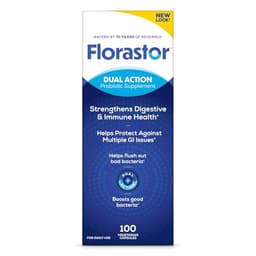
Florastor (Saccharomyces boulardii CNCM I-745)
Best For
Adults taking antibiotics; also the most defensible option for travel
Works In
Start with the first antibiotic dose
Price
$49.99
$0.50 / count
Pros
- ✓Meta-analysis of 21 trials: antibiotic-associated diarrhea fell from 18.7% to 8.5%, with benefit in both adults and children
- ✓A yeast, so antibacterial antibiotics aren't designed to kill it
- ✓Only strain with a significant reduction in traveler's diarrhea in a 2019 meta-analysis
Cons
- ✗C. diff reduction was significant only in children, not adults
- ✗Contains lactose, and dosing is 2 capsules once or twice daily per the brand
- ✗Avoid if critically ill, immunocompromised, or you have a central line: rare yeast bloodstream infections are reported
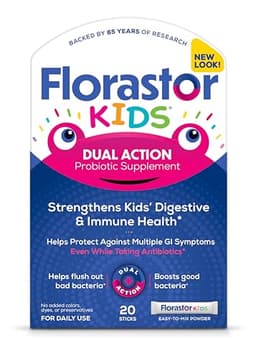
Florastor Kids Dual Action (Saccharomyces boulardii CNCM I-745)
Best For
Children taking antibiotics
Works In
Start with the first antibiotic dose
Price
$22.99
$1.15 / count
Pros
- ✓Same strain as adult Florastor; in children, antibiotic-associated diarrhea fell from 20.9% to 8.8% across 6 trials
- ✓ESPGHAN gives S. boulardii a strong recommendation for preventing antibiotic-associated diarrhea in at-risk children
- ✓Powder sticks mix into soft food or drinks that aren't very hot or carbonated
Cons
- ✗For stomach bugs, pooled trials suggest only about 1 day shorter diarrhea, with very low-quality evidence
- ✗Contains lactose; follow the label for your child's age and ask a pediatrician before giving it to a baby
- ✗Not for children who are seriously ill, immunocompromised, or have a central line
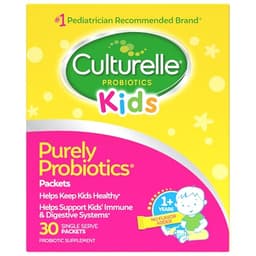
Culturelle Kids Daily Probiotic Packets (Lactobacillus rhamnosus GG)
Best For
Children taking antibiotics, especially if S. boulardii isn't an option
Works In
Start with the first antibiotic dose
Price
$19.99
$0.67 / count
Pros
- ✓LGG significantly reduced antibiotic-associated diarrhea in children (moderate-quality evidence)
- ✓ESPGHAN gives LGG a strong recommendation for at-risk children on antibiotics
- ✓Labeled 5 billion CFU per packet, the dose level linked to better results in the Cochrane review
Cons
- ✗A 971-child trial found LGG did not help stomach bugs, even at 10 billion CFU twice daily
- ✗LGG's evidence against antibiotic-associated diarrhea is weaker in adults, so it doesn't carry over to grown-up doses
- ✗Give only the labeled dose for your child's age
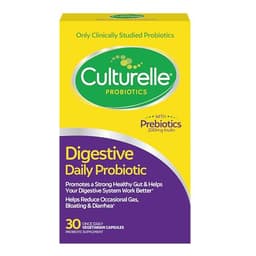
Culturelle Digestive Daily (Lactobacillus rhamnosus GG)
Best For
Adults on antibiotics who prefer a once-daily bacterial probiotic, including during H. pylori treatment
Works In
Start with the first antibiotic dose
Price
$17.47
$0.58 / count
Pros
- ✓LGG lowered antibiotic-associated diarrhea from 22.4% to 12.3% across 12 trials
- ✓Adults taking H. pylori eradication therapy showed a significant benefit in a subgroup analysis
- ✓Labeled 10 billion CFU in one daily capsule
Cons
- ✗In adults overall, the pooled benefit was not statistically significant
- ✗Probably little or no benefit for adults with an acute stomach bug
- ✗Includes 200 mg of inulin, a prebiotic fiber, alongside the probiotic

BioGaia Protectis Kids (Limosilactobacillus reuteri DSM 17938)
Best For
Children ages 3 and up with a stomach bug, as an optional add-on to fluids
Works In
Trials measured about 1 day shorter diarrhea
Price
$18.99
$0.63 / count
Pros
- ✓Contains L. reuteri DSM 17938, the strain given a weak ESPGHAN recommendation for children's gastroenteritis
- ✓Four trials with 347 children showed diarrhea shortened by 0.87 days
- ✓One chewable tablet a day per the brand; no powder to mix
Cons
- ✗The effect was small and of limited clinical relevance, per the meta-analysis authors
- ✗Not among the strains ESPGHAN recommends for preventing antibiotic-associated diarrhea
- ✗The Amazon listing is marketed for tummy discomfort and constipation rather than diarrhea
Amazon prices retrieved from the Amazon Product Advertising API on . Prices and availability are accurate as of that time and may change.
Over-the-Counter Diarrhea Medicines: Loperamide and Bismuth
For symptom relief once diarrhea has started, an expert panel on traveler's diarrhea concluded that loperamide or bismuth subsalicylate may be enough for most mild cases PMID: 28521004.
Loperamide (Imodium A-D) slows the movement of the gut, reducing how often you need to go. Its Drug Facts label says not to use it if you have bloody or black stool, and not to give the caplets to children under 12. Ask a doctor first if you have a fever, mucus in your stool, liver disease, or a history of abnormal heart rhythm. Stick to the labeled dose. Normal over-the-counter doses range from 2 to 8 mg a day, while very large doses (50 to 300 mg) taken by people misusing the drug have caused dangerous heart rhythm problems PMID: 27855148. Loperamide eases symptoms but doesn't treat an infection, so it's a poor fit when fever or blood suggests something more serious.
Bismuth subsalicylate (Pepto-Bismol) can ease diarrhea and upset stomach. It contains a salicylate, a chemical relative of aspirin. Its label says not to use it if you're allergic to salicylates, including aspirin, or are taking other salicylate products. Children and teenagers who have or are recovering from chickenpox or flu-like symptoms should not use it because of the risk of Reye's syndrome, a rare but serious illness. If you take blood thinners or other regular medicines, check with a pharmacist first.
Safety: Who Should Skip Probiotics
For most healthy children and adults, short-term probiotic use appears safe. In the pediatric Cochrane review, adverse events occurred in 4% of children taking probiotics versus 6% of controls, most commonly rash, nausea, gas, bloating, and constipation PMID: 31039287. In the C. diff reviews, the most common side effects in both groups included abdominal cramping, nausea, soft stools, and flatulence, and adverse events were no more common with probiotics PMID: 29257353.
The risks concentrate in vulnerable patients. After an outbreak of Saccharomyces bloodstream infection in an intensive care unit was traced to an S. boulardii product, researchers reviewed 57 more cases: 60% of patients were in intensive care, 71% were receiving tube or intravenous feeding, and they concluded that yeast probiotics should be carefully reconsidered in immunosuppressed or critically ill patients PMID: 15889360. The pediatric Cochrane authors also noted serious adverse events in observational reports of severely debilitated or immunocompromised children, including those with central venous catheters PMID: 31039287.
Talk to a doctor before taking any probiotic if you are critically ill, immunocompromised (for example, on chemotherapy or after a transplant), have a central line, or had recent bowel surgery. Ask a pediatrician before giving one to a premature or very young infant, and check with your care team if pregnant or breastfeeding.
When to See a Doctor for Diarrhea
Most short bouts of diarrhea get better on their own with fluids. Get medical care promptly if you or your child have:
- Blood in the stool or black, tarry stools
- A high fever, or fever with severe belly pain
- Signs of dehydration: very little urine, dark urine, dizziness when standing, a very dry mouth, or unusual sleepiness. In babies and toddlers, watch for no wet diapers for several hours, crying without tears, or sunken eyes.
- Diarrhea lasting more than two days in an adult, or getting worse instead of better. Call sooner for children, and right away for infants.
- Severe or frequent watery diarrhea during or after antibiotics, or after a hospital stay, which can signal C. diff
- Diarrhea during or after travel, especially with fever or blood
- A weakened immune system, pregnancy, older age, or serious ongoing health conditions
Diarrhea that keeps coming back or lasts for weeks also deserves a visit, since it needs a diagnosis rather than a supplement.
Frequently Asked Questions
What is the best probiotic for diarrhea? It depends on the cause. S. boulardii CNCM I-745 (Florastor) and LGG (Culturelle) have the best evidence for diarrhea from antibiotics. For a stomach bug, oral rehydration matters most.
What is the best probiotic to take with antibiotics to prevent diarrhea? S. boulardii CNCM I-745, which roughly halved the risk in both children and adults. LGG also works, most clearly in children. Start with your first antibiotic dose.
Is Saccharomyces boulardii or Lactobacillus rhamnosus GG better for diarrhea? Neither is proven better head-to-head. S. boulardii has more evidence in adults; LGG's is clearest in children.
Do probiotics help diarrhea in kids? For preventing diarrhea during antibiotics, yes. For stomach bugs, two large 2018 trials found no benefit. Fluids come first.
How long does it take for probiotics to stop diarrhea? They don't stop it quickly. Where they helped, diarrhea ended about a day sooner on average, with low-certainty evidence.
Can probiotics cause diarrhea? Gas, bloating, and soft stools are reported, but about as often or less often than with placebo. Serious infections are rare and mostly affect very sick or immunocompromised people.
When should I see a doctor for diarrhea instead of trying a probiotic? For blood in the stool, high fever, dehydration, severe belly pain, diarrhea lasting over two days or worsening, severe diarrhea around antibiotics, or diarrhea after travel.
References
- Guarino A, Ashkenazi S, Gendrel D, et al. European Society for Pediatric Gastroenterology, Hepatology, and Nutrition/European Society for Pediatric Infectious Diseases evidence-based guidelines for the management of acute gastroenteritis in children in Europe: update 2014. Journal of Pediatric Gastroenterology and Nutrition. 2014;59(1):132-152. PMID: 24739189.
- Riddle MS, Connor BA, Beeching NJ, et al. Guidelines for the prevention and treatment of travelers' diarrhea: a graded expert panel report. Journal of Travel Medicine. 2017;24(suppl_1):S57-S74. PMID: 28521004.
- Guo Q, Goldenberg JZ, Humphrey C, et al. Probiotics for the prevention of pediatric antibiotic-associated diarrhea. Cochrane Database of Systematic Reviews. 2019;4(4):CD004827. PMID: 31039287.
- Szajewska H, Kołodziej M. Systematic review with meta-analysis: Saccharomyces boulardii in the prevention of antibiotic-associated diarrhoea. Alimentary Pharmacology & Therapeutics. 2015;42(7):793-801. PMID: 26216624.
- Szajewska H, Kołodziej M. Systematic review with meta-analysis: Lactobacillus rhamnosus GG in the prevention of antibiotic-associated diarrhoea in children and adults. Alimentary Pharmacology & Therapeutics. 2015;42(10):1149-1157. PMID: 26365389.
- Szajewska H, Canani RB, Guarino A, et al. Probiotics for the prevention of antibiotic-associated diarrhea in children. Journal of Pediatric Gastroenterology and Nutrition. 2016;62(3):495-506. PMID: 26756877.
- Shen NT, Maw A, Tmanova LL, et al. Timely use of probiotics in hospitalized adults prevents Clostridium difficile infection: a systematic review with meta-regression analysis. Gastroenterology. 2017;152(8):1889-1900.e9. PMID: 28192108.
- Goldenberg JZ, Yap C, Lytvyn L, et al. Probiotics for the prevention of Clostridium difficile-associated diarrhea in adults and children. Cochrane Database of Systematic Reviews. 2017;12(12):CD006095. PMID: 29257353.
- Esmaeilinezhad Z, Ghosh NR, Walsh CM, et al. Probiotics for the prevention of Clostridioides difficile-associated diarrhea in adults and children. Cochrane Database of Systematic Reviews. 2025;9(9):CD006095. PMID: 40931979.
- Schnadower D, Tarr PI, Casper TC, et al. Lactobacillus rhamnosus GG versus placebo for acute gastroenteritis in children. New England Journal of Medicine. 2018;379(21):2002-2014. PMID: 30462938.
- Freedman SB, Williamson-Urquhart S, Farion KJ, et al. Multicenter trial of a combination probiotic for children with gastroenteritis. New England Journal of Medicine. 2018;379(21):2015-2026. PMID: 30462939.
- Szajewska H, Guarino A, Hojsak I, et al. Use of probiotics for the management of acute gastroenteritis in children: an update. Journal of Pediatric Gastroenterology and Nutrition. 2020;71(2):261-269. PMID: 32349041.
- Szajewska H, Kołodziej M, Zalewski BM. Systematic review with meta-analysis: Saccharomyces boulardii for treating acute gastroenteritis in children, a 2020 update. Alimentary Pharmacology & Therapeutics. 2020;51(7):678-688. PMID: 32056266.
- Patro-Gołąb B, Szajewska H. Systematic review with meta-analysis: Lactobacillus reuteri DSM 17938 for treating acute gastroenteritis in children. An update. Nutrients. 2019;11(11):2762. PMID: 31739457.
- Collinson S, Deans A, Padua-Zamora A, et al. Probiotics for treating acute infectious diarrhoea. Cochrane Database of Systematic Reviews. 2020;12(12):CD003048. PMID: 33295643.
- McFarland LV, Goh S. Are probiotics and prebiotics effective in the prevention of travellers' diarrhea: a systematic review and meta-analysis. Travel Medicine and Infectious Disease. 2019;27:11-19. PMID: 30278238.
- Eggleston W, Marraffa JM, Stork CM, et al. Notes from the field: cardiac dysrhythmias after loperamide abuse, New York, 2008-2016. Morbidity and Mortality Weekly Report. 2016;65(45):1276-1277. PMID: 27855148.
- Muñoz P, Bouza E, Cuenca-Estrella M, et al. Saccharomyces cerevisiae fungemia: an emerging infectious disease. Clinical Infectious Diseases. 2005;40(11):1625-1634. PMID: 15889360.