Few supplement pitches have ridden a trend as hard as the "natural GLP-1" probiotic. With prescription GLP-1 medications everywhere, Pendulum's GLP-1 Probiotic promises to support the same hormone pathway with live gut bacteria — including Akkermansia muciniphila, one of the most-researched "next-generation" probiotic species. This review separates what's actually been tested from what's been inferred: what's in the capsule, the single published Pendulum trial (which tested a different product), what Akkermansia research shows in people, and who might reasonably try it.
This article is for general education and isn't a substitute for care from your own physician. If you have diabetes or take glucose-lowering medication, talk to your doctor before adding any supplement marketed for blood sugar.
Quick Answer
Pendulum's GLP-1 Probiotic contains three live strains, including Akkermansia muciniphila, but the product itself has never been tested in a published clinical trial — its GLP-1 and craving claims rest on mouse studies and a company consumer survey, and Pendulum says it isn't a GLP-1 drug or a weight-loss product. Pendulum's one published trial tested a different five-strain formula, the one it ties to its Glucose Control product, in people with type 2 diabetes.
What Is Pendulum GLP-1 Probiotic?
Pendulum Therapeutics launched GLP-1 Probiotic in 2024. According to Pendulum's product page, it contains three live organisms: Akkermansia muciniphila, Clostridium butyricum, and Bifidobacterium infantis. The product page we reviewed doesn't list per-strain doses.
Two statements on Pendulum's own page matter more than anything on the front of the box. The company says GLP-1 Probiotic "does not contain GLP-1 and is not a GLP-1 agonist drug," and that it is "not intended for weight loss." Despite the name, then, this isn't a supplement version of prescription GLP-1 medication. It's a probiotic built around organisms that, in preclinical research, appear to nudge the body's own GLP-1 signaling.
Where the "GLP-1" Claim Comes From
GLP-1 (glucagon-like peptide-1) is a gut hormone involved in blood-sugar control and feelings of fullness. The link to Akkermansia comes largely from animal work: a 2021 study found that A. muciniphila secretes a protein, named P9, that increased GLP-1 secretion and improved glucose control in mice fed a high-fat diet PMID: 33820962. That's a genuine, well-designed mechanistic finding — but it's a mouse study, and mechanisms that work in mice often fail to translate into meaningful effects in people.
Human data on GLP-1 specifically is thin and indirect. In a 2026 trial of 142 adults with metabolic syndrome, a pasteurized (heat-killed) Akkermansia product from a different company did not improve the trial's primary endpoint, whole-body insulin sensitivity; an exploratory analysis did find a larger GLP-1 rise after a glucose drink compared with placebo PMID: 42343233. Exploratory findings after a missed primary endpoint generate hypotheses rather than proof — and that study didn't test Pendulum's live organisms at all.
Pendulum's headline numbers for GLP-1 Probiotic — 91% of people reporting reduced food cravings and 88% reporting fewer sugar cravings — come, per its product page, from a consumer survey of 274 people over six weeks. A survey with no placebo group can't separate the product's effect from expectation, other diet changes, or the simple fact that people who keep taking a supplement are more likely to report liking it.
The One Published Pendulum Trial — and What It Tested
Pendulum's strongest evidence is real: a 12-week, multicenter, double-blind, placebo-controlled trial published in 2020 PMID: 32675291. It enrolled 76 people already diagnosed with type 2 diabetes and randomly assigned them to placebo, a three-strain formulation (WBF-010), or a five-strain formulation (WBF-011), taken twice daily.
The five-strain formula — inulin plus A. muciniphila, Clostridium beijerinckii, C. butyricum, B. infantis, and Anaerobutyricum hallii — improved the primary outcome, total glucose exposure after a standardized meal, compared with placebo, and lowered A1c by 0.6 percentage points as a secondary outcome. No safety or tolerability issues were observed. The published results report benefits for the five-strain version, not the three-strain one.
Three caveats keep this from carrying over to GLP-1 Probiotic:
- It's not the same product. The trialed formula had five organisms plus inulin; GLP-1 Probiotic lists three. Pendulum cites this trial for its Glucose Control product, which lists the same five organisms.
- It's one small trial. The primary result landed right at the conventional significance threshold (p = 0.05) in 76 people — promising, not definitive.
- It's company research. Every author was affiliated with Pendulum, and we couldn't find an independent replication.
Probiotic effects are also strain-specific: results shown for one organism or combination don't automatically transfer to another, even when they share ingredients PMID: 24912386.
What Akkermansia Research Shows in People
Human trials of Akkermansia beyond Pendulum's own are growing — but they differ in important ways from what's in a Pendulum capsule.
- The first human study (2019) gave overweight or obese, insulin-resistant volunteers either live or pasteurized A. muciniphila for three months; 32 completed it. Both forms were safe and well tolerated. The metabolic improvements reported — better insulin sensitivity, lower insulin and total cholesterol — were for the pasteurized form, and the change in body weight didn't reach statistical significance PMID: 31263284.
- A 2025 trial in 58 people with overweight or obesity and type 2 diabetes found no significant difference between a live Akkermansia strain and placebo overall. Participants who started with low levels of Akkermansia in their gut did see reductions in weight, fat mass, and A1c; those with high starting levels saw poor colonization and no clinical benefit PMID: 39879980.
- A 2026 trial in 90 adults found that pasteurized Akkermansia taken after a weight-loss diet led to less weight regain than placebo over 24 weeks (about 1.2 kg versus 3.2 kg) PMID: 42120725. Several of its authors work for the company that makes that pasteurized product.
Put together: Akkermansia is a legitimate research target with some encouraging human signals. But the best results so far have used a pasteurized form made by another company, effects appear to depend heavily on each person's existing gut bacteria, and none of these trials tested Pendulum's live organisms or its GLP-1 Probiotic formula.
Does It Help Digestion, Bloating, or IBS?
Because this is a digestive-health site, it's worth being direct: we found no published human trial showing that GLP-1 Probiotic — or any Pendulum product — improves bloating, IBS, or other digestive symptoms.
The Akkermansia–IBS connection so far is preclinical. A 2024 study found that pasteurized A. muciniphila reduced gut hypersensitivity and strengthened the gut barrier in two mouse models of IBS PMID: 38170633 — interesting, but again a different, heat-killed product, tested in mice. Pendulum's digestive claims for its single-strain Akkermansia product (for example, 82% of people reporting more regular bowel movements) come from a company consumer survey, not a controlled trial.
If digestive symptoms are your main reason for considering a probiotic, strains with dedicated human trials in those conditions are a better-supported starting point — see our best probiotics for IBS and best probiotics rankings, and our gut microbiome guide for the bigger picture.
Pendulum's Product Line, Compared
Pendulum sells several overlapping Akkermansia-based products. They share organisms, but not formulas, doses, or evidence, so they aren't interchangeable.
| GLP-1 Probiotic | Glucose Control | Metabolic Daily | Akkermansia | |
|---|---|---|---|---|
| Organisms | A. muciniphila, C. butyricum, B. infantis | A. muciniphila, C. butyricum, C. beijerinckii, A. hallii, B. infantis | Same five organisms as Glucose Control | A. muciniphila only |
| Published trial Pendulum cites | None | 2020 five-strain trial in type 2 diabetes (company-run) | None | None |
| Support for headline claims | Preclinical studies + consumer survey | The 2020 trial | None cited on product page | Preclinical studies + consumer surveys |
| Where it's sold | Pendulum site and Amazon | Pendulum site | Pendulum site and Amazon | Pendulum site and Amazon |
Ranked by the strength of evidence behind each finished product:
Pendulum Glucose Control
Best For
Adults with type 2 diabetes who want the Pendulum formula tied to its published trial — alongside their doctor
Works In
12 weeks (trial length)
Price
~$99-139/mo at Pendulum's site
Pros
- ✓The only Pendulum product for which the company cites a published, placebo-controlled trial
- ✓In that trial, the five-strain formula lowered post-meal glucose exposure and A1c (by 0.6 points) versus placebo in type 2 diabetes
- ✓No safety or tolerability issues were reported in the trial
Cons
- ✗A single small trial (76 people), run by Pendulum, with the primary result right at p = 0.05
- ✗Tested only in people with type 2 diabetes — not in people without diabetes or with digestive symptoms
- ✗The most expensive product in the line, and we couldn't find it sold on Amazon
We earn nothing from this link · See all commissions
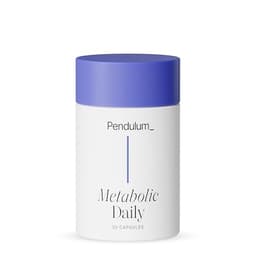
Pendulum Metabolic Daily
Best For
People curious about Pendulum's five-organism blend at a lower price, knowing this exact product hasn't been trialed
Works In
Not established
Price
$59.99
$2.00 / count
Pros
- ✓Lists the same five organisms as Glucose Control
- ✓Costs less than Glucose Control
Cons
- ✗No published trial is cited for this product
- ✗Pendulum doesn't cite its diabetes trial for Metabolic Daily, so that trial's dosing and results can't be assumed to apply
- ✗No evidence for digestive symptoms
We earn 1-4%/sale if you sign up · See all commissions
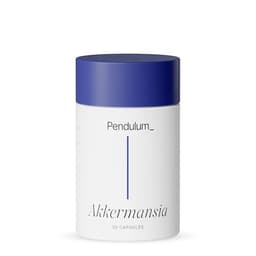
Pendulum Akkermansia
Best For
People who specifically want a live, single-organism Akkermansia supplement and accept preliminary evidence
Works In
Not established
Price
$64.00
$2.13 / count
Pros
- ✓A single named organism, so it's clear what you're taking
- ✓Akkermansia is an active area of human metabolic research
Cons
- ✗No published trial of this product; its gut-health claims rest on preclinical work and company surveys
- ✗The most encouraging human Akkermansia results so far used a pasteurized form from another company
- ✗In human trials, benefits appear to depend on how much Akkermansia is already in the gut
We earn 1-4%/sale if you sign up · See all commissions
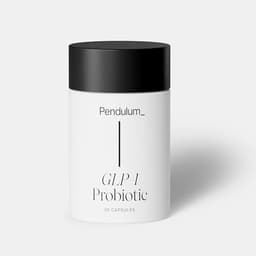
Pendulum GLP-1 Probiotic
Best For
People drawn to the GLP-1 angle who understand it is not a GLP-1 medication or a weight-loss product
Works In
Not established (company survey ran 6 weeks)
Price
$74.99
$2.50 / count
Pros
- ✓Pendulum states plainly that it isn't a GLP-1 drug or a weight-loss product
- ✓Its three organisms overlap with the formula Pendulum tested in its diabetes trial
Cons
- ✗No published trial of this three-organism product
- ✗Craving claims come from an uncontrolled consumer survey, and GLP-1 claims from preclinical studies
- ✗Among the more expensive probiotics on this site relative to the evidence behind it
We earn 1-4%/sale if you sign up · See all commissions
Amazon prices retrieved from the Amazon Product Advertising API on . Prices and availability are accurate as of that time and may change.
Price
GLP-1 Probiotic launched at $65; the cards above show today's Amazon price from Pendulum's own store. On Pendulum's site, Glucose Control starts around $99 (listed regular price $139), Metabolic Daily around $49 ($69 regular), and Akkermansia around $54 ($75 regular). Every Pendulum product costs more than well-studied single-strain probiotics like Culturelle or Align, which have more direct evidence for digestive uses — though not for blood sugar.
Safety and Who Should Be Cautious
In Pendulum's 2020 trial, no safety or tolerability issues were observed over 12 weeks PMID: 32675291, and the first human Akkermansia study found both live and pasteurized forms safe over three months PMID: 31263284. European regulators have judged pasteurized Akkermansia safe as a food supplement at defined doses PMID: 34484452 — but that assessment covers the heat-killed form, not the live bacteria Pendulum sells.
Some researchers urge caution about boosting Akkermansia in particular situations — including inflammatory bowel disease and recovery after antibiotics — and recommend deciding on an individual basis PMID: 37374030. As with any live probiotic, people who are immunocompromised, critically ill, have a central venous catheter, or recently had gut surgery should talk to a physician first PMID: 16762934. And if you take insulin or other glucose-lowering medication, check with your doctor before starting a product marketed for blood sugar.
Our Verdict
Rating: 2.5/5.
Pendulum is more scientifically serious than most gut-health brands: it has run and published a placebo-controlled trial, and it works with one of the most promising microbes in metabolic research. It also deserves credit for stating plainly that GLP-1 Probiotic isn't a GLP-1 drug or a weight-loss product.
What holds GLP-1 Probiotic back: the product itself has never been tested in a published trial. Its name leans on a hormone pathway supported mainly by mouse research, its craving statistics come from an uncontrolled survey, and the company's actual clinical evidence belongs to a different, five-strain formula tested in people with type 2 diabetes. The broader human Akkermansia research is encouraging but mixed, often uses a pasteurized product from another company, and seems to depend on each person's existing gut bacteria.
If you have type 2 diabetes and want to try a Pendulum product, Glucose Control is the one tied to published evidence — discuss it with your doctor rather than using it in place of treatment. If you're looking for help with bloating, IBS, or regularity, better-studied and cheaper options are in our best probiotics ranking. And if you're simply curious about Akkermansia, know that you're paying a premium to be an early adopter of promising but unproven science.
We earn 1-4%/sale if you sign up · See all commissions
Frequently Asked Questions
Does Pendulum GLP-1 Probiotic work like Ozempic or other GLP-1 drugs? No. Pendulum states that GLP-1 Probiotic does not contain GLP-1, is not a GLP-1 agonist drug, and is not intended for weight loss. Its GLP-1 claim is based on preclinical research suggesting certain gut bacteria can stimulate the body's own GLP-1 signaling — very different from a prescription GLP-1 medication.
Is there clinical evidence for Pendulum GLP-1 Probiotic? Not for the product itself, as of 2026. Pendulum's published placebo-controlled trial tested a different five-strain formula in 76 people with type 2 diabetes. GLP-1 Probiotic's craving claims come from a company consumer survey, and its GLP-1 claims from preclinical studies.
What's the difference between GLP-1 Probiotic, Glucose Control, Metabolic Daily, and Akkermansia? GLP-1 Probiotic lists three organisms (Akkermansia muciniphila, Clostridium butyricum, Bifidobacterium infantis). Glucose Control and Metabolic Daily each list five, and Glucose Control is the product Pendulum ties to its published diabetes trial. Akkermansia contains A. muciniphila alone. They share organisms but not formulas or evidence.
Does Akkermansia help with bloating, IBS, or digestion? There's no published human trial showing that. Studies linking Akkermansia to relief of IBS-like symptoms so far are in mice and used a pasteurized product, and Pendulum's digestive claims come from consumer surveys.
Is Pendulum safe to take? Pendulum's 2020 trial reported no safety or tolerability issues over 12 weeks, and early human Akkermansia studies found it well tolerated. People who are immunocompromised, critically ill, recently had gut surgery, have inflammatory bowel disease, or take glucose-lowering medication should talk to a doctor first.
Is Pendulum GLP-1 Probiotic worth the price? On current evidence it's hard to justify for most people: roughly $65 to $75 a month without a published trial of the product itself. People with type 2 diabetes interested in Pendulum should look at Glucose Control with their doctor; people with digestive symptoms have cheaper, better-studied options.
References
- Yoon HS, Cho CH, Yun MS, et al. Akkermansia muciniphila secretes a glucagon-like peptide-1-inducing protein that improves glucose homeostasis and ameliorates metabolic disease in mice. Nature Microbiology. 2021;6(5):563-573. PMID: 33820962.
- Suenaert P, Segers A, Rymenans L, et al. Effect of pasteurized Akkermansia muciniphila MucT on insulin sensitivity, body composition, and GLP-1 production in subjects with metabolic syndrome: impact of low baseline gut Akkermansia levels. Gut Microbes. 2026;18(1):2690689. PMID: 42343233.
- Perraudeau F, McMurdie P, Bullard J, et al. Improvements to postprandial glucose control in subjects with type 2 diabetes: a multicenter, double blind, randomized placebo-controlled trial of a novel probiotic formulation. BMJ Open Diabetes Research & Care. 2020;8(1):e001319. PMID: 32675291.
- Hill C, Guarner F, Reid G, et al. The International Scientific Association for Probiotics and Prebiotics consensus statement on the scope and appropriate use of the term probiotic. Nature Reviews Gastroenterology & Hepatology. 2014;11(8):506-514. PMID: 24912386.
- Depommier C, Everard A, Druart C, et al. Supplementation with Akkermansia muciniphila in overweight and obese human volunteers: a proof-of-concept exploratory study. Nature Medicine. 2019;25(7):1096-1103. PMID: 31263284.
- Zhang Y, Liu R, Chen Y, et al. Akkermansia muciniphila supplementation in patients with overweight/obese type 2 diabetes: efficacy depends on its baseline levels in the gut. Cell Metabolism. 2025;37(3):592-605.e6. PMID: 39879980.
- Mount S, Canfora EE, Jocken JW, et al. Pasteurized Akkermansia muciniphila MucT for weight loss maintenance in people with overweight and obesity: a controlled randomized trial. Nature Medicine. 2026;32(6):2107-2116. PMID: 42120725.
- Meynier M, Daugey V, Mallaret G, et al. Pasteurized Akkermansia muciniphila improves irritable bowel syndrome-like symptoms and related behavioral disorders in mice. Gut Microbes. 2024;16(1):2298026. PMID: 38170633.
- EFSA Panel on Nutrition, Novel Foods and Food Allergens (NDA), Turck D, Bohn T, et al. Safety of pasteurised Akkermansia muciniphila as a novel food pursuant to Regulation (EU) 2015/2283. EFSA Journal. 2021;19(9):e06780. PMID: 34484452.
- Chiantera V, Laganà AS, Basciani S, Nordio M, Bizzarri M. A critical perspective on the supplementation of Akkermansia muciniphila: benefits and harms. Life (Basel). 2023;13(6):1247. PMID: 37374030.
- Boyle RJ, Robins-Browne RM, Tang MLK. Probiotic use in clinical practice: what are the risks? American Journal of Clinical Nutrition. 2006;83(6):1256-1264. PMID: 16762934.