If you've been told you have IBS and sent home with a vague suggestion to "try a probiotic," you're not alone — and you've probably noticed the advice stops there. Walk down any supplement aisle and you'll find dozens of products claiming to support gut health, but only a handful have actually been tested in people with irritable bowel syndrome. This guide ranks the probiotics with the most credible IBS-specific evidence, explains what that evidence does and doesn't show, and covers dosing, timelines, and when a supplement isn't the right next step.
This article is for general education and isn't a substitute for care from your own physician or gastroenterologist.
Quick Answer
Align (Bifidobacterium infantis 35624) has the strongest IBS-specific trial evidence of any over-the-counter probiotic, but strain matters far more than brand — trial one product for at least 4 weeks and track your symptoms before switching.
Sources: PMID 41682832, PMID 16863564
How Probiotics Might Help IBS
IBS symptoms — abdominal pain, bloating, and unpredictable bowel habits — are thought to arise from a mix of visceral hypersensitivity, altered gut motility, low-grade immune activation, and disruption of the normal gut microbial community. Probiotics are live microorganisms that, in theory, could rebalance that microbial community, calm local immune signaling, or strengthen the intestinal barrier enough to reduce symptoms.
The critical detail that gets lost in most marketing is that these effects are strain-specific, not species-wide. A probiotic effect demonstrated for one strain of, say, Lactobacillus doesn't automatically apply to a different Lactobacillus strain, let alone a different genus entirely. The researchers behind the pivotal Align trial made this point explicitly: probiotic bacteria have properties — including immune-modulating activity — that are unique to a particular strain, so "not all species will necessarily have the same therapeutic potential in a particular condition" PMID: 16863564. That single sentence is the reason this ranking is built around specific, named strains rather than generic "probiotic" claims.
Supporting this, a randomized trial of Lactobacillus rhamnosus GG in children with IBS found that the strain reduced both the frequency and severity of abdominal pain compared with placebo, and that benefit tracked with improvement in a marker of intestinal permeability — consistent with a gut-barrier mechanism, at least for that strain PMID: 21078735. Other strains appear to work through different routes, such as competing with overgrown bacteria in the small intestine.
IBS-C vs. IBS-D: Does the Subtype Matter?
Most of the larger, better-designed probiotic trials in IBS enrolled patients across bowel-habit subtypes (constipation-predominant, diarrhea-predominant, and mixed) rather than restricting enrollment to one. The pivotal Align trial, for example, included "primary care IBS patients, with any bowel habit subtype" PMID: 16863564. That's reassuring if you don't fit neatly into one subtype, but it also means the evidence for subtype-specific benefit is thinner than marketing sometimes implies.
A few strains do have subtype-focused data. Saccharomyces boulardii CNCM I-745, a yeast-based probiotic, has been studied specifically in diarrhea-predominant IBS, where a small randomized pilot found it reduced small-intestinal bacterial overgrowth on breath testing and lowered overall symptom-severity scores compared with dietary advice alone PMID: 36630947. That's a reasonable rationale for trying it if IBS-D and possible SIBO overlap are your main issue — but it was a small, open-label pilot, and a larger 2026 strain-specific meta-analysis described results for this strain as conflicting overall PMID: 41682832. There isn't enough head-to-head evidence to say any one strain is clearly the right choice for IBS-C specifically; if constipation is your dominant symptom, fiber, osmotic laxatives, or prescription options usually have a stronger evidence base than probiotics do — we break down the laxative options for constipation-predominant IBS separately.
For diarrhea-predominant IBS, the spore-forming probiotic Bacillus coagulans MTCC 5856 also has a small placebo-controlled pilot: at 2 billion CFU a day for 90 days, it reduced bloating, diarrhea, abdominal pain, and stool frequency in 36 newly diagnosed patients PMID: 26922379. It's promising but preliminary, a single pilot run by researchers from the company that makes the ingredient. For diarrhea outside of IBS, such as during a course of antibiotics, see our probiotic picks for diarrhea.
Our Rankings
These rankings are ordered by the strength and specificity of IBS clinical trial evidence behind the exact strain in each product — not by price, popularity, or CFU count. Probiotics are only one piece of managing IBS; our broader guide to IBS treatments that actually work covers how they fit alongside diet, fiber, and medication.
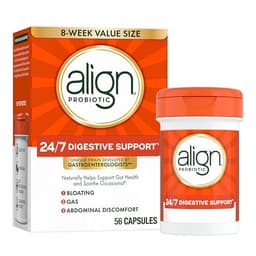
Align Probiotic (Bifidobacterium infantis 35624)
Best For
Strongest single-strain IBS evidence, any bowel-habit subtype
Works In
4 weeks
Price
$43.99
$0.79 / count
Pros
- ✓Backed by a 362-patient randomized, dose-ranging trial conducted specifically in IBS patients
- ✓Studied across IBS-C, IBS-D, and mixed-subtype patients, not just one bowel-habit pattern
- ✓Once-daily capsule with no refrigeration required
Cons
- ✗Single-strain product — it won't address issues outside its studied mechanism
- ✗The proven benefit was tied to a specific 1×10^8 CFU dose in the trial; check that current labeling still matches
- ✗Premium price for what is, functionally, one strain
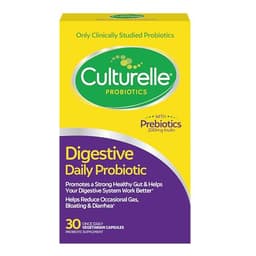
Culturelle Digestive Health (Lactobacillus rhamnosus GG)
Best For
IBS with prominent abdominal pain, especially if symptoms started young
Works In
4-8 weeks
Price
$17.47
$0.58 / count
Pros
- ✓LGG is one of the most-studied probiotic strains in the world, with a large safety record
- ✓Randomized, placebo-controlled trial data showing reduced pain frequency and severity
- ✓Widely available and inexpensive relative to specialty probiotic brands
Cons
- ✗The pivotal pain-reduction trial enrolled children and adolescents with IBS, not adults specifically
- ✗Broader adult IBS meta-analyses rate the certainty of evidence for Lactobacillus strains as low
- ✗Less symptom-specific trial data than B. infantis 35624
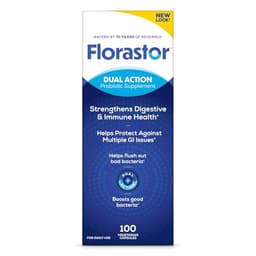
Florastor (Saccharomyces boulardii CNCM I-745)
Best For
IBS-D, especially with suspected small intestinal bacterial overgrowth
Works In
2-4 weeks
Price
$67.99
$0.68 / count
Pros
- ✓A yeast, not a bacterium — an option if you need to take it alongside antibiotics
- ✓Small randomized pilot showed reduced bacterial overgrowth and better stool consistency in IBS-D
- ✓Long, well-documented safety track record in general use
Cons
- ✗IBS-specific evidence is limited to a small, open-label pilot study
- ✗A 2026 strain-specific meta-analysis described results for this strain as conflicting
- ✗Not appropriate if you're immunocompromised or have a central venous catheter
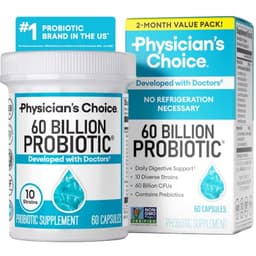
Physician's Choice Probiotic 60 Billion
Best For
General digestive support alongside an IBS plan; high-CFU multi-strain blend
Works In
4-8 weeks, if it helps at all
Price
$27.28
$0.45 / count
Pros
- ✓Multi-strain blend of Lactobacillus and Bifidobacterium species, some of which have independent trial support
- ✓High labeled CFU count may appeal to those who haven't responded to lower-dose products
- ✓Includes organic prebiotic fiber in the formulation
Cons
- ✗No published randomized controlled trial on this specific commercial blend in IBS patients
- ✗Multi-strain products make it hard to know which organism, if any, is responsible for a response
- ✗A higher CFU count hasn't been shown to outperform the lower, trial-proven doses used in research
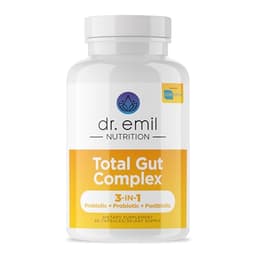
Dr. Emil Total Gut Complex (Bacillus coagulans MTCC 5856)
Best For
Diarrhea-predominant IBS, for people who want a named spore-forming strain
Works In
Trial ran 90 days
Price
$27.19
$0.45 / count
Pros
- ✓Its probiotic, Bacillus coagulans MTCC 5856 (LactoSpore), reduced bloating, diarrhea, and abdominal pain versus placebo in a 90-day IBS-D pilot trial at 2 billion CFU a day
- ✓Label provides roughly that trial dose, about 2 billion CFU per two-capsule serving
- ✓A named, specific strain rather than an undisclosed probiotic blend
Cons
- ✗The supporting trial was a small pilot (36 patients) by researchers from the company that makes the ingredient
- ✗Only studied in diarrhea-predominant IBS, not IBS-C or mixed IBS
- ✗Adds tributyrin and mushroom extracts that were not part of the trial
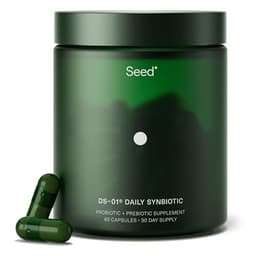
Seed DS-01 Daily Synbiotic
Best For
People who want a broad-spectrum synbiotic and are comfortable without IBS-specific trial data
Works In
4+ weeks
Price
$59.99
$1.00 / count
Pros
- ✓24-strain formulation paired with a separate prebiotic capsule in a 2-in-1 design
- ✓Publishes third-party viability testing and a transparent strain list
- ✓Subscription model can help with the consistency needed for a full trial period
Cons
- ✗No published randomized controlled trial specifically in IBS patients
- ✗The highest monthly cost of the products on this list
- ✗A large multi-strain blend makes it difficult to attribute any change in symptoms to a specific component
Amazon prices retrieved from the Amazon Product Advertising API on . Prices and availability are accurate as of that time and may change.
What the Evidence Does — and Doesn't — Show
It's worth being direct about the state of the science, because it's more mixed than most product pages suggest.
An older but influential systematic review found that, pooled across trials available at the time, probiotics as a category showed a modest benefit over placebo for global IBS symptoms and abdominal pain, without a clear signal for harm PMID: 19091823. A larger 2018 meta-analysis of 53 randomized trials reached a more cautious conclusion: certain combinations or specific species and strains appeared beneficial, but the authors could not say which particular ones with any confidence, calling the question of "which strain works" still largely unresolved PMID: 30294792. A follow-up analysis pooling data through 2017 across a broader set of prebiotic, probiotic, and synbiotic trials reached a similar conclusion about the overall category PMID: 25070051.
The most useful recent evidence comes from two 2023-2026 efforts that finally broke results out by individual strain rather than lumping "probiotics" together. A 2023 update pooling 82 trials and over 10,000 patients found that the certainty of evidence varied enormously by strain — moderate certainty for Escherichia strains improving global symptoms, low certainty for Lactobacillus strains and abdominal-pain benefit from Bifidobacterium strains, and very low certainty for most combination products — concluding that certainty in the evidence was "low to very low across almost all of our analyses" even where a benefit was seen PMID: 37541528. A 2026 strain-specific meta-analysis went a step further, naming the individual strains with supportive meta-analytic evidence: Bifidobacterium longum (formerly infantis) 35624, Lactobacillus rhamnosus GG, Lactiplantibacillus plantarum 299v, Saccharomyces cerevisiae CNCM I-3856, and specific Bacillus coagulans strains all showed benefit for at least one IBS symptom domain, while results for Saccharomyces boulardii CNCM I-745 were conflicting and several other named strains (including Escherichia coli Nissle 1917 and Lactobacillus casei Shirota) showed no demonstrated benefit at all PMID: 41682832. The American College of Gastroenterology's clinical guideline on IBS management, developed using formal GRADE methodology, reflects this same overall caution about weighing therapies by the strength of the underlying trial evidence PMID: 33315591.
The takeaway: some strains, in some trials, help some people with some symptoms. That's a genuinely useful signal — it's just a narrower one than "probiotics help IBS."
How to Choose
Match the strain, not the marketing. Look at the supplement facts panel for the exact species and strain designation (for example, "35624" or "GG" or "CNCM I-745"), not just the genus. If a label only says "Lactobacillus" or "proprietary blend" without a strain number, there's no way to connect it to any specific trial.
Consider your dominant symptom. If pain and global symptom burden are your main complaint, the B. infantis 35624 and LGG data are the most directly relevant. If diarrhea and possible bacterial overgrowth dominate, the S. boulardii pilot data is more applicable, with the caveat that it's preliminary.
Don't assume more strains or a higher CFU count means better. Multi-strain, high-CFU products aren't inherently worse, but they also aren't proven better than the single, lower-dose strains used in the trials above — and they make it harder to identify what's actually working (or causing side effects) if you react to the product.
Dosing, CFU, and How Long to Trial One
Most positive IBS trials used doses in the range of roughly 1×10^8 to 1×10^10 CFU per day, taken once daily, generally with food. Notably, in the dose-ranging Align trial, the middle dose (1×10^8 CFU) outperformed both a lower and a substantially higher dose, and the authors specifically cautioned against assuming higher is better without matching dosage-form data PMID: 16863564 — a reminder to follow the labeled dose on a specific product rather than doubling up.
Give any single product a genuine trial period. Four weeks is the timeframe used in most of the underlying research, so that's a reasonable minimum before judging whether it's working. Some people need six to eight weeks to notice a clear pattern. Keep a simple daily log of pain, bloating, stool consistency, and frequency so you're comparing against your actual baseline rather than memory. If there's no meaningful change by 8 weeks at a proper dose, it's reasonable to stop and try a different, differently-studied strain rather than continuing indefinitely.
Safety and Who Should Be Cautious
Across the trials reviewed above, adverse events with probiotics were not significantly more common than with placebo, and most commonly reported issues were mild and transient — some initial bloating or gas as the gut adjusts PMID: 37541528. That said, probiotics are live organisms, and a small subset of people should be more cautious: anyone who is immunocompromised, critically ill, has a central venous catheter, or has had recent gastrointestinal surgery should talk to their physician before starting any probiotic, since rare cases of bloodstream infection from probiotic organisms have been documented in these higher-risk groups. Pregnant or breastfeeding individuals should also check with their care team first.
When to See a Doctor Instead
A probiotic trial is reasonable for someone with an established IBS diagnosis and no alarm features. It is not a substitute for medical evaluation if you have any of the following: blood in the stool or black, tarry stools; unintended weight loss; iron-deficiency anemia; fevers; symptoms that wake you from sleep; a family history of colorectal cancer or inflammatory bowel disease; or new bowel symptoms starting after age 50. These warrant a visit to your doctor for appropriate testing before you spend weeks trialing supplements. It's also worth checking in with your physician if your symptoms are severe enough to affect daily functioning, or if you've tried two or three well-matched, strain-specific probiotics without any improvement — at that point, other IBS therapies with their own evidence base (dietary approaches, gut-directed psychotherapy, or prescription options) may be a better next step.
Frequently Asked Questions
Can probiotics cure IBS? No probiotic cures or eliminates IBS. At best, specific well-studied strains modestly reduce symptoms like abdominal pain, bloating, or bowel-habit disturbance in some people, as part of a broader management plan that may include diet and lifestyle changes.
Which probiotic strain has the best evidence for IBS? Bifidobacterium infantis 35624 (marketed as Align) has the largest dedicated IBS trial and was confirmed effective for global symptoms in a 2026 strain-specific meta-analysis. Lactobacillus rhamnosus GG (Culturelle) also has supportive data, mostly from studies in younger patients.
How long should I try a probiotic before deciding it isn't working? Give a single product at least 4 weeks at the labeled dose — that's the window used in most of the underlying trials — and reassess by 8 weeks if you're unsure.
Are probiotics different for IBS-C versus IBS-D? Somewhat. Most major trials enrolled patients across bowel-habit subtypes. Saccharomyces boulardii has some subtype-specific pilot data in IBS-D, but there isn't strong evidence pointing to a clearly superior strain for IBS-C.
Can I take more than one probiotic at the same time? It's generally not necessary and makes it harder to identify what's helping. Trial one well-studied product at a time.
When should I see a doctor instead of just trying probiotics? See a doctor if you notice blood in your stool, unintended weight loss, anemia, fevers, nighttime symptoms, a relevant family history, or new symptoms after age 50 — these need diagnostic evaluation, not a supplement trial.
References
- Whorwell PJ, Altringer L, Morel J, et al. Efficacy of an encapsulated probiotic Bifidobacterium infantis 35624 in women with irritable bowel syndrome. American Journal of Gastroenterology. 2006;101(7):1581-1590. PMID: 16863564.
- Francavilla R, Miniello V, Magistà AM, et al. A randomized controlled trial of Lactobacillus GG in children with functional abdominal pain. Pediatrics. 2010;126(6):e1445-e1452. PMID: 21078735.
- Bustos Fernández LM, Man F, Lasa JS. Impact of Saccharomyces boulardii CNCM I-745 on bacterial overgrowth and composition of intestinal microbiota in diarrhea-predominant irritable bowel syndrome patients: results of a randomized pilot study. Digestive Diseases. 2023;41(5):798-809. PMID: 36630947.
- Moayyedi P, Ford AC, Talley NJ, et al. The efficacy of probiotics in the treatment of irritable bowel syndrome: a systematic review. Gut. 2010;59(3):325-332. PMID: 19091823.
- Ford AC, Harris LA, Lacy BE, Quigley EMM, Moayyedi P. Systematic review with meta-analysis: the efficacy of prebiotics, probiotics, synbiotics and antibiotics in irritable bowel syndrome. Alimentary Pharmacology & Therapeutics. 2018;48(10):1044-1060. PMID: 30294792.
- Ford AC, Quigley EMM, Lacy BE, et al. Efficacy of prebiotics, probiotics, and synbiotics in irritable bowel syndrome and chronic idiopathic constipation: systematic review and meta-analysis. American Journal of Gastroenterology. 2014;109(10):1547-1561. PMID: 25070051.
- Goodoory VC, Khasawneh M, Black CJ, Quigley EMM, Moayyedi P, Ford AC. Efficacy of probiotics in irritable bowel syndrome: systematic review and meta-analysis. Gastroenterology. 2023;165(5):1206-1218. PMID: 37541528.
- Maslennikov R, Gosteeva E, Ananeva V, et al. Strain-specific systematic review with meta-analysis of probiotics efficacy in the treatment of irritable bowel syndrome. Journal of Clinical Medicine. 2026;15(3):1152. PMID: 41682832.
- Lacy BE, Pimentel M, Brenner DM, et al. ACG Clinical Guideline: Management of Irritable Bowel Syndrome. American Journal of Gastroenterology. 2021;116(1):17-44. PMID: 33315591.
- Majeed M, Nagabhushanam K, Natarajan S, et al. Bacillus coagulans MTCC 5856 supplementation in the management of diarrhea predominant irritable bowel syndrome: a double blind randomized placebo controlled pilot clinical study. Nutrition Journal. 2016;15:21. PMID: 26922379.