Bloating after meals is common, and the supplement aisle offers a tidy-sounding fix: a capsule of amylase, protease, lipase, and a dozen other enzymes meant to help you "digest better." Some of that promise is backed by real, targeted evidence. Most of it, for most people, isn't. This guide separates the enzyme therapies with genuine clinical trial support from the broad blends riding on their coattails, and explains when digestive symptoms are a signal to see a doctor rather than reach for another supplement.
This article is for general education and isn't a substitute for care from your own physician or gastroenterologist.
Quick Answer
Lactaid (lactase) has the strongest condition-specific evidence for anyone with lactose intolerance, and Beano (alpha-galactosidase) has the best data for gas from beans and cruciferous vegetables — broad 'digestive enzyme' blends like NOW Super Enzymes and Pure Encapsulations Digestive Enzymes Ultra have thinner evidence for general bloating.
Sources: PMID 33490624, PMID 7964541
How Digestive Enzymes Actually Work
Your pancreas, small intestine, and stomach normally produce a full set of digestive enzymes — amylase for starches, proteases for protein, lipase for fat, plus enzymes like lactase that live in the lining of the small intestine and target specific sugars. In a healthy digestive system, this enzyme output has a large built-in safety margin. Research on chronic pancreatitis has found that clinically significant fat malabsorption doesn't show up until pancreatic enzyme output drops by roughly 90 percent from normal — the pancreas has to lose almost all of its functional reserve before digestion is meaningfully impaired PMID: 30962702. That single fact explains a lot about why enzyme supplements help dramatically in some situations and barely at all in others: they matter most when a specific enzyme is genuinely missing or overwhelmed, not simply when someone feels bloated after a big meal.
"Digestive enzyme" products on store shelves generally fall into three very different categories, and they don't have equal evidence behind them:
- Single-purpose enzymes for a specific, well-defined problem — lactase for lactose intolerance, alpha-galactosidase for gas from certain plant sugars. These have real, if sometimes modest, clinical trial support.
- Prescription pancreatic enzyme replacement therapy (PERT) — regulated medications for people with a diagnosed condition that genuinely knocks out pancreatic enzyme production. This has the strongest evidence of all three categories, but it requires a diagnosis and a prescription.
- Broad, multi-enzyme OTC blends — marketed generally for "digestive support" or bloating in people with no diagnosed enzyme deficiency. This is where the evidence is thinnest and the marketing claims run furthest ahead of the data.
Where the Evidence Is Strong — and Where It's Mostly Marketing
Lactase for lactose intolerance is a genuinely well-matched intervention. Lactose intolerance happens when the small intestine doesn't produce enough lactase to break down milk sugar, so undigested lactose reaches the colon, where bacteria ferment it into gas and draw in fluid, causing bloating, cramping, and diarrhea PMID: 31427404. Taking lactase before a lactose-containing meal directly replaces the missing enzyme. A randomized, placebo-controlled crossover study found that lactase supplementation reduced both symptom scores and hydrogen breath test levels — an objective marker of lactose fermentation in the gut — compared with placebo in people with confirmed lactose intolerance PMID: 33490624. That said, a broader systematic review commissioned to evaluate lactose intolerance management strategies found the trial evidence across different lactase products was inconsistent in magnitude, and noted that most people who react to lactose can still tolerate small to moderate amounts without any intervention at all PMID: 20404262. Lactase is a reasonable, evidence-supported tool for lactose intolerance specifically — it isn't a general digestive fix.
Alpha-galactosidase for gas is one of the more surprisingly well-tested OTC ingredients. Beans, lentils, and cruciferous vegetables like broccoli and cabbage contain oligosaccharides (raffinose and related sugars) that human digestive enzymes can't break down on their own; they pass to the colon and get fermented into gas, the same way undigested lactose does. Alpha-galactosidase, an enzyme derived from a mold source, breaks these sugars down before that fermentation happens. In a double-blind, placebo-controlled crossover study, people who took oral alpha-galactosidase before a bean-based meal had significantly fewer flatulence events over the following hours compared with placebo — though the same study found no significant difference in bloating or abdominal pain between groups PMID: 7964541. That's a genuinely useful, targeted result, with an honest caveat: it measurably reduces gas frequency for many people, but it hasn't been shown to reliably resolve bloating or pain from the same meals.
Pancreatic enzyme replacement therapy (PERT) has the strongest evidence of any enzyme intervention — and it's prescription-only, for a specific diagnosis. Exocrine pancreatic insufficiency (EPI) is a condition in which the pancreas no longer produces enough digestive enzymes, most often due to chronic pancreatitis, cystic fibrosis, pancreatic cancer or surgery, or sometimes as a downstream effect of long-standing celiac disease or inflammatory bowel disease PMID: 30962702. A meta-analysis of randomized trials in chronic pancreatitis found that prescription PERT significantly improved fat absorption (measured by the coefficient of fat absorption) compared with placebo PMID: 27941156, and a separate meta-analysis across EPI of various causes reached a similar conclusion, also finding no meaningful difference in adverse events between PERT and placebo PMID: 29212278. This is real, well-supported enzyme replacement — but it's dosed by body weight and meal fat content, requires a physician's diagnosis (often via a fecal elastase test or imaging), and isn't something an OTC "digestive enzyme" blend is designed or approved to replicate.
Broad OTC digestive enzyme blends, by contrast, are the category with the least direct evidence. Products combining a dozen or more enzymes and marketed generally for bloating, gas, or "digestive support" in people without a diagnosed deficiency have not, to our knowledge, been tested in dedicated randomized controlled trials showing they reduce symptoms in that general population. Some of their individual ingredients (like protease or amylase blends, or added alpha-galactosidase) have some supporting data in narrower contexts, but the combined commercial products themselves are largely untested as formulated. One exception is worth knowing about: a 2023 randomized, double-blind, placebo-controlled trial in 120 adults with functional dyspepsia (persistent upper-abdominal discomfort) found that a fungal-fermentation multi-enzyme blend, taken as two 200 mg capsules a day for two months, improved dyspepsia-related quality of life, pain severity, and sleep compared with placebo PMID: 37976892. That's a genuine result, but it tested one specific blend for upper-GI dyspepsia, not the products below for general bloating. If you have normal pancreatic function and occasional bloating, the honest answer is that a broad enzyme blend is unlikely to outperform simpler, cheaper steps like eating more slowly, moderating problem foods, or addressing an underlying cause such as IBS or SIBO — our guide to fixing bloating walks through matching the cause to the fix.
Our Rankings
These rankings prioritize condition-specific clinical evidence over broad marketing claims. The top two products target a specific, well-studied enzyme deficiency; the bottom three are general blends included because they're widely purchased, with their evidence limitations clearly noted.
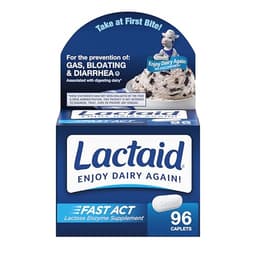
Lactaid (Lactase Enzyme)
Best For
Diagnosed or suspected lactose intolerance
Works In
30-60 minutes before a lactose-containing meal
Price
$20.54
$0.21 / count
Pros
- ✓Directly replaces the specific enzyme that's actually missing in lactose intolerance
- ✓Supported by a randomized, placebo-controlled crossover trial showing reduced symptoms and lower hydrogen breath levels
- ✓Inexpensive, widely available, and simple to dose around meals
Cons
- ✗Only useful for lactose-related symptoms — won't help with bloating from other causes
- ✗Trial evidence across different lactase products has been inconsistent in size of effect
- ✗Most people with lactose intolerance can already tolerate small amounts of lactose without it
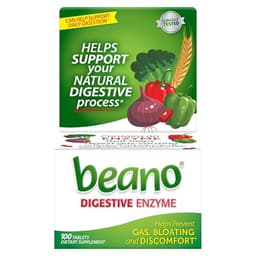
Beano (Alpha-Galactosidase)
Best For
Gas after beans, lentils, or cruciferous vegetables
Works In
First bite of the meal
Price
$11.98
$0.12 / count
Pros
- ✓Backed by a double-blind, placebo-controlled crossover study specifically measuring flatulence events
- ✓Targets a real digestive gap — humans lack the enzyme needed to break down raffinose-family sugars
- ✓Low cost and taken only with the meals that tend to cause problems
Cons
- ✗The supporting study found reduced gas frequency but no significant reduction in bloating or pain
- ✗Won't help with gas or bloating from other food groups or underlying conditions
- ✗Effect size in the original trial was modest and based on a small sample
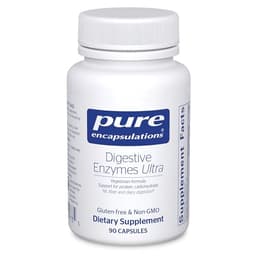
Pure Encapsulations Digestive Enzymes Ultra
Best For
People who want a broad, hypoallergenic-formulated enzyme blend
Works In
Unclear — no dedicated trial data
Price
$38.00
$0.42 / count
Pros
- ✓Broad spectrum covering protease, amylase, lipase, and several plant-derived enzymes in one capsule
- ✓Manufactured by a brand with third-party testing and a hypoallergenic, additive-free formulation focus
- ✓May be reasonable to trial alongside meals that reliably cause discomfort, given its low apparent risk
Cons
- ✗No published randomized controlled trial on this specific commercial blend for general bloating or digestive symptoms
- ✗Higher monthly cost than single-purpose options with clearer evidence
- ✗A multi-enzyme blend makes it hard to know which ingredient, if any, is doing anything

Doctor's Best Digestive Enzymes
Best For
A low-cost broad blend that also includes small amounts of lactase and alpha-galactosidase
Works In
Unclear — no dedicated trial data
Price
$26.99
$0.30 / count
Pros
- ✓Broad blend of proteases, amylase, lipase, and plant-fiber enzymes from plant and microbial sources
- ✓Also contains lactase and alpha-galactosidase, the two enzymes with targeted trial support
- ✓Among the lowest-cost broad blends, sold on Amazon by the brand itself
Cons
- ✗No published randomized controlled trial on this specific blend for bloating or digestive symptoms
- ✗Not a substitute for dedicated lactase or alpha-galactosidase products taken for a specific trigger meal
- ✗Adds a Bacillus subtilis probiotic that hasn't been shown to add benefit in this formula

NOW Super Enzymes
Best For
Budget-conscious broad-blend option, general use only
Works In
Unclear — no dedicated trial data
Price
$22.53
$0.13 / count
Pros
- ✓Wide-ranging formula including protease, amylase, lipase, bromelain, papain, and ox bile extract
- ✓Low cost relative to other multi-enzyme blends
- ✓Widely available and long-standing product in the supplement market
Cons
- ✗No dedicated clinical trials on this formulation for bloating or general digestive complaints
- ✗Includes ox bile and higher-potency proteases, which some people tolerate less well than plant-based blends
- ✗Not appropriate as a substitute for prescription enzyme therapy in anyone with a real pancreatic condition
Amazon prices retrieved from the Amazon Product Advertising API on . Prices and availability are accurate as of that time and may change.
Who Actually Benefits From an Enzyme Supplement
Match the enzyme to the actual problem rather than reaching for the broadest blend available.
- You get bloating, cramping, or diarrhea specifically after dairy — this points toward lactose intolerance, and lactase is a directly relevant, evidence-supported option to trial around dairy-containing meals.
- You get noticeably more gas after beans, lentils, or cruciferous vegetables — alpha-galactosidase targets exactly this mechanism and has trial data specifically for reduced gas frequency.
- You have a diagnosed condition affecting the pancreas (chronic pancreatitis, cystic fibrosis, pancreatic surgery or cancer) — this calls for prescription PERT under a physician's supervision, not an OTC blend.
- You have occasional, non-specific bloating with no clear food trigger and normal digestion otherwise — the evidence doesn't currently support a broad enzyme blend fixing this reliably. Simpler steps (eating pace, portion size, identifying trigger foods, or investigating IBS or SIBO if symptoms are frequent) are more likely to help.
Dosing and How to Trial an Enzyme
For lactase, take it with the first bite of a lactose-containing meal or snack — timing matters, since the enzyme needs to be present alongside the lactose in the gut. For alpha-galactosidase, the same principle applies: take it with the first bite of the gas-triggering meal, not afterward. For broad OTC blends, follow the label dose taken with meals, and give any single product a few weeks of consistent use before judging whether it's doing anything — track your symptoms so you're comparing against an actual baseline rather than memory.
Safety and Who Should Be Cautious
OTC digestive enzymes, including lactase and alpha-galactosidase, are generally well tolerated in short-term use by healthy adults. Broad blends that include ox bile extract or high-potency proteases may cause more stomach upset in some people than gentler, plant-derived formulations. Anyone with a diagnosed pancreatic condition, a history of gastrointestinal surgery, or who is pregnant or breastfeeding should check with a physician or pharmacist before starting any enzyme supplement rather than self-selecting a product. Prescription PERT carries its own dosing guidance and monitoring from a physician and should never be substituted with an OTC blend, since the enzyme content and regulation are not equivalent.
When to See a Doctor Instead of Self-Treating
Occasional bloating after a big or unusual meal is common and rarely needs medical evaluation. But a few patterns are signals to see a doctor rather than keep experimenting with supplements:
- Unintended weight loss, fatty or oily-looking stools, or persistent diarrhea can point toward true exocrine pancreatic insufficiency, which needs objective testing (such as a fecal elastase test) and prescription-strength PERT, not an OTC blend PMID: 30962702.
- A history of chronic pancreatitis, cystic fibrosis, pancreatic surgery, or long-standing diabetes raises the likelihood that any digestive symptoms are related to genuine enzyme insufficiency and warrants a conversation with your gastroenterologist about PERT specifically.
- Symptoms that keep recurring alongside anemia, unexplained weight loss, or a family history of celiac disease should prompt testing for celiac disease, which is diagnosed with blood antibody tests and often a small bowel biopsy, and is managed with a gluten-free diet and monitoring rather than enzyme supplements PMID: 36602836.
- Bloating that is severe, worsening, or accompanied by blood in the stool, fevers, or symptoms that wake you at night needs prompt medical evaluation rather than a supplement trial.
If your symptoms don't fit a clean pattern — no obvious dairy or bean trigger, no red-flag symptoms, but persistent bloating anyway — that's still a reasonable reason to see a doctor before spending months rotating through enzyme products. Conditions like IBS and SIBO are common causes of chronic bloating that enzyme supplements aren't designed to address.
Frequently Asked Questions
Do digestive enzyme supplements actually work? It depends on which enzyme and which problem. Lactase for lactose intolerance and alpha-galactosidase for gas from beans and certain vegetables both have supportive trial data for their specific use cases. Broad multi-enzyme blends for general bloating have much less direct evidence.
What's the difference between an OTC enzyme blend and prescription pancreatic enzymes? Prescription PERT is a regulated medication dosed for people with a diagnosed condition causing exocrine pancreatic insufficiency. OTC enzyme blends are supplements and are not an appropriate substitute for PERT in someone with true EPI.
Who actually needs a broad digestive enzyme supplement? Most healthy people with occasional bloating don't have a demonstrated enzyme deficiency and are unlikely to see a clear benefit from a broad blend. People most likely to benefit from a targeted enzyme are those with lactose intolerance, frequent gas after beans or cruciferous vegetables, or a diagnosed condition causing true pancreatic insufficiency.
Can I just take a digestive enzyme instead of seeing a doctor about ongoing symptoms? No. Persistent bloating, gas, diarrhea, or weight loss can have causes — including exocrine pancreatic insufficiency, celiac disease, SIBO, or inflammatory bowel disease — that need medical diagnosis and often prescription-level treatment. Self-treating with an OTC blend can delay a diagnosis that matters.
Is Beano the same thing as Lactaid? No. Lactaid contains lactase for lactose (milk sugar); Beano contains alpha-galactosidase for raffinose-family sugars in beans and cruciferous vegetables. They target different sugars and aren't interchangeable.
Are broad digestive enzyme blends safe to try anyway? For most healthy adults, short trials are generally low-risk, though they haven't been shown in dedicated trials to reduce general bloating. Anyone with a suspected pancreatic condition or on other medications should check with a physician or pharmacist first.
References
- Ganiats TG, Norcross WA, Halverson AL, Burford PA, Palinkas LA. Does Beano prevent gas? A double-blind crossover study of oral alpha-galactosidase to treat dietary oligosaccharide intolerance. The Journal of Family Practice. 1994;39(5):441-445. PMID: 7964541.
- Baijal R, Tandon RK. Effect of lactase on symptoms and hydrogen breath levels in lactose intolerance: A crossover placebo-controlled study. JGH Open. 2021;5(1):143-148. PMID: 33490624.
- Shaukat A, Levitt MD, Taylor BC, et al. Systematic review: effective management strategies for lactose intolerance. Annals of Internal Medicine. 2010;152(12):797-803. PMID: 20404262.
- Misselwitz B, Butter M, Verbeke K, Fox MR. Update on lactose malabsorption and intolerance: pathogenesis, diagnosis and clinical management. Gut. 2019;68(11):2080-2091. PMID: 31427404.
- de la Iglesia-García D, Huang W, Szatmary P, et al. Efficacy of pancreatic enzyme replacement therapy in chronic pancreatitis: systematic review and meta-analysis. Gut. 2017;66(8):1354-1355. PMID: 27941156.
- Gan C, Chen YH, Liu L, Gao JH, Tong H, Tang CW, Liu R. Efficacy and safety of pancreatic enzyme replacement therapy on exocrine pancreatic insufficiency: a meta-analysis. Oncotarget. 2017;8(55):94920-94931. PMID: 29212278.
- Capurso G, Traini M, Piciucchi M, Signoretti M, Arcidiacono PG. Exocrine pancreatic insufficiency: prevalence, diagnosis, and management. Clinical and Experimental Gastroenterology. 2019;12:129-139. PMID: 30962702.
- Rubio-Tapia A, Hill ID, Semrad C, Kelly CP, Greer KB, Limketkai BN, Lebwohl B. American College of Gastroenterology Guidelines Update: Diagnosis and Management of Celiac Disease. American Journal of Gastroenterology. 2023;118(1):59-76. PMID: 36602836.
- Ullah H, Di Minno A, et al. Efficacy of digestive enzyme supplementation in functional dyspepsia: a monocentric, randomized, double-blind, placebo-controlled, clinical trial. Biomedicine & Pharmacotherapy. 2023;169:115858. PMID: 37976892.