If you've been diagnosed with IBS, you've probably already heard some version of "try cutting out certain foods" or "manage your stress" — advice that's directionally correct but rarely comes with specifics. Irritable bowel syndrome affects a meaningful share of adults and drives a disproportionate number of gastroenterology visits, yet the gap between what's marketed for it and what's actually been tested in clinical trials is wide. This guide focuses on the treatments — dietary, digital, and supplement-based — that hold up under randomized trial evidence, ranks the leading over-the-counter options by the strength of that evidence, and is clear about where science stops and marketing starts.
This article is for general education and isn't a substitute for care from your own physician or gastroenterologist.
Quick Answer
Gut-directed hypnotherapy and sustained-release peppermint oil (IBgard) have the most consistent randomized-trial evidence among non-prescription IBS treatments, with the probiotic strain Bifidobacterium infantis 35624 (Align) a reasonable add-on — but none of these cure IBS, and a low-FODMAP trial plus medical evaluation for red flags still come first.
Sources: PMID 33315591, PMID 30654773, PMID 27397586
What IBS Is, and Why Treatment Isn't One-Size-Fits-All
Irritable bowel syndrome is a chronic disorder of gut-brain interaction, diagnosed by a pattern of recurrent abdominal pain linked to changes in bowel habits, once structural disease has been reasonably ruled out. It's typically split into subtypes based on predominant stool pattern: IBS-C (constipation-predominant), IBS-D (diarrhea-predominant), and IBS-M (mixed, alternating between the two). Some people also get labeled IBS-U (unclassified) if their pattern doesn't fit neatly into the others.
The mechanisms behind IBS are still being worked out, but the leading model involves several overlapping factors: visceral hypersensitivity (the gut nerves signaling pain at normal levels of stretch or gas), altered gut motility, low-grade immune activation in the gut wall, and dysregulation of the gut-brain axis — the two-way communication network linking the enteric nervous system to the brain via the vagus nerve, hormones, and the gut microbiome. That gut-brain link is precisely why treatments as different as a dietary change and a hypnotherapy app can both move the needle on the same physical symptoms.
Because subtype and dominant mechanism vary so much between individuals, no single therapy works for everyone, and most people end up combining approaches. That's the core reason this guide is structured as a ranked comparison rather than a single recommendation.
First-Line Approaches: Diet Before Apps or Supplements
Before ranking supplements and digital tools, it's worth being clear that dietary strategies have the most guideline-level support as a starting point. The American College of Gastroenterology's clinical guideline, developed using formal GRADE methodology, recommends a limited trial of a low-FODMAP diet in IBS patients to improve global symptoms PMID: 33315591.
Low-FODMAP diet. FODMAPs — fermentable oligosaccharides, disaccharides, monosaccharides, and polyols — are short-chain carbohydrates that are poorly absorbed in the small intestine and rapidly fermented by gut bacteria, producing gas and drawing water into the bowel. A landmark randomized crossover trial found that a diet low in FODMAPs significantly reduced overall IBS symptoms compared with a typical Australian diet PMID: 24076059. A more recent systematic review and network meta-analysis confirmed the low-FODMAP diet outperformed several comparator diets for global symptom improvement, while also noting the diet is complex, restrictive, and generally needs a structured reintroduction phase to avoid unnecessary long-term restriction PMID: 34376515. It's best attempted with guidance from a registered dietitian, since the elimination phase is meant to be temporary and diagnostic, not a permanent way of eating. See our full low-FODMAP diet guide for how to do it step by step.
Soluble fiber (psyllium). Fiber's reputation in IBS is mixed because "fiber" isn't one thing. A randomized, placebo-controlled primary-care trial found that psyllium (soluble fiber) meaningfully improved IBS symptom scores over several months, while bran (insoluble fiber) performed no better than placebo and was more likely to worsen symptoms in some participants PMID: 19713235. In practical terms, that means a psyllium-based supplement (such as Metamucil) is a reasonable, low-cost first or add-on step, particularly for IBS-C — as are the gentler laxatives meant for regular use — while wheat-bran-style insoluble fiber is not well supported and may aggravate bloating.
Prescription options. For people whose symptoms don't respond adequately to diet, supplements, or digital therapeutics, prescription medications have their own guideline-backed evidence base: chloride channel activators and guanylate cyclase agonists for IBS-C, and rifaximin for IBS-D, are both specifically recommended in the ACG guideline PMID: 33315591. These require a physician's evaluation and prescription and sit outside the scope of this ranking, but they're worth discussing with a gastroenterologist if OTC and behavioral approaches aren't enough. If small intestinal bacterial overgrowth (SIBO) comes up in that conversation, our guide to SIBO breath testing and treatment explains how it's evaluated.
Our Rankings
These rankings are ordered by the strength, consistency, and directness of the randomized clinical trial evidence behind each product or program — not by price or popularity. Gut-directed hypnotherapy has some of the strongest trial evidence of any IBS treatment, but it isn't a product sold on Amazon, so we cover it in its own section below rather than in this list.
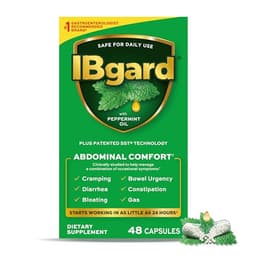
IBgard (Sustained-Release Peppermint Oil)
Best For
Cramping and abdominal pain, especially IBS-D or IBS-M
Works In
1-4 weeks
Price
$29.97
$0.62 / count
Pros
- ✓The specific sustained-release delivery format used in IBgard was tested in a randomized trial and reduced IBS symptom severity, including abdominal pain, versus placebo
- ✓A pooled meta-analysis of peppermint oil trials found a statistically significant overall benefit for global IBS symptoms and pain
- ✓Site-targeted release in the small intestine is designed to reduce the heartburn sometimes seen with plain peppermint oil capsules
Cons
- ✗Effect sizes in trials are real but modest — it reduces symptoms for many people rather than eliminating them
- ✗Not the right choice if you have significant GERD, since peppermint can relax the lower esophageal sphincter in some people
- ✗Doesn't target bowel habit directly, so may need to be combined with a fiber or motility-focused approach for IBS-C
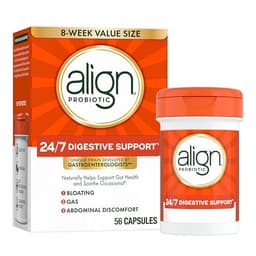
Align Probiotic (Bifidobacterium infantis 35624)
Best For
General symptom support alongside diet or hypnotherapy, any subtype
Works In
4 weeks
Price
$43.99
$0.79 / count
Pros
- ✓Backed by a 362-patient randomized, dose-ranging trial conducted specifically in women with IBS
- ✓Confirmed effective for global IBS symptoms in a 2026 strain-specific systematic review and meta-analysis
- ✓Once-daily capsule with no refrigeration required and a long safety track record
Cons
- ✗Broader reviews of probiotics as a category for IBS rate the overall certainty of evidence as low to very low
- ✗Benefit is strain-specific — the trial evidence doesn't transfer to other Bifidobacterium or Lactobacillus products
- ✗Premium price for what is, functionally, a single studied strain
Amazon prices retrieved from the Amazon Product Advertising API on . Prices and availability are accurate as of that time and may change.
For a deeper dive into probiotic strain selection — including options for IBS-D specifically and how to interpret the broader (and mixed) probiotic literature — see our full best probiotics for IBS guide.
Peppermint Oil: How the Enteric-Coated Delivery Works
Peppermint oil's active component, L-menthol, is an antispasmodic that blocks calcium channels in intestinal smooth muscle, reducing the spasm that contributes to cramping pain. The catch is delivery: swallowed as a plain oil, peppermint is absorbed too early in the digestive tract to reliably reach the colon and can cause heartburn. IBgard uses a "site-specific targeting" delivery system designed to release the oil further down the small intestine. In a randomized, double-blind trial of this exact delivery approach, participants had significantly greater reductions in overall IBS symptom scores and abdominal pain compared with placebo within the first 24 hours and over 4 weeks PMID: 26319955. A separate meta-analysis pooling multiple peppermint oil trials — including different formulations — found a consistent, statistically significant benefit for both global symptom improvement and abdominal pain reduction PMID: 30654773. Typical dosing is one to two capsules taken 30-90 minutes before meals, up to three times daily; taking it on an empty stomach and not crushing or chewing the capsule matters for the delivery system to work as intended.
Gut-Directed Hypnotherapy and the Gut-Brain Axis
Hypnotherapy for IBS isn't generic relaxation — "gut-directed" hypnotherapy uses IBS-specific suggestion scripts aimed at normalizing gut function and reducing visceral hypersensitivity, built on the premise that the gut-brain axis runs in both directions. The evidence base is older than most people expect: a controlled trial published in 1984 found that hypnotherapy produced substantial symptom improvement in patients with severe, treatment-refractory IBS compared with a psychotherapy-and-placebo control group PMID: 6150275. More recently, a randomized trial directly compared gut-directed hypnotherapy against the low-FODMAP diet and found the two approaches produced similar rates of adequate symptom relief, suggesting hypnotherapy isn't a fallback option but a comparably effective first-line strategy for people who prefer it or can't sustain a restrictive diet PMID: 27397586.
The accessibility problem with traditional gut-directed hypnotherapy is that it historically required in-person sessions with a small number of trained specialists. Digital delivery through self-guided audio programs is a direct response to that bottleneck. In a randomized trial comparing a digitally delivered gut-directed hypnotherapy program against an active digital control (240 adults with IBS, roughly 90% female, over a 6-week program), 81% of the hypnotherapy group met the primary endpoint of a clinically meaningful drop in IBS symptom severity, compared with 63% of the control group, with corresponding improvements in quality of life PMID: 38940439.
How to Choose and Combine Treatments
None of the options above are mutually exclusive, and most people do better combining a dietary change with one behavioral or supplement-based approach rather than expecting any single product to resolve everything.
If pain and cramping dominate, enteric-coated peppermint oil has the fastest and most direct trial evidence for that specific symptom. If stress, anxiety, or a clear link between flares and emotional state stands out, gut-directed hypnotherapy addresses the gut-brain mechanism more specifically than a supplement can. If your main goal is a general, well-tolerated daily addition with a long safety record, the B. infantis 35624 strain in Align has the cleanest single-strain trial data, though expectations should stay modest given how mixed probiotic-category evidence is overall. Many gastroenterologists suggest starting with a structured low-FODMAP trial or soluble fiber, then layering in peppermint oil or hypnotherapy based on which symptom is most disruptive.
Give any approach a real trial period before judging it: at least 4 weeks for peppermint oil or a probiotic, and the full 6-week program for hypnotherapy, since that's the timeframe used in the underlying trials. Track pain, bloating, and stool pattern daily so you're comparing against your actual baseline.
When to See a Gastroenterologist Instead
Self-directed treatment is reasonable for someone with an established IBS diagnosis and no alarm features. It is not a substitute for medical evaluation if you notice blood in the stool or black, tarry stools; unintended weight loss; iron-deficiency anemia; fevers; symptoms that wake you from sleep; a family history of colorectal cancer or inflammatory bowel disease; or new bowel symptoms starting after age 50. The ACG guideline specifically recommends targeted testing — including celiac serology and fecal calprotectin — in patients with IBS and diarrhea symptoms, to help rule out celiac disease and inflammatory bowel disease before settling on an IBS diagnosis PMID: 33315591. It's also reasonable to check in with your physician if symptoms are severe enough to affect daily functioning, or if you've given two or three well-matched, evidence-based approaches a genuine trial without meaningful improvement — at that point, prescription options with their own guideline support may be the better next step.
Frequently Asked Questions
Can IBS be cured? No. IBS is a chronic gut-brain disorder that's managed, not cured. Diet, gut-directed psychotherapy, and medications can substantially reduce symptoms for most people, but the condition typically waxes and wanes over years.
What's the single best first step for treating IBS? A structured trial of the low-FODMAP diet has the strongest guideline-level support as a starting point, with soluble fiber, peppermint oil, and gut-directed hypnotherapy as reasonable next or parallel steps depending on your dominant symptom.
Does peppermint oil really work for IBS? Yes, with real but modest evidence. Enteric-coated, sustained-release peppermint oil has shown meaningful reductions in abdominal pain and overall symptom severity in randomized trials and a pooled meta-analysis.
What is gut-directed hypnotherapy and does it actually help IBS? It's a structured, IBS-specific form of hypnotherapy targeting the gut-brain axis. Trials dating to 1984, plus a 2025 randomized trial of a digitally delivered program, show it reduces IBS symptom severity as well as or better than comparator treatments.
Are probiotics worth trying for IBS? Possibly, but strain matters more than the word "probiotic." Bifidobacterium infantis 35624 (Align) has the strongest single-strain evidence; the broader category is rated low to very low certainty in systematic reviews.
When should I see a gastroenterologist instead of self-treating? See a doctor if you notice blood in the stool, unintended weight loss, anemia, fevers, nighttime symptoms, a relevant family history, or new symptoms after age 50 — these need diagnostic evaluation, not a supplement or app trial.
References
- Lacy BE, Pimentel M, Brenner DM, et al. ACG Clinical Guideline: Management of Irritable Bowel Syndrome. American Journal of Gastroenterology. 2021;116(1):17-44. PMID: 33315591.
- Halmos EP, Power VA, Shepherd SJ, Gibson PR, Muir JG. A diet low in FODMAPs reduces symptoms of irritable bowel syndrome. Gastroenterology. 2014;146(1):67-75. PMID: 24076059.
- Black CJ, Staudacher HM, Ford AC. Efficacy of a low FODMAP diet in irritable bowel syndrome: systematic review and network meta-analysis. Gut. 2022;71(6):1117-1126. PMID: 34376515.
- Bijkerk CJ, de Wit NJ, Muris JW, Whorwell PJ, Knottnerus JA, Hoes AW. Soluble or insoluble fibre in irritable bowel syndrome in primary care? Randomised placebo controlled trial. BMJ. 2009;339:b3154. PMID: 19713235.
- Cash BD, Epstein MS, Shah SM. A novel delivery system of peppermint oil is an effective therapy for irritable bowel syndrome symptoms. Digestive Diseases and Sciences. 2016;61(2):560-571. PMID: 26319955.
- Alammar N, Wang L, Saberi B, et al. The impact of peppermint oil on the irritable bowel syndrome: a meta-analysis of the pooled clinical data. BMC Complementary and Alternative Medicine. 2019;19(1):21. PMID: 30654773.
- Whorwell PJ, Prior A, Faragher EB. Controlled trial of hypnotherapy in the treatment of severe refractory irritable-bowel syndrome. Lancet. 1984;2(8414):1232-1234. PMID: 6150275.
- Peters SL, Yao CK, Philpott H, Yelland GW, Muir JG, Gibson PR. Randomised clinical trial: the efficacy of gut-directed hypnotherapy is similar to that of the low FODMAP diet for the treatment of irritable bowel syndrome. Alimentary Pharmacology & Therapeutics. 2016;44(5):447-459. PMID: 27397586.
- Anderson EJ, Peters SL, Gibson PR, Halmos EP. Comparison of digitally delivered gut-directed hypnotherapy program with an active control for irritable bowel syndrome. American Journal of Gastroenterology. 2025;120(2):440-448. PMID: 38940439.