Constipation is one of the most common digestive complaints in adults, yet the shelf of laxative options — fiber powders, osmotic solutions, stimulant tablets — can make it hard to know where to start or what's actually backed by evidence. This guide walks through what counts as constipation, the first-line lifestyle steps worth trying before any product, how the major laxative classes work and compare, and the warning signs that mean it's time to see a doctor instead of reaching for another box off the shelf.
This article is for general education and isn't a substitute for care from your own physician or gastroenterologist.
Quick Answer
For most adults with occasional or chronic constipation, an osmotic laxative like MiraLAX (PEG 3350) has the strongest and most consistent trial evidence and the best tolerability, with fiber supplements as a reasonable first step and stimulant laxatives like Senokot or Dulcolax reserved for short-term, as-needed use.
Sources: PMID 20614462, PMID 27170558, PMID 21440672
What Counts as Constipation?
Clinically, constipation isn't defined by a single symptom like "not going every day" — bowel habits vary widely between healthy people. The Rome IV diagnostic framework, the standard reference used in gastroenterology research and guidelines, defines functional constipation using a cluster of features over the past 3 months: fewer than 3 spontaneous bowel movements per week, straining, lumpy or hard stools, a sense of incomplete emptying, a sense of anorectal blockage, or needing manual maneuvers to pass stool, present for at least a quarter of bowel movements PMID: 27144627.
In practice, most people know something is off before they'd ever map their symptoms onto a formal checklist — infrequent, hard, or difficult-to-pass stools that don't feel normal for their body. The American Gastroenterological Association's position statement on constipation frames it similarly: a symptom-based condition, most often without an identifiable structural or metabolic cause (so-called chronic idiopathic constipation), that's managed in a stepwise fashion starting with the least invasive options and escalating only as needed PMID: 23261064. For how constipation fits into irritable bowel syndrome, see our breakdown of IBS subtypes.
How the Main Laxative Types Work
Nearly every over-the-counter option for constipation falls into one of three mechanistic categories, and understanding the difference matters more than brand names.
Bulk-forming fiber (psyllium, wheat dextrin, methylcellulose) works by adding soluble or partially fermentable material to stool, which absorbs water and increases stool bulk and softness. This is the gentlest mechanism and the one most guidelines recommend trying first, since it mimics what a higher-fiber diet would do naturally PMID: 21332763. If fiber is where you want to start, our guide to the best fiber supplements ranks the specific products by the strength of their evidence.
Osmotic laxatives (polyethylene glycol 3350, lactulose, magnesium-based products) draw water into the bowel by osmosis, softening stool and increasing volume without directly stimulating colon muscle contractions. Because the mechanism is physical rather than neuromuscular, osmotic laxatives are generally well tolerated for regular use. For the magnesium-based options specifically, we cover how magnesium citrate and oxide compare separately.
Stimulant laxatives (senna, bisacodyl, sodium picosulfate) act directly on the nerves of the colon wall to trigger muscular contractions that push stool along. They tend to work faster — often within 6 to 12 hours, which is why they anchor most quick-relief laxative shortlists — but that same mechanism is why they're typically positioned as a short-term or as-needed tool rather than a daily maintenance strategy.
Our Rankings
These rankings are ordered by mechanism and by first-line status: options with the strongest, most consistent trial evidence and the gentlest mechanism for everyday use are listed first, with stimulant options last as short-term tools rather than daily staples.
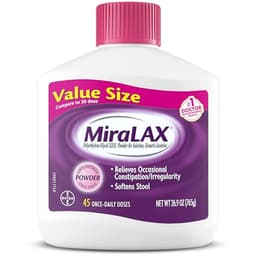
MiraLAX (Polyethylene Glycol 3350)
Best For
First-line daily option for most adults with occasional or chronic constipation
Works In
1-3 days
Price
$30.99
$1.15 / ounce
Pros
- ✓Outperformed lactulose across multiple outcomes in a Cochrane systematic review, including stool frequency and form
- ✓Not directly absorbed or metabolized, which supports long-term regular use
- ✓Unflavored powder dissolves in liquid and is generally well tolerated with less gas and bloating than some alternatives
Cons
- ✗Takes 1 to 3 days to produce a bowel movement, so it isn't a fast-acting rescue option
- ✗Some people need to titrate the dose up or down to find their comfortable stool consistency
- ✗Doesn't add bulk to stool the way fiber does, so it addresses a different mechanism
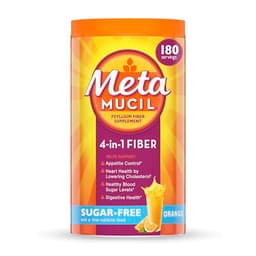
Metamucil (Psyllium Husk Fiber)
Best For
Daily baseline fiber, especially for milder or diet-related constipation
Works In
1-3 weeks of consistent use
Price
$34.97
$0.95 / ounce
Pros
- ✓Soluble, gel-forming fiber with supportive evidence in systematic reviews of fiber for chronic idiopathic constipation
- ✓Doubles as a general diet-quality intervention, not just a symptom fix
- ✓Available in capsules, powder, and gummies for different preferences
Cons
- ✗Needs consistent daily use and adequate fluid intake, or it can worsen bloating instead of helping
- ✗Slower onset than osmotic or stimulant options, so it's not useful for acute constipation
- ✗Some formulations contain added sugars or flavors worth checking on the label

Benefiber (Wheat Dextrin Fiber)
Best For
People who want fiber without the gel-like texture or taste of psyllium
Works In
1-3 weeks of consistent use
Price
$22.98
$1.31 / ounce
Pros
- ✓Dissolves clear and unflavored in liquids or soft foods, without thickening
- ✓Partially fermentable fiber source that's generally gentler on gas and bloating than psyllium for some users
- ✓Easy to add to an existing daily routine, like a morning drink
Cons
- ✗Less directly studied in dedicated chronic constipation trials than psyllium specifically
- ✗Like all bulk fiber, it requires weeks of consistent use rather than offering quick relief
- ✗May be less effective for more severe or slow-transit constipation than osmotic options

Senokot (Senna)
Best For
Short-term relief when fiber and osmotic options haven't worked quickly enough
Works In
6-12 hours
Price
$15.74
$0.44 / count
Pros
- ✓Fast-acting compared with fiber or osmotic laxatives
- ✓Long history of clinical use as a stimulant laxative, including in palliative and post-surgical settings
- ✓Available in tablet form that's easy to dose as-needed rather than daily
Cons
- ✗Best used short-term or intermittently rather than as an everyday maintenance laxative
- ✗Can cause cramping, especially at higher doses
- ✗Fewer modern placebo-controlled trials specific to senna than for some other stimulant agents like bisacodyl
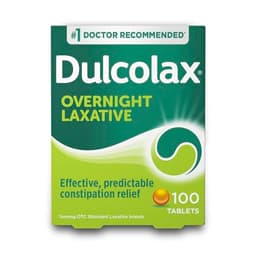
Dulcolax (Bisacodyl)
Best For
Fast, short-term relief with the most robust stimulant-class trial data
Works In
6-12 hours (oral); 15-60 minutes (suppository)
Price
$17.98
$0.18 / count
Pros
- ✓Backed by randomized, placebo-controlled trials in adults with chronic constipation showing significantly improved bowel movement frequency
- ✓Available as both an oral tablet and a rectal suppository for faster onset when needed
- ✓Predictable, well-characterized dosing
Cons
- ✗Same as other stimulants — intended for short courses or occasional use, not indefinite daily reliance
- ✗Can cause abdominal cramping, particularly at the start of use
- ✗Enteric-coated tablets shouldn't be taken with antacids or dairy close to dosing, which can affect how they dissolve
Amazon prices retrieved from the Amazon Product Advertising API on . Prices and availability are accurate as of that time and may change.
Why PEG 3350 Is Often the First Choice
When gastroenterologists reach past simple fiber for something more reliable, polyethylene glycol 3350 is usually the next step, and the evidence explains why. A Cochrane systematic review comparing lactulose and PEG head-to-head found that PEG produced better outcomes across stool frequency, form, and the need for additional rescue laxatives, and it was associated with less abdominal pain than lactulose in the pooled trials PMID: 20614462. PEG is also not meaningfully absorbed or fermented by gut bacteria the way lactulose is, which is the likely reason it tends to cause less bloating and gas for many users.
The American College of Gastroenterology's monograph on chronic idiopathic constipation, which grades the evidence behind common therapies, places PEG among the treatments with the strongest supporting evidence for chronic use, alongside recognizing fiber as a reasonable, lower-cost first attempt for milder cases PMID: 25091148. None of this means PEG works for everyone or on its own — but among over-the-counter options, it has the most consistent data behind regular, ongoing use. For the direct comparison against psyllium specifically — the single randomized trial that tested the two against each other, plus how the 2023 AGA-ACG guideline grades them differently — see our Metamucil vs MiraLAX comparison.
First-Line Steps Before (or Alongside) Any Laxative
Guidelines consistently frame lifestyle measures as the foundation of constipation management, not an afterthought to a laxative.
Fiber. A systematic review of fiber trials in chronic idiopathic constipation found that fiber supplementation, particularly soluble fiber like psyllium, improved stool frequency and consistency compared with placebo, while insoluble fiber (like bran) showed more inconsistent results and could worsen bloating in some patients PMID: 21332763. A more recent meta-analysis reached a similar conclusion: fiber supplementation overall improved constipation symptoms and stool frequency, with soluble, fermentable fibers generally performing better than insoluble ones PMID: 27170558. Most adults benefit from gradually working toward 25 to 30 grams of total daily fiber from food and, if needed, a supplement — increasing intake slowly to avoid excess gas.
Fluids. Adequate hydration supports the water-retaining effect of fiber and osmotic laxatives; dehydration in particular can worsen stool hardness, though drinking dramatically more water than your body needs hasn't been shown to reverse constipation on its own in someone who's already adequately hydrated.
Physical activity. Regular movement is generally recommended as part of constipation management because sedentary behavior is associated with slower colon transit, though the size of the direct effect from exercise alone is more modest than the effect of fiber or osmotic laxatives.
Routine. Simple habits — not delaying the urge to go, allowing unhurried time after meals when the gastrocolic reflex is strongest, and using a footstool to improve rectal angle during defecation — cost nothing and are reasonable to try before or alongside any product on this list.
Stimulant Laxatives: A Short-Term Tool, Not a Daily Habit
Stimulant laxatives earn their spot on this list because they work, and work quickly. A randomized, placebo-controlled trial of oral bisacodyl in adults with chronic constipation found significantly more complete spontaneous bowel movements and improved symptom scores compared with placebo over 4 weeks, with abdominal pain and diarrhea as the main tolerability trade-offs PMID: 21440672. A similarly designed trial of sodium picosulfate, another stimulant, found comparable results PMID: 20179697, and a head-to-head comparison found the two stimulant agents performed similarly to each other PMID: 17407625. Senna works through a related but distinct mechanism (it's converted by colon bacteria into an active compound that stimulates contractions), and it has a long clinical track record, though it has fewer large, modern placebo-controlled trials specific to chronic constipation than bisacodyl does.
Older teaching held that regular stimulant laxative use damages colon nerves ("cathartic colon") and causes long-term dependence, but the trial evidence for that specific claim is weaker than the folklore suggests, and current guidance has softened accordingly. That said, most gastroenterology guidelines still position stimulant laxatives as an add-on or short-term option once fiber and osmotic approaches haven't fully worked, rather than a first-line daily therapy — largely because osmotic and bulk-forming options accomplish similar goals with a gentler mechanism and better long-term tolerability data. If you find yourself needing a stimulant laxative most days for more than a couple of weeks, that's a reasonable point to check in with a doctor about your regimen rather than simply continuing indefinitely.
Red Flags: When Constipation Needs a Doctor, Not a Laxative
Most constipation is functional and responds to the steps above. But certain features suggest constipation could be a symptom of something else and deserve prompt medical evaluation rather than another over-the-counter trial:
- Blood in the stool, or black, tarry stools
- Unexplained weight loss
- New constipation that starts after age 50, especially without a prior history of bowel problems
- Constipation alternating with diarrhea, or a significant, persistent change in your usual bowel pattern
- Severe or worsening abdominal pain, especially if it wakes you at night
- A family history of colorectal cancer or inflammatory bowel disease
- Constipation accompanied by fever, vomiting, or an inability to pass gas, which can signal an obstruction and needs urgent attention
The American Gastroenterological Association's position statement specifically frames these kinds of alarm features as a signal to pursue diagnostic evaluation before or instead of an extended trial of self-directed treatment PMID: 23261064. If you have any of these symptoms, or if you've tried fiber, an osmotic laxative, and a short course of a stimulant laxative without meaningful improvement, it's time for an appointment rather than a longer product search.
A home stool test for hidden blood isn't a substitute for that appointment when you have symptoms like these. Our guide to at-home colon cancer screening tests explains who those kits are and aren't for.
Frequently Asked Questions
What is the most effective over-the-counter laxative for constipation? Polyethylene glycol 3350 (MiraLAX) has the strongest head-to-head trial evidence among common options, generally outperforming lactulose with fewer side effects. Fiber and stimulant laxatives are also supported by evidence but suit different situations.
Is it safe to use a stimulant laxative like Senokot or Dulcolax every day? Short courses are well studied and considered safe. Daily long-term reliance hasn't been shown to cause the harm older teaching suggested, but most guidelines still favor fiber and osmotic laxatives for everyday use and reserve stimulants for flare-ups or bridging periods.
How long does it take for a fiber supplement to relieve constipation? Give a fiber supplement 1 to 4 weeks of consistent daily use, paired with adequate fluids, before judging whether it's working.
What's the difference between MiraLAX, Metamucil, and Senokot? MiraLAX is an osmotic laxative that draws water into the colon. Metamucil is a bulk-forming psyllium fiber that adds soft mass to stool. Senokot is a stimulant that triggers colon contractions directly. They work through different mechanisms rather than being interchangeable.
When is constipation a sign of something more serious? See a doctor if constipation is new after age 50, comes with rectal bleeding, unexplained weight loss, severe abdominal pain, or alternates with diarrhea.
Can I combine a fiber supplement with MiraLAX or a stimulant laxative? Yes — many people use fiber daily and add an osmotic or stimulant laxative as needed, since they work through different mechanisms. Introduce changes one at a time so you can tell what's helping.
References
- Mearin F, Lacy BE, Chang L, Chey WD, Lembo AJ, Simren M. Bowel Disorders. Gastroenterology. 2016. PMID: 27144627.
- American Gastroenterological Association, Bharucha AE, Dorn SD, Lembo A, Pressman A. American Gastroenterological Association medical position statement on constipation. Gastroenterology. 2013;144(1):211-217. PMID: 23261064.
- Ford AC, Moayyedi P, Lacy BE, et al. American College of Gastroenterology monograph on the management of irritable bowel syndrome and chronic idiopathic constipation. American Journal of Gastroenterology. 2014;109(Suppl 1):S2-S26. PMID: 25091148.
- Suares NC, Ford AC. Systematic review: the effects of fibre in the management of chronic idiopathic constipation. Alimentary Pharmacology & Therapeutics. 2011;33(8):895-901. PMID: 21332763.
- Christodoulides S, Dimidi E, Fragkos KC, Farmer AD, Whelan K, Scott SM. Systematic review with meta-analysis: effect of fibre supplementation on chronic idiopathic constipation in adults. Alimentary Pharmacology & Therapeutics. 2016;44(2):103-116. PMID: 27170558.
- Lee-Robichaud H, Thomas K, Morgan J, Nelson RL. Lactulose versus polyethylene glycol for chronic constipation. Cochrane Database of Systematic Reviews. 2010;(7):CD007570. PMID: 20614462.
- Kamm MA, Mueller-Lissner S, Wald A, Richter E. Oral bisacodyl is effective and well-tolerated in patients with chronic constipation. Clinical Gastroenterology and Hepatology. 2011;9(7):577-583. PMID: 21440672.
- Mueller-Lissner S, Kamm MA, Wald A, Hinkel U. Multicenter, 4-week, double-blind, randomized, placebo-controlled trial of sodium picosulfate in patients with chronic constipation. American Journal of Gastroenterology. 2010;105(4):897-903. PMID: 20179697.
- Kienzle-Horn S, Vix JM, Schuijt C, Peil H. Comparison of bisacodyl and sodium picosulphate in the treatment of chronic constipation. Current Medical Research and Opinion. 2007;23(4):691-699. PMID: 17407625.