Bloating — that tight, distended, "my pants don't fit after lunch" feeling — is one of the most common digestive complaints there is, and also one of the most poorly matched to treatment. Most people reach for whatever's in the pharmacy aisle without knowing whether their bloating comes from trapped gas, slow digestion, a food intolerance, or something else entirely. This guide ranks the over-the-counter options with real trial evidence behind them, walks through what's actually driving your bloating, and covers the low-FODMAP diet, digestive enzymes, and the red flags that mean it's time to see a doctor instead of trying another supplement.
This article is for general education and isn't a substitute for care from your own physician or gastroenterologist.
Quick Answer
Enteric-coated peppermint oil (IBgard) has the best overall trial evidence of these options for IBS-type symptoms like cramping and abdominal pain, though not every trial has been positive, and matching the product to your specific trigger — trapped gas, slow digestion, or a food intolerance — matters more than reaching for the best-selling option.
Sources: PMID 24100754, PMID 26319955, PMID 34319275
What Causes Bloating?
Bloating is a symptom, not a diagnosis, and it has several distinct mechanisms that call for different fixes.
Swallowed air (aerophagia). Eating too fast, chewing gum, carbonated drinks, and drinking through a straw all introduce extra air into the upper GI tract, which can distend the stomach and upper abdomen, especially right after eating.
Gas-producing foods and FODMAPs. Many carbohydrates — including the fermentable oligosaccharides, disaccharides, monosaccharides, and polyols known collectively as FODMAPs — resist digestion in the small intestine and get fermented by bacteria in the colon, producing hydrogen, methane, and carbon dioxide as byproducts. Beans, onions, garlic, wheat, and certain fruits are common sources, and our rundown of common bloating trigger foods and swaps covers them in more detail. In IBS, the problem is often how the gut handles gas rather than how much is produced: in a lab study, people with IBS had apparently normal amounts of intestinal gas while fasting, yet 18 of 20 developed gas retention, symptoms, or abdominal distension during a gas infusion, compared with 4 of 20 healthy controls PMID: 11115817.
Constipation. Stool sitting longer in the colon gives bacteria more time to ferment it and produces more gas, while the retained stool itself adds to abdominal distension. Treating the underlying constipation — typically with an osmotic like MiraLAX, which draws water into the stool without the extra fermentation gas some fibers cause — often resolves bloating that seemed unrelated at first.
Food intolerance. Lactose intolerance, and less commonly fructose malabsorption or non-celiac gluten sensitivity, can each cause bloating that's specific to certain foods rather than a general pattern.
Small intestinal bacterial overgrowth (SIBO). When bacteria that normally live in the colon migrate into the small intestine in excess numbers, they ferment food earlier in the digestive process, which can cause bloating, often with additional symptoms like diarrhea or malabsorption. SIBO is typically diagnosed with a breath test and treated differently from ordinary dietary bloating; our guide to SIBO breath tests and treatment explains how that works.
Functional dyspepsia. This is a distinct condition centered on the upper abdomen — early fullness, post-meal discomfort, and bloating that's tied to how the stomach empties and accommodates food, rather than to colonic gas production. It responds to different treatments than lower-GI, gas-related bloating.
Because these mechanisms are so different, the "best" bloating product genuinely depends on which one applies to you — which is why this list is ranked by the strength and specificity of the evidence behind each option, not by which is most popular. For a deeper supplement-by-supplement breakdown of the evidence, see our full roundup of the best supplements for bloating.
Our Rankings
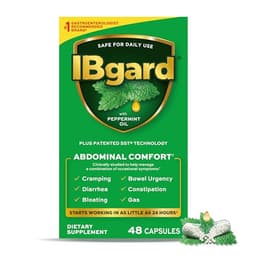
IBgard (Sustained-Release Peppermint Oil)
Best For
IBS-type bloating, cramping, and visceral hypersensitivity
Works In
2-4 weeks, some relief within days
Price
$29.97
$0.62 / count
Pros
- ✓Backed by a systematic review and meta-analysis of randomized trials showing benefit for global IBS symptoms and abdominal pain
- ✓A placebo-controlled trial of this sustained-release formulation found greater IBS symptom reduction than placebo, starting within 24 hours
- ✓Sustained-release microspheres are designed to release the peppermint oil in the small intestine rather than the stomach
Cons
- ✗Trial evidence centers on IBS-diagnosed patients, not bloating in isolation
- ✗Can cause heartburn or a cooling/burning sensation in some people even with enteric coating
- ✗A 2021 placebo-controlled trial found no significant difference from placebo, with both groups improving substantially
- ✗Not a fit for bloating caused by constipation or a specific food intolerance
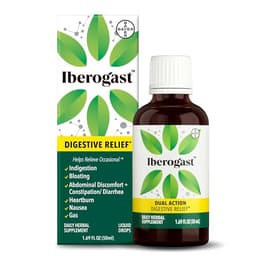
Iberogast (STW 5 Herbal Blend)
Best For
Upper-abdominal bloating, early fullness, and functional dyspepsia
Works In
2-4 weeks
Price
$18.97
$11.22 / fluid ounce
Pros
- ✓A meta-analysis of STW 5 trials found benefit for functional dyspepsia symptoms over placebo
- ✓A recent randomized study found the related STW 5-II formulation improved tolerance to gastric gas in functional dyspepsia patients
- ✓Multi-herb formulation (including bitter candytuft, peppermint, and chamomile) rather than a single ingredient
Cons
- ✗Most trial evidence is in functional dyspepsia, an upper-GI condition, not lower-GI gas-related bloating
- ✗Liquid dosing (drops) is less convenient than a capsule for some people
- ✗Rare case reports of liver injury exist, so it isn't ideal for anyone with liver disease
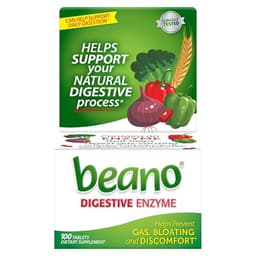
Beano (Alpha-Galactosidase)
Best For
Gas and flatulence specifically from beans, lentils, and cruciferous vegetables
Works In
Same meal, taken with the first bite
Price
$11.98
$0.12 / count
Pros
- ✓A classic double-blind crossover trial found it reduced flatulence from a bean-based test meal
- ✓A small randomized trial in healthy volunteers found it reduced gas production and gas-related symptoms after a bean-rich meal
- ✓Works preventively — taken before or with a meal, not after symptoms start
Cons
- ✗The classic Beano trial found no difference in bloating or pain, and a later randomized trial found no clear benefit for broader IBS symptoms
- ✗Narrow mechanism — it does nothing for bloating from other causes like constipation or SIBO
- ✗Requires knowing your trigger foods in advance and remembering to take it with that meal
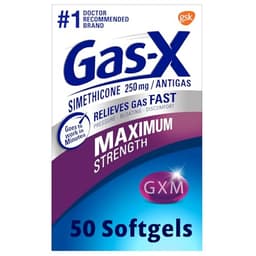
Gas-X (Simethicone)
Best For
Occasional, mild gas-related bloating when you want a fast, low-risk option
Works In
20-60 minutes, if it works at all
Price
$16.59
$0.33 / count
Pros
- ✓A meta-analysis of bowel-prep trials found oral simethicone reduced foam, bubbles, and abdominal distension
- ✓Not absorbed systemically, with a long track record of safety
- ✓Inexpensive and widely available over the counter
Cons
- ✗Placebo-controlled evidence for standalone simethicone in everyday functional bloating is limited — in an older acute-diarrhea trial, simethicone alone relieved gas-related discomfort more slowly than a loperamide-simethicone combination
- ✗A 2024 trial in functional bloating patients found a xyloglucan and pea-protein product outperformed simethicone, and it had no placebo arm
- ✗Best thought of as a low-cost, low-risk option to try rather than a proven fix
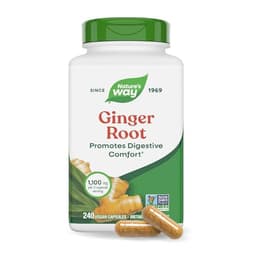
Ginger Supplement
Best For
Mild bloating with nausea or a sense of slow digestion after eating
Works In
2-8 weeks for a fair trial
Price
$16.65
$0.07 / count
Pros
- ✓A small randomized crossover study in functional dyspepsia patients found ginger sped up gastric emptying
- ✓Long traditional use for nausea and upper-GI discomfort
- ✓Inexpensive and widely available in capsule, tea, or chew form
Cons
- ✗The dyspepsia study behind it was tiny (11 patients) and found no improvement in symptoms compared with placebo
- ✗Less relevant for bloating driven by colonic gas or constipation rather than slow stomach emptying
- ✗Faster stomach emptying hasn't been shown to translate into less bloating
Amazon prices retrieved from the Amazon Product Advertising API on . Prices and availability are accurate as of that time and may change.
What the Trials Show for Each Option
Peppermint oil. A 2014 systematic review and meta-analysis of nine randomized trials (726 patients) found enteric-coated peppermint oil significantly better than placebo for global improvement of IBS symptoms and for abdominal pain; side effects were mild and transient, and heartburn was the most common one PMID: 24100754. A 4-week trial of a sustained-release formulation designed to release in the small intestine, in 72 people with mixed- or diarrhea-type IBS, found a 40% drop in total IBS symptom score versus 24% on placebo, with a significant difference already at 24 hours PMID: 26319955. Results aren't uniform, though: a 2021 six-week trial of enteric-coated peppermint oil in moderate-to-severe IBS found that both the peppermint oil and placebo groups improved substantially, with no significant difference between them PMID: 34319275.
Beano (alpha-galactosidase). In a double-blind crossover study, 19 people eating a meatless chili meal had significantly fewer flatulence events over six hours with alpha-galactosidase than with placebo, but no difference in bloating or pain PMID: 7964541. A small randomized trial in eight healthy volunteers eating a large portion of cooked beans found the higher dose reduced breath hydrogen (a marker of gas production) and flatulence severity, and both doses lowered the total symptom score PMID: 17151807. In 125 people with IBS and bloating or flatulence, though, 12 weeks of alpha-galactosidase showed only a trend toward improvement, more people dropped out on the enzyme than on placebo, and the authors found no evidence to support routine use in IBS PMID: 26133538.
Iberogast (STW 5). A meta-analysis pooling raw data from three placebo-controlled trials in functional dyspepsia found STW 5 more effective than placebo for the severity of the most bothersome GI symptom, with adverse events similar to placebo PMID: 15606389; a 2025 randomized study of the related STW 5-II formulation lowered symptom perception during a gastric gas challenge without changing measured distension PMID: 40684457. Severe liver injury has been reported, including a case that led to liver transplantation PMID: 27580789 — the signal points to greater celandine, which the six-herb version sold in the US leaves out. Our full Iberogast review covers both formulations, the trials in detail, and who it suits.
Ginger. The main study here is small: in 11 people with functional dyspepsia, a single 1.2 g dose of ginger sped up gastric emptying compared with placebo, but gastrointestinal symptoms didn't differ between the two PMID: 21218090. That's why ginger ranks below the options above.
Simethicone (Gas-X). Simethicone's best evidence is in colonoscopy preparation: a meta-analysis of 38 randomized trials (10,505 patients) found oral simethicone increased the rate of no or minimal foam and bubbles and decreased abdominal distension during bowel prep PMID: 35075814. For functional bloating itself, a 2024 randomized trial in 88 patients found a xyloglucan and pea-protein product reduced bloating and abdominal pain more than simethicone, but the trial had no placebo arm PMID: 37923826. And in an older trial of 493 adults with acute diarrhea and gas-related abdominal discomfort, a loperamide-simethicone combination relieved that discomfort faster than simethicone alone, loperamide alone, or placebo PMID: 10333820.
How to Choose Based on Your Trigger
If your bloating tracks closely with beans, lentils, broccoli, cabbage, or other high-oligosaccharide foods, Beano taken with that specific meal is the most targeted option, especially if gas and flatulence are the main complaint. If bloating is part of a broader pattern of abdominal pain, unpredictable bowel habits, and general IBS-type symptoms, enteric-coated peppermint oil has the most direct evidence. If your main complaint is early fullness and discomfort in the upper abdomen after modest-sized meals — closer to functional dyspepsia than classic IBS — Iberogast is better matched to that symptom pattern, and ginger is a cheaper but less-proven alternative. Simethicone is reasonable to keep on hand for an occasional bad day, but don't expect it to fix a recurring pattern on its own.
None of these products address bloating caused by constipation or an underlying food intolerance — those need to be identified and treated at the source, which is where the low-FODMAP approach below comes in.
Try a Low-FODMAP Trial
If bloating is a recurring pattern rather than an occasional nuisance, a structured low-FODMAP diet is one of the best-studied dietary interventions available. The approach has three phases: a strict 2-6 week elimination of high-FODMAP foods, a systematic reintroduction of one FODMAP category at a time to identify your personal triggers, and a longer-term personalized diet that only restricts the categories that actually caused symptoms for you. Our low-FODMAP diet guide walks through each phase in detail.
A 2022 systematic review and network meta-analysis in Gut found that a low-FODMAP diet ranked first for improving global IBS symptoms and was superior to all the other interventions compared, and it also beat standard British dietary advice for abdominal bloating or distension PMID: 34376515. A more recent 2025 network meta-analysis in The Lancet Gastroenterology and Hepatology, which compared several dietary approaches for IBS, found that among diets studied in more than one trial, the low-FODMAP diet was the only one superior to a habitual diet for abdominal bloating or distension; a starch- and sucrose-reduced diet ranked higher for global symptoms, but in only two trials, and the authors concluded the most evidence exists for the low-FODMAP diet PMID: 40258374. An earlier 2017 meta-analysis likewise found significant reductions in abdominal pain and bloating with a low-FODMAP diet compared with a traditional diet PMID: 28846594.
The catch is that a low-FODMAP diet is meant to be temporary and structured, not a permanent restriction. Skipping the reintroduction phase means unnecessarily avoiding foods long-term, which may affect nutrient intake and the diversity of your gut microbiome. Working with a dietitian familiar with the protocol, at least for the reintroduction phase, meaningfully improves the odds of doing it correctly.
Digestive Enzymes and Other Non-Drug Approaches
Beyond alpha-galactosidase for beans and cruciferous vegetables, a few other enzyme and lifestyle approaches are worth knowing about:
Lactase supplements break down the lactose in dairy before gut bacteria ferment it — a different enzyme for a different specific trigger, working on the same general principle as Beano. In a randomized, placebo-controlled crossover trial of 47 adults with breath-test-confirmed lactose intolerance, lactase tablets reduced symptoms and hydrogen breath levels compared with placebo PMID: 33490624.
Eating pace and posture. Slowing down at meals, chewing thoroughly, and avoiding carbonated drinks and straws reduces the amount of air swallowed, which is a meaningful contributor to bloating that requires no supplement at all.
Fiber, carefully. Adequate fiber intake helps prevent the constipation that contributes to bloating, but adding fiber too quickly, especially insoluble fiber, can temporarily worsen gas and bloating. Increasing intake gradually over several weeks avoids this trap.
Physical activity. Light activity, such as a short walk after eating, may help move gas through the digestive tract. In a small lab study of eight patients with bloating, intermittent mild pedaling reduced intestinal gas retention and symptoms compared with rest PMID: 17029608. For visible distension after meals, a 2024 randomized, placebo-controlled trial found that biofeedback training to correct how the diaphragm and abdominal wall respond to a meal reduced distension scores by about two-thirds, an effect not seen with placebo PMID: 38467383.
When Bloating Is a Red Flag
Occasional, food-related, or stress-related bloating that comes and goes is common and usually not a sign of anything serious. That said, certain patterns warrant a medical evaluation rather than another round of self-treatment:
- Unintended weight loss alongside bloating
- Blood in the stool, or black, tarry stools
- Persistent or worsening abdominal pain, rather than pain that comes and goes with meals or bowel movements
- Bloating that doesn't fluctuate throughout the day and is accompanied by a palpable mass or visible, fixed distension
- Fevers, night sweats, or symptoms that wake you from sleep
- New bloating or bowel-habit changes that start suddenly after age 50
- A family history of colorectal cancer, ovarian cancer, or inflammatory bowel disease
- Bloating alongside difficulty swallowing, persistent vomiting, or early satiety severe enough to affect eating
Any of these deserve a visit to your doctor for appropriate testing — bloodwork, imaging, endoscopy, or a breath test for SIBO, depending on the picture — before you spend weeks trialing supplements or diets. It's also reasonable to check in with your physician if you've tried a well-matched product or a proper low-FODMAP trial for 6-8 weeks without meaningful improvement, since that's a sign the underlying cause may need a different kind of workup.
An at-home stool test for hidden blood isn't a substitute for that visit if you have warning signs. Our guide to at-home colon cancer screening tests explains who those kits are meant for.
Frequently Asked Questions
What actually causes bloating? Bloating usually comes from swallowed air, gas production from fermentable foods (FODMAPs), constipation, an unrecognized food intolerance, small intestinal bacterial overgrowth, or functional dyspepsia. The right fix depends on which mechanism applies to you.
What's the fastest way to reduce bloating? For a single episode, simethicone or some light activity like a short walk may help, though simethicone's trial evidence for everyday bloating is thin. For a recurring pattern, enteric-coated peppermint oil over 2-4 weeks or a structured low-FODMAP trial address the issue more directly.
Does a low-FODMAP diet actually work for bloating? Yes, for many people with IBS-type bloating. Multiple meta-analyses, including a 2022 network meta-analysis in Gut and a 2025 update in The Lancet Gastroenterology and Hepatology, found it improves abdominal bloating more than a habitual diet. It's meant to be a temporary elimination-and-reintroduction protocol.
Is simethicone (Gas-X) effective for bloating? The evidence is weaker than its popularity suggests. It reduces foam, bubbles, and distension during bowel prep for colonoscopy, but rigorous placebo-controlled trials for everyday functional bloating are limited, and it's inexpensive and low-risk either way.
Can digestive enzymes like Beano help with bloating? Alpha-galactosidase has randomized trial support for reducing gas after bean-based meals, with clearer effects on flatulence than on bloating itself. It's a targeted fix for that one trigger rather than a general bloating treatment.
When should bloating be checked out by a doctor? See a doctor if bloating comes with weight loss, blood in the stool, persistent pain, fixed or non-fluctuating distension, fevers, or a sudden new pattern after age 50 — these need diagnostic evaluation, not a supplement trial.
References
- Serra J, Azpiroz F, Malagelada JR. Impaired transit and tolerance of intestinal gas in the irritable bowel syndrome. Gut. 2001;48(1):14-19. PMID: 11115817.
- Khanna R, MacDonald JK, Levesque BG. Peppermint oil for the treatment of irritable bowel syndrome: a systematic review and meta-analysis. Journal of Clinical Gastroenterology. 2014;48(6):505-512. PMID: 24100754.
- Cash BD, Epstein MS, Shah SM. A Novel Delivery System of Peppermint Oil Is an Effective Therapy for Irritable Bowel Syndrome Symptoms. Digestive Diseases and Sciences. 2016;61(2):560-571. PMID: 26319955.
- Nee J, Ballou S, Kelley JM, et al. Peppermint Oil Treatment for Irritable Bowel Syndrome: A Randomized Placebo-Controlled Trial. American Journal of Gastroenterology. 2021;116(11):2279-2285. PMID: 34319275.
- Ganiats TG, Norcross WA, Halverson AL, Burford PA, Palinkas LA. Does Beano prevent gas? A double-blind crossover study of oral alpha-galactosidase to treat dietary oligosaccharide intolerance. Journal of Family Practice. 1994;39(5):441-445. PMID: 7964541.
- Di Stefano M, Miceli E, Gotti S, Missanelli A, Mazzocchi S, Corazza GR. The effect of oral alpha-galactosidase on intestinal gas production and gas-related symptoms. Digestive Diseases and Sciences. 2007;52(1):78-83. PMID: 17151807.
- Hillilä M, Färkkilä MA, Sipponen T, Rajala J, Koskenpato J. Does oral alpha-galactosidase relieve irritable bowel symptoms? Scandinavian Journal of Gastroenterology. 2016;51(1):16-21. PMID: 26133538.
- Melzer J, Rösch W, Reichling J, Brignoli R, Saller R. Meta-analysis: phytotherapy of functional dyspepsia with the herbal drug preparation STW 5 (Iberogast). Alimentary Pharmacology & Therapeutics. 2004;20(11-12):1279-1287. PMID: 15606389.
- Aguilar A, Alcala-Gonzalez L, Barber C, Santos J, Lobo B, Malagelada C, Serra J. Effect of STW 5-II (Iberogast-N) on Tolerance to Gastric Gas in Patients With Functional Dyspepsia. The IBO-2 Study. Neurogastroenterology & Motility. 2025;37(11):e70123. PMID: 40684457.
- Sáez-González E, Conde I, Díaz-Jaime FC, Benlloch S, Prieto M, Berenguer M. Iberogast-Induced Severe Hepatotoxicity Leading to Liver Transplantation. American Journal of Gastroenterology. 2016;111(9):1364-1365. PMID: 27580789.
- Hu ML, Rayner CK, Wu KL, et al. Effect of ginger on gastric motility and symptoms of functional dyspepsia. World Journal of Gastroenterology. 2011;17(1):105-110. PMID: 21218090.
- Cao RR, Wang L, Gao C, Pan JH, Yoshida EM, Li HY, Qi XS. Effect of oral simethicone on the quality of colonoscopy: a systematic review and meta-analysis of randomized controlled trials. Journal of Digestive Diseases. 2022;23(3):134-148. PMID: 35075814.
- Petrisor DC, Etropolska Z, Elenski K, Dimitrova E, Santos J. Efficacy and Safety of Pea Protein and Xyloglucan Versus Simethicone in Functional Abdominal Bloating and Distension. Digestive Diseases and Sciences. 2024;69(1):161-168. PMID: 37923826.
- Kaplan MA, Prior MJ, Ash RR, McKonly KI, Helzner EC, Nelson EB. Loperamide-simethicone vs loperamide alone, simethicone alone, and placebo in the treatment of acute diarrhea with gas-related abdominal discomfort. A randomized controlled trial. Archives of Family Medicine. 1999;8(3):243-248. PMID: 10333820.
- Black CJ, Staudacher HM, Ford AC. Efficacy of a low FODMAP diet in irritable bowel syndrome: systematic review and network meta-analysis. Gut. 2022;71(6):1117-1126. PMID: 34376515.
- Cuffe MS, Staudacher HM, Aziz I, et al. Efficacy of dietary interventions in irritable bowel syndrome: a systematic review and network meta-analysis. The Lancet Gastroenterology & Hepatology. 2025;10(6):520-536. PMID: 40258374.
- Altobelli E, Del Negro V, Angeletti PM, Latella G. Low-FODMAP Diet Improves Irritable Bowel Syndrome Symptoms: A Meta-Analysis. Nutrients. 2017;9(9):940. PMID: 28846594.
- Baijal R, Tandon RK. Effect of lactase on symptoms and hydrogen breath levels in lactose intolerance: a crossover placebo-controlled study. JGH Open. 2021;5(1):143-148. PMID: 33490624.
- Villoria A, Serra J, Azpiroz F, Malagelada JR. Physical activity and intestinal gas clearance in patients with bloating. American Journal of Gastroenterology. 2006;101(11):2552-2557. PMID: 17029608.
- Barba E, Livovsky DM, Accarino A, Azpiroz F. Thoracoabdominal Wall Motion-Guided Biofeedback Treatment of Abdominal Distention: A Randomized Placebo-Controlled Trial. Gastroenterology. 2024;167(3):538-546.e1. PMID: 38467383.