Bloating is one of the most common digestive complaints and one of the least specific — it can come from swallowed air, fermentable carbohydrates, slow gastric emptying, food intolerances, small intestinal bacterial overgrowth, or a functional disorder like IBS or dyspepsia. That variety is why no single supplement fixes bloating for everyone, and why a product that works well for one cause can do nothing for another. This guide ranks supplements with the most credible bloating-relevant evidence, explains the mechanism each one targets, and is honest about where the science runs thin. If you're not yet sure which mechanism is driving your symptoms, our guide to what actually fixes bloating walks through how to match the cause to the fix first.
This article is for general education and isn't a substitute for care from your own physician or gastroenterologist.
Quick Answer
IBgard (sustained-release peppermint oil) has the strongest trial evidence of these options for IBS symptoms, including bloating, but the right supplement depends heavily on what's actually causing your bloating — Iberogast, Beano, and ginger each target a different mechanism.
Sources: PMID 26319955, PMID 24100754, PMID 17151807
Why "Bloating" Has So Many Different Causes
Bloating is a symptom, not a diagnosis, and that distinction matters more than most product marketing lets on. Broadly, it can arise from at least four different mechanisms, each of which points toward a different intervention:
Visceral hypersensitivity and gut motility disturbances, common in irritable bowel syndrome and functional dyspepsia, where a normal amount of gas or gut stretch is perceived as uncomfortable bloating. Fermentation of specific carbohydrates — the FODMAPs (fermentable oligosaccharides, disaccharides, monosaccharides, and polyols) in foods like beans, wheat, onions, and certain fruits — which produce gas as gut bacteria break them down. Delayed gastric emptying, where food and gas sit in the stomach longer than expected, producing a feeling of fullness and distension after meals. And structural or barrier-level issues, such as small intestinal bacterial overgrowth or altered intestinal permeability, which are harder to self-diagnose and often need testing to confirm.
Because these mechanisms are different, the supplements that plausibly help them are different too. Enteric-coated peppermint oil relaxes gut smooth muscle and reduces visceral sensitivity; a systematic review and meta-analysis of randomized trials found it improved global IBS symptoms and abdominal pain compared with placebo PMID: 24100754, and a dedicated trial of a sustained-release delivery system found meaningful reductions in IBS symptom severity over placebo PMID: 26319955. Alpha-galactosidase is an enzyme that pre-digests the specific sugars in beans and cruciferous vegetables before bacteria can ferment them, and a controlled crossover study found it reduced gas from those foods specifically PMID: 7964541 — useful only if that's your trigger. Ginger sped gastric emptying in small randomized crossover studies of people with functional dyspepsia PMID: 21218090 and of healthy volunteers PMID: 18403946, although neither study found a measurable improvement in symptoms versus placebo, and not all trials agree even on the emptying effect PMID: 8317647. And STW-5 (Iberogast), a multi-herb extract, has a meta-analysis of trials supporting benefit specifically in functional dyspepsia PMID: 15606389, a related but distinct diagnosis from IBS. None of these mechanisms overlap much, which is the core reason a "one-size-fits-all debloat supplement" is a difficult claim to support with evidence.
Our Rankings
These rankings are ordered by the strength and specificity of the clinical evidence behind each product's target mechanism — not price or popularity. Match the product to your likely cause, not just the rank.
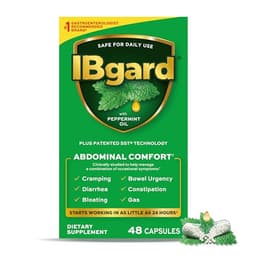
IBgard (Sustained-Release Peppermint Oil)
Best For
IBS-associated bloating, cramping, and post-meal abdominal pain
Works In
2-4 weeks
Price
$29.97
$0.62 / count
Pros
- ✓Backed by a dedicated randomized, placebo-controlled trial in IBS patients using this specific delivery system
- ✓Site-specific targeted-release capsule designed to reduce the heartburn some people get from standard peppermint oil
- ✓A broader systematic review and meta-analysis supports peppermint oil generally for IBS symptom relief
Cons
- ✗Evidence is strongest for IBS-associated bloating specifically, less so for bloating from other causes
- ✗Some people still experience heartburn or a cooling/burning sensation
- ✗Not a substitute for identifying dietary triggers if those are the main driver
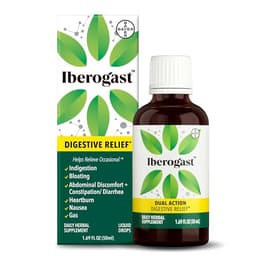
Iberogast (STW-5 Herbal Blend)
Best For
Functional dyspepsia — upper-abdominal bloating and fullness after eating
Works In
4 weeks
Price
$18.97
$11.22 / fluid ounce
Pros
- ✓A meta-analysis of functional dyspepsia trials found STW-5 outperformed placebo for global symptom relief
- ✓Multi-target herbal mechanism thought to affect both motility and visceral sensitivity, not just one pathway
- ✓Long track record of use with a favorable reported safety profile in the trials reviewed
Cons
- ✗Most trial evidence is in functional dyspepsia specifically, which is a distinct diagnosis from IBS or general bloating
- ✗Clinical benefit does not appear to come from speeding up gastric emptying, so it may not help emptying-related bloating
- ✗Liquid herbal-drop format is less convenient than a capsule for some users
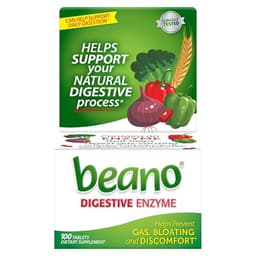
Beano (Alpha-Galactosidase)
Best For
Gas and bloating from beans, lentils, and cruciferous vegetables specifically
Works In
Same meal, taken before eating
Price
$11.98
$0.12 / count
Pros
- ✓The original double-blind crossover study of oral alpha-galactosidase found it reduced gas from oligosaccharide-containing foods
- ✓A separate randomized trial found it reduced intestinal gas production and gas-related symptoms after a high-fiber meal
- ✓Also studied in a pediatric randomized, placebo-controlled trial for gas-related symptoms
Cons
- ✗Only addresses gas from the specific carbohydrates it breaks down — it does nothing for bloating with other causes
- ✗Must be taken with the first bite of the trigger food to work, which requires planning ahead
- ✗Not useful for bloating driven by motility, visceral sensitivity, or non-oligosaccharide intolerances
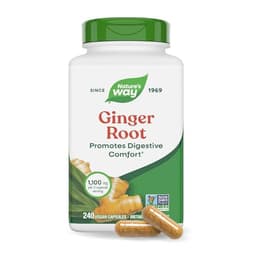
Ginger Supplement
Best For
Bloating tied to slow gastric emptying, fullness, or nausea after meals
Works In
Speeds stomach emptying within about an hour; symptom relief not shown in trials
Price
$16.65
$0.07 / count
Pros
- ✓A small randomized crossover trial found ginger accelerated gastric emptying in functional dyspepsia patients
- ✓A separate study in healthy volunteers found ginger sped gastric emptying and antral motility compared with placebo
- ✓Widely available and generally well tolerated at food-level doses
Cons
- ✗Evidence is mixed — the dyspepsia trial found faster emptying but no symptom improvement over placebo, and an earlier randomized crossover trial found no effect on gastric emptying rate
- ✗Most positive studies used specific extract doses that may not match every commercial supplement's labeling
- ✗Less helpful if your bloating is driven by fermentation or visceral hypersensitivity rather than slow emptying
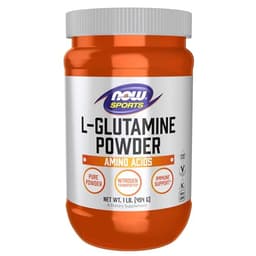
L-Glutamine
Best For
Narrow use case only — not a general bloating recommendation
Works In
8-12 weeks, unproven for general bloating
Price
$23.10
$1.44 / ounce
Pros
- ✓One randomized, placebo-controlled trial found benefit in patients with post-infectious diarrhea-predominant IBS and lab-confirmed increased intestinal permeability
- ✓Mechanistic studies show glutamine can restore a specific tight-junction protein in colon tissue from IBS-D patients
- ✓Widely available, with a long history of use in clinical nutrition at higher medical doses
Cons
- ✗The positive trial enrolled a narrow, lab-selected subgroup — it has not been shown to help general or unselected bloating
- ✗Popular 'gut-healing' and 'leaky gut' marketing claims for glutamine outrun what the clinical trial evidence actually shows
- ✗No dedicated trial demonstrates it reduces bloating specifically, as opposed to other IBS-D measures
Amazon prices retrieved from the Amazon Product Advertising API on . Prices and availability are accurate as of that time and may change.
How to Choose Based on Your Bloating Pattern
Think about when and why your bloating shows up before picking a product. If it comes with cramping, urgency, or altered bowel habits fitting an IBS pattern, enteric-coated peppermint oil has the most directly relevant evidence. If your main complaint is early fullness and upper-abdominal discomfort during or shortly after meals — closer to functional dyspepsia than IBS — Iberogast's trial base is a better match; one caveat is that its benefit doesn't come from faster gastric emptying, which didn't speed up on STW-5 in a placebo-controlled trial PMID: 19220753. That pattern is a different diagnosis with a different treatment order, covered in our functional dyspepsia guide and our Iberogast review.
If specific foods (beans, lentils, broccoli, cabbage) reliably trigger gas within a few hours, alpha-galactosidase treats that mechanism directly, but won't help bloating on days you haven't eaten those foods. It has also been tested in children: in a small placebo-controlled trial, two weeks of alpha-galactosidase reduced global distress and days with moderate-to-severe bloating in kids with gas-related symptoms PMID: 24063420. If you haven't pinned down your triggers yet, start with our overview of common foods behind gas and bloating. If it's more about fullness, slow digestion, or nausea after eating, ginger's motility evidence applies more directly than the others.
If your bloating comes with IBS and you're open to a fiber supplement, partially hydrolyzed guar gum is the soluble fiber with a placebo-controlled bloating result: 6 grams a day for 12 weeks improved bloating scores, though not overall IBS severity PMID: 26855665. We cover it, including Thorne FiberMend, in our best fiber supplements guide.
L-glutamine is the outlier here. It's heavily marketed for gut-lining and bloating support, and it's worth naming honestly: the one positive randomized trial enrolled patients with post-infectious diarrhea-predominant IBS who had lab-confirmed increased intestinal permeability, not people with bloating generally PMID: 30108163. A related mechanistic study showed glutamine can restore a tight-junction protein in colon biopsies from IBS-D patients PMID: 25972430 — a plausible mechanism, but not the same as proven symptom relief for the average person with bloating. If you don't fit that narrow, lab-confirmed profile, the evidence doesn't currently back the claim. Glutamine is also widely sold as a "leaky gut" fix; we cover what research shows about leaky gut separately.
If you do fit that profile and try glutamine with your clinician, note the dose: the trial used 5 grams three times a day PMID: 30108163. Our listed pick is a budget powder; Thorne's L-Glutamine Powder is a pricier alternative at 5 grams per scoop that is NSF Certified for Sport according to its listing, for people who want third-party certification.
Pairing a Supplement with a Low-FODMAP Trial
Supplements work best as one piece of a broader plan, not a replacement for figuring out your triggers. A structured low-FODMAP elimination and reintroduction trial, ideally with a dietitian's guidance, is one of the more systematic ways to identify which fermentable carbohydrates drive your symptoms, since it tests your actual diet rather than a single ingredient's trial data. Running a supplement trial at the same time as an elimination diet muddies the results — you won't know whether improvement came from the food change or the supplement. It's more informative to sequence them: map your triggers with the diet trial first, then layer in a targeted supplement for whatever bloating remains once diet is optimized. Our low-FODMAP diet guide covers how to run that trial.
Dosing and How Long to Trial a Product
Give any of these a defined, honest trial period rather than judging after a day or two. For peppermint oil and Iberogast, most supportive trials ran roughly 4 weeks — a reasonable minimum before deciding whether it's helping. Alpha-galactosidase works acutely: a placebo-controlled trial measured gas reduction within hours of a single trigger meal PMID: 17151807, so you'll know within the same day whether it helped a specific food. In a functional dyspepsia trial, a single dose of ginger sped emptying of a meal eaten an hour later but didn't change symptom scores PMID: 21218090, so judge it over a longer stretch of recurring post-meal bloating rather than a single meal. Keep a simple log of what you ate and how severe symptoms were — comparing to your actual baseline beats relying on memory.
Safety and Who Should Be Cautious
These products are generally well tolerated, but none are risk-free for everyone. Peppermint oil can worsen heartburn in some people; enteric coating is designed to reduce, not eliminate, that risk. (If heartburn or reflux is your main symptom rather than bloating, see our acid reflux & GERD treatment guide.) Iberogast contains multiple herbal extracts and should be used cautiously alongside liver-metabolized medications — check with a pharmacist if you take prescription drugs regularly. Rare but serious liver injury has been reported with it, including a case that led to liver transplantation PMID: 27580789; the reports point to greater celandine, which the six-herb version sold in the US omits. Alpha-galactosidase and ginger both derive from food sources with good general safety records, though ginger in higher doses can interact with blood thinners. Glutamine at high supplemental doses has a more limited long-term safety record outside clinical settings and hasn't been well studied in people with certain cancers or liver disease. Anyone pregnant, breastfeeding, or managing a chronic condition should check with their care team before starting any of these.
When to See a Doctor Instead of Self-Treating
A supplement trial is reasonable for occasional or predictable bloating without alarm features. It is not a substitute for medical evaluation if bloating is new after age 50, comes with unintended weight loss, blood in the stool, persistent vomiting, fever, a palpable lump or mass, or symptoms severe enough to wake you at night. Bloating that's constant, progressively worsening, or paired with significant changes in bowel habits also deserves a visit, since it can occasionally point toward small intestinal bacterial overgrowth, an obstruction, or, more rarely, a gynecologic or gastrointestinal condition needing its own workup. If you've tried a well-matched supplement for a full trial period without improvement, that's also a reasonable point to loop in your physician rather than moving randomly to the next product.
Frequently Asked Questions
What is the single best supplement for bloating? There isn't one best supplement for everyone, because bloating has multiple distinct causes. IBgard (sustained-release peppermint oil) has the most bloating-specific randomized trial evidence for IBS-related bloating, but Iberogast works through a different mechanism for functional dyspepsia, and Beano only helps gas from specific fermentable foods.
Do debloat supplement blends actually work? Most multi-ingredient "debloat" blends have little to no published clinical trial evidence for the finished product as sold. Individual ingredients within them, like peppermint oil or ginger, may have supportive research, but that doesn't mean the specific blend or dose in a given product has been tested.
Does L-glutamine help with bloating? The evidence is thin. One randomized trial found benefit in a narrow subgroup — people with post-infectious diarrhea-predominant IBS and confirmed increased intestinal permeability — but this hasn't been replicated in general bloating populations, and broader gut-barrier-repair claims for glutamine are not well supported.
Can I take more than one bloating supplement at once? It's generally better to trial one product at a time so you can tell what's actually helping. Combining several supplements makes it hard to know which one, if any, was responsible for an improvement.
Should I try a low-FODMAP diet instead of a supplement? For many people, dietary triggers are the dominant driver of bloating, so a structured low-FODMAP trial often identifies the cause more precisely than a supplement can treat it. Supplements work well alongside a diet trial, not as a substitute for finding your triggers.
When should bloating be evaluated by a doctor instead of self-treated? See a doctor if bloating is new after age 50, comes with unintended weight loss, blood in the stool, fever, persistent vomiting, or a palpable abdominal mass, or if it wakes you at night. These need diagnostic evaluation, not a supplement trial.
References
- Cash BD, Epstein MS, Shah SM. A novel delivery system of peppermint oil is an effective therapy for irritable bowel syndrome symptoms. Digestive Diseases and Sciences. 2016;61(2):560-571. PMID: 26319955.
- Khanna R, MacDonald JK, Levesque BG. Peppermint oil for the treatment of irritable bowel syndrome: a systematic review and meta-analysis. Journal of Clinical Gastroenterology. 2014;48(6):505-512. PMID: 24100754.
- Melzer J, Rösch W, Reichling J, Brignoli R, Saller R. Meta-analysis: phytotherapy of functional dyspepsia with the herbal drug preparation STW 5 (Iberogast). Alimentary Pharmacology & Therapeutics. 2004;20(11-12):1279-1287. PMID: 15606389.
- Braden B, Caspary W, Börner N, Vinson B, Schneider AR. Clinical effects of STW 5 (Iberogast) are not based on acceleration of gastric emptying in patients with functional dyspepsia and gastroparesis. Neurogastroenterology and Motility. 2009;21(6):632-638. PMID: 19220753.
- Ganiats TG, Norcross WA, Halverson AL, Burford PA, Palinkas LA. Does Beano prevent gas? A double-blind crossover study of oral alpha-galactosidase to treat dietary oligosaccharide intolerance. The Journal of Family Practice. 1994;39(5):441-445. PMID: 7964541.
- Di Stefano M, Miceli E, Gotti S, Missanelli A, Mazzocchi S, Corazza GR. The effect of oral alpha-galactosidase on intestinal gas production and gas-related symptoms. Digestive Diseases and Sciences. 2007;52(1):78-83. PMID: 17151807.
- Di Nardo G, Oliva S, Ferrari F, et al. Efficacy and tolerability of alpha-galactosidase in treating gas-related symptoms in children: a randomized, double-blind, placebo controlled trial. BMC Gastroenterology. 2013;13:142. PMID: 24063420.
- Hu ML, Rayner CK, Wu KL, et al. Effect of ginger on gastric motility and symptoms of functional dyspepsia. World Journal of Gastroenterology. 2011;17(1):105-110. PMID: 21218090.
- Wu KL, Rayner CK, Chuah SK, et al. Effects of ginger on gastric emptying and motility in healthy humans. European Journal of Gastroenterology & Hepatology. 2008;20(5):436-440. PMID: 18403946.
- Phillips S, Hutchinson S, Ruggier R. Zingiber officinale does not affect gastric emptying rate. A randomised, placebo-controlled, crossover trial. Anaesthesia. 1993;48(5):393-395. PMID: 8317647.
- Zhou Q, Verne ML, Fields JZ, et al. Randomised placebo-controlled trial of dietary glutamine supplements for postinfectious irritable bowel syndrome. Gut. 2019;68(6):996-1002. PMID: 30108163.
- Bertrand J, Ghouzali I, Guérin C, et al. Glutamine restores tight junction protein claudin-1 expression in colonic mucosa of patients with diarrhea-predominant irritable bowel syndrome. JPEN Journal of Parenteral and Enteral Nutrition. 2016;40(8):1170-1176. PMID: 25972430.
- Niv E, Halak A, Tiommny E, et al. Randomized clinical study: Partially hydrolyzed guar gum (PHGG) versus placebo in the treatment of patients with irritable bowel syndrome. Nutrition & Metabolism. 2016;13:10. PMID: 26855665.
- Sáez-González E, Conde I, Díaz-Jaime FC, et al. Iberogast-induced severe hepatotoxicity leading to liver transplantation. The American Journal of Gastroenterology. 2016;111(9):1364-1365. PMID: 27580789.