Nearly everyone gets heartburn now and then, but for a meaningful share of adults it becomes a regular, disruptive problem — burning discomfort after meals, a sour taste creeping up at night, or a cough that won't quite go away. The over-the-counter aisle offers three genuinely different drug classes for it, and picking the wrong one for your pattern of symptoms is one of the most common reasons people feel like "nothing works." This guide walks through what's actually happening physiologically, how antacids, H2 blockers, and PPIs differ, and which situations call for which — plus the lifestyle changes with real evidence behind them and the symptoms that mean it's time to stop self-treating.
This article is for general education and isn't a substitute for a diagnosis or treatment plan from your own physician.
Quick Answer
For occasional heartburn, a fast-acting H2 blocker like Pepcid (famotidine) works within about an hour; for reflux that happens more than twice a week, a PPI like Prilosec (omeprazole) or Nexium (esomeprazole) taken daily for several weeks controls symptoms more consistently.
Sources: PMID 9178669, PMID 2887616, PMID 12950485
Heartburn vs. GERD: What's Actually Happening
Heartburn happens when the lower esophageal sphincter — the ring of muscle that normally keeps stomach contents from moving backward — relaxes or weakens at the wrong time, letting acidic stomach contents splash up into the esophagus. The esophagus doesn't have the same protective lining as the stomach, so that acid exposure causes the familiar burning sensation behind the breastbone, sometimes with a sour or bitter taste in the throat.
Everyone reflux occasionally; it's not automatically a disease. The distinction clinicians use is frequency and impact. According to a widely cited review of the condition, gastroesophageal reflux disease is generally defined by symptoms occurring at least twice a week, or reflux severe enough to cause complications such as esophagitis (visible inflammation or erosion of the esophageal lining), strictures, or Barrett's esophagus regardless of how often symptoms occur PMID: 33351048. Some people with objectively significant reflux have mild or no symptoms, while others with more modest acid exposure feel it intensely — esophageal sensitivity varies a good deal between individuals, which is part of why treatment response varies too.
Common triggers include fatty or fried meals, caffeine, alcohol, chocolate, mint, citrus, tomato-based foods, carbonated drinks, large meal sizes, and lying down soon after eating. Not everyone reacts to the same triggers, so this list is a starting point for your own elimination experiment rather than a universal rulebook. Reflux also frequently overlaps with upper-abdominal fullness and bloating — if that's as much of a problem as the burning, our guide to fixing bloating covers that side.
The Three OTC Drug Classes, and How Each Works
Over-the-counter reflux treatment splits into three mechanistically distinct categories, and understanding the difference is the single most useful thing for choosing between them.
Antacids (calcium carbonate, magnesium hydroxide — think Tums or generic equivalents) neutralize acid that's already in the stomach through a direct chemical reaction. They act within minutes but only last an hour or two, since they don't reduce how much acid the stomach produces going forward. They're best suited to occasional, already-present discomfort rather than prevention.
H2 blockers (famotidine — Pepcid; the drug class also includes cimetidine) work by blocking histamine receptors on the acid-producing cells lining the stomach, which reduces new acid secretion. Famotidine's antisecretory effect begins within about an hour of a dose, peaks at one to three hours, and lasts roughly 10 to 12 hours PMID: 2887616 — meaningfully faster onset than a PPI, though with somewhat less overall acid suppression. This makes H2 blockers a good fit for symptoms you can anticipate (before a reflux-prone meal) or breakthrough nighttime symptoms, including as an add-on for people already on a PPI.
Proton pump inhibitors (PPIs) (omeprazole — Prilosec; esomeprazole — Nexium) work further upstream, irreversibly blocking the proton pump enzyme that's the final step in acid production. Because they act on pumps rather than receptors, and because it takes time for the body to synthesize new pumps to replace the blocked ones, PPIs produce more complete and more sustained acid suppression than H2 blockers — but they take longer to reach full effect, typically several days of consistent daily dosing, and work best taken on an empty stomach roughly 30 to 60 minutes before the first meal of the day.
The clinical trial evidence backs up this hierarchy. A meta-analysis pooling 43 randomized trials and over 7,600 patients with endoscopy-confirmed erosive esophagitis found that PPIs healed esophagitis and relieved heartburn faster than H2 blockers, which in turn outperformed placebo, with clear separation between all three drug classes in the pooled healing curves PMID: 9178669. A separate systematic review focused specifically on empirically treated GERD and endoscopy-negative reflux disease similarly concluded that PPIs produced greater symptom relief than H2 blockers over comparable short-term treatment courses, and that both outperformed placebo, though the size of PPIs' advantage was somewhat smaller in patients without visible esophageal damage on endoscopy PMID: 12950485 PMID: 10796857. None of this means H2 blockers are inferior in every situation — for fast, as-needed relief they're arguably a better tool — but for regular, frequent reflux, PPIs have the stronger track record.
Our Rankings
These rankings assume you've already decided which drug class fits your symptom pattern, and rank the leading OTC options within and across those classes by how they're best used.
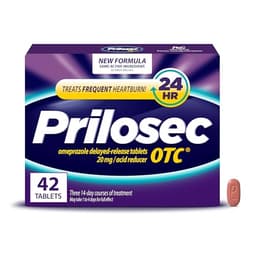
Prilosec OTC (omeprazole)
Best For
Frequent heartburn (2+ episodes a week) or diagnosed GERD needing daily control
Works In
1-4 days for full effect, with a 14-day course for complete symptom control
Price
$17.98
$0.43 / count
Pros
- ✓Strongest and most sustained acid suppression of the OTC options, per pooled trial data
- ✓One pill a day, taken before breakfast, is enough for most people
- ✓Widely available OTC 14-day course designed for self-directed frequent-heartburn use
Cons
- ✗Not for immediate relief — takes days to reach full effect
- ✗OTC labeling caps use at 14 days every 4 months without a doctor's guidance
- ✗Long-term daily use should be discussed with a physician rather than self-continued indefinitely
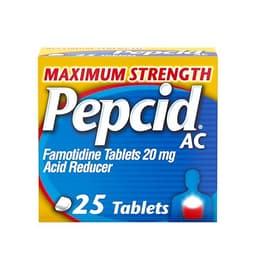
Pepcid AC Maximum Strength (famotidine 20 mg)
Best For
Fast, as-needed relief and nighttime breakthrough symptoms
Works In
About 1 hour, lasting 10-12 hours
Price
$10.98
$0.44 / count
Pros
- ✓Meaningfully faster onset than any PPI — usable before a known trigger meal
- ✓Reasonable option to pair with a PPI for nighttime acid breakthrough
- ✓Long track record and generally well tolerated across ages
Cons
- ✗Less complete acid suppression than PPIs in head-to-head healing trials
- ✗Not the strongest option for esophagitis that needs to heal, versus symptom control alone
- ✗Twice-daily dosing needed for continuous coverage rather than once-daily
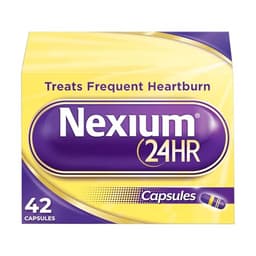
Nexium 24HR (esomeprazole)
Best For
Frequent heartburn not fully controlled by omeprazole, or a preferred PPI formulation
Works In
1-4 days for full effect, similar to omeprazole
Price
$25.28
$0.60 / count
Pros
- ✓Same drug class and comparable trial-supported efficacy to omeprazole for healing and symptom relief
- ✓A reasonable alternative to try if omeprazole hasn't fully resolved symptoms at an adequate dose
- ✓Once-daily dosing before the first meal of the day
Cons
- ✗More expensive than Prilosec OTC for a similar mechanism and comparable outcomes in most patients
- ✗Not established as clearly superior to omeprazole for typical GERD — mainly useful as an alternative to try
- ✗Carries the same long-term-use cautions as any other PPI
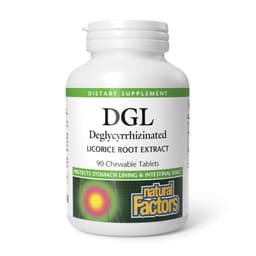
DGL Licorice Chewables
Best For
Mild, occasional symptoms as a non-drug adjunct, not a replacement for PPIs or H2 blockers in confirmed GERD
Works In
Variable; typically used before meals
Price
$13.27
$0.15 / count
Pros
- ✓Deglycyrrhizinated licorice removes the compound responsible for licorice's blood-pressure-raising effect
- ✓Can be used alongside an H2 blocker or PPI without a known interaction
- ✓A reasonable first step for mild, infrequent symptoms before escalating to a drug therapy
Cons
- ✗Lacks the large, rigorous randomized trial base that PPIs and H2 blockers have in GERD specifically
- ✗Not an appropriate substitute for a PPI or H2 blocker in erosive esophagitis or frequent GERD
- ✗Effects are harder to predict and quantify compared with the pharmacologic options above
Amazon prices retrieved from the Amazon Product Advertising API on . Prices and availability are accurate as of that time and may change.
For genuinely occasional heartburn — once every week or two, tied to a specific meal or event — a calcium carbonate or magnesium hydroxide antacid (Tums and similar) taken as needed is often all that's necessary, and doesn't require picking between the products above at all.
Lifestyle Changes That Actually Help
Medication addresses the chemistry of reflux, but several lifestyle factors influence how often and how severely it happens in the first place, and the evidence behind them varies more than marketing copy usually admits.
Weight loss has among the better-supported evidence of any lifestyle intervention. A large cohort study of over 10,000 women found that increasing body-mass index was associated with a graded increase in reflux symptoms even within the normal weight range, and that women who lost weight saw a corresponding reduction in symptom frequency PMID: 16738270. A smaller prospective study specifically testing intentional weight loss in overweight patients with reflux symptoms found an independent symptom benefit from weight loss that held up after controlling for other dietary changes PMID: 10365891. If you're carrying excess weight and dealing with frequent reflux, this is one of the few non-drug changes with real trial support behind it — though it's a gradual intervention, not a quick fix.
Head-of-bed elevation helps specifically with nighttime and lying-down symptoms, by using gravity to reduce how easily stomach contents move upward while supine. A randomized single-blind trial that assigned patients to sleep with the head of the bed raised versus their usual flat position found meaningful improvement in nighttime reflux symptoms and quality-of-life scores in the elevated group PMID: 32229033. Raising the actual head of the bed frame (with blocks under the legs, or a wedge under the mattress) works better than just stacking pillows, since extra pillows tend to bend the body at the waist rather than elevating the whole upper body.
Meal timing matters for a related reason — lying down with a full stomach makes reflux more likely regardless of what you ate. Avoiding meals within two to three hours of lying down, and eating smaller portions rather than large ones, are both commonly recommended and physiologically reasonable, though the trial evidence specifically isolating meal timing is thinner than for weight loss or bed elevation.
Trigger foods and other individual factors — a review of lifestyle measures in GERD found that the evidence for broadly recommending trigger-food avoidance, caffeine restriction, or alcohol restriction across all patients is weaker and less consistent than for weight loss and bed elevation, in part because trigger sensitivity is genuinely individual PMID: 25956834. Rather than eliminating every commonly cited trigger up front, it's usually more useful to keep a brief symptom log for a couple of weeks and identify which of your own foods and habits actually correlate with symptoms.
Quitting smoking and reducing alcohol intake are reasonable general-health recommendations that plausibly help reflux by other mechanisms as well, even where GERD-specific trial data is limited.
How Long Is It Safe to Take a PPI?
PPIs are considered to have a favorable overall safety profile, and the OTC labeling on Prilosec and Nexium reflects that — a standard 14-day course is meant to be self-directed, with re-treatment as needed roughly every four months without medical supervision. Longer-term, prescription-strength daily use is common for diagnosed GERD, but it's worth knowing what the long-term data shows.
A review of long-term PPI use found associations with modestly increased fracture risk with prolonged use, along with reduced absorption of certain nutrients — calcium, vitamin B12, iron, and magnesium — that depend partly on stomach acid for normal uptake PMID: 20882439. These are generally small, population-level effects rather than a reason for panic if you've taken a PPI for a few months, but they're the basis for the general recommendation to use the lowest effective dose for the shortest duration that controls your symptoms.
Because of this, an American Gastroenterological Association clinical practice update on de-prescribing PPIs recommends that clinicians periodically reassess whether ongoing PPI therapy is still necessary, and offers a structured approach to tapering rather than abruptly stopping — since stopping a PPI suddenly after prolonged use can trigger temporary rebound acid hypersecretion that feels like the reflux is worse than before PMID: 35183361. If you've been on a daily PPI for months and want to step down, a reasonable approach (best done with your doctor if you have diagnosed GERD or esophagitis) is gradually reducing dose or frequency, or switching to an as-needed H2 blocker or antacid for breakthrough symptoms, rather than stopping cold.
Red Flags: When to See a Doctor Instead of Self-Treating
Most heartburn is exactly what it looks like, and responds to the options above. But a smaller set of symptoms warrant medical evaluation rather than another round of over-the-counter treatment, because they can signal a complication of reflux or an entirely different condition:
- Trouble or pain swallowing (dysphagia or odynophagia), which can indicate esophageal narrowing, inflammation, or, rarely, something requiring more urgent workup.
- Unintended weight loss alongside reflux symptoms.
- Signs of GI bleeding — vomiting blood, or stools that are black, tarry, or maroon-colored.
- Chest pain, especially pain that's crushing, radiates to the arm or jaw, or comes with shortness of breath, sweating, or dizziness. Heartburn and cardiac chest pain can feel similar, and ruling out a cardiac cause always takes priority — when in doubt, this warrants emergency evaluation, not an antacid.
- Heartburn that persists despite a full course of OTC treatment, or that keeps coming back as soon as you stop treating it.
- New reflux symptoms starting after age 60, or a family history relevant to esophageal or stomach conditions.
None of this is meant to be alarming for the common case of run-of-the-mill heartburn — it's simply the line where self-treatment should hand off to a proper medical evaluation, which may include endoscopy or other testing your doctor can guide you through.
Frequently Asked Questions
What's the difference between heartburn and GERD? Heartburn is the symptom; GERD is the diagnosis given when reflux happens often enough — generally twice a week or more — or is severe enough to cause esophageal damage, regardless of symptom frequency.
Which works better for GERD: an H2 blocker or a PPI? PPIs like omeprazole and esomeprazole show stronger healing and symptom-control results than H2 blockers like famotidine in pooled trial data, making them the better choice for frequent reflux, while H2 blockers act faster and suit occasional or breakthrough symptoms.
How long does famotidine (Pepcid) take to work? Its acid-suppressing effect starts within about an hour, peaks at one to three hours, and lasts roughly 10 to 12 hours.
Is it safe to take a PPI long-term? PPIs are generally well tolerated, but prolonged daily use has been linked to modestly higher fracture risk and reduced absorption of some nutrients, so most guidance favors the lowest effective dose for the shortest necessary duration, with periodic reassessment.
What lifestyle changes actually help acid reflux? Weight loss (if overweight) and elevating the head of the bed have the most consistent supporting evidence; avoiding meals close to bedtime is also reasonable, while individual trigger-food avoidance is more variable person to person.
When should I see a doctor about heartburn instead of just taking an antacid? See a doctor for difficulty swallowing, unintended weight loss, signs of GI bleeding, chest pain that could be cardiac, or heartburn that doesn't respond to a full course of OTC treatment.
References
- Maret-Ouda J, Markar SR, Lagergren J. Gastroesophageal Reflux Disease: A Review. JAMA. 2020;324(24):2536-2547. PMID: 33351048.
- Chremos AN. Clinical pharmacology of famotidine: a summary. Journal of Clinical Gastroenterology. 1987;9(Suppl 2):7-12. PMID: 2887616.
- Chiba N, De Gara CJ, Wilkinson JM, Hunt RH. Speed of healing and symptom relief in grade II to IV gastroesophageal reflux disease: a meta-analysis. Gastroenterology. 1997;112(6):1798-1810. PMID: 9178669.
- van Pinxteren B, Numans ME, Lau J, de Wit NJ, Hungin AP, Bonis PA. Short-term treatment of gastroesophageal reflux disease. Journal of General Internal Medicine. 2003;18(9):755-763. PMID: 12950485.
- van Pinxteren B, Numans ME, Bonis PA, Lau J. Short-term treatment with proton pump inhibitors, H2-receptor antagonists and prokinetics for gastro-oesophageal reflux disease-like symptoms and endoscopy negative reflux disease. Cochrane Database of Systematic Reviews. 2000;(2):CD002095. PMID: 10796857.
- Jacobson BC, Somers SC, Fuchs CS, Kelly CP, Camargo CA Jr. Body-mass index and symptoms of gastroesophageal reflux in women. New England Journal of Medicine. 2006;354(22):2340-2348. PMID: 16738270.
- Fraser-Moodie CA, Norton B, Gornall C, Magnago S, Weale AR, Holmes GK. Weight loss has an independent beneficial effect on symptoms of gastro-oesophageal reflux in patients who are overweight. Scandinavian Journal of Gastroenterology. 1999;34(4):337-340. PMID: 10365891.
- Villamil Morales IM, Gallego Ospina DM, Otero Regino WA. Impact of head of bed elevation in symptoms of patients with gastroesophageal reflux disease: a randomized single-blind study (IBELGA). Gastroenterologia y Hepatologia. 2020;43(6):310-321. PMID: 32229033.
- Ness-Jensen E, Hveem K, El-Serag H, Lagergren J. Lifestyle Intervention in Gastroesophageal Reflux Disease. Clinical Gastroenterology and Hepatology. 2016;14(2):175-182. PMID: 25956834.
- Ito T, Jensen RT. Association of long-term proton pump inhibitor therapy with bone fractures and effects on absorption of calcium, vitamin B12, iron, and magnesium. Current Gastroenterology Reports. 2010;12(6):448-457. PMID: 20882439.
- Targownik LE, Fisher DA, Saini SD. AGA Clinical Practice Update on De-Prescribing of Proton Pump Inhibitors: Expert Review. Gastroenterology. 2022;162(4):1334-1342. PMID: 35183361.