If you're shopping for the best prebiotic supplement, you'll find labels using one word for very different ingredients. Inulin, GOS, guar gum, resistant starch and wheat dextrin are all sold as prebiotics. They behave differently in your gut, and they differ a lot in how much gas they cause. This guide explains what a prebiotic actually is and what human trials show for each type. It then ranks the few products we'd consider, with the most weight on tolerability, because the best prebiotic is the one you can take daily without feeling bloated. If you're new to how gut bacteria work, start with our gut microbiome guide.
This article is for general education and isn't a substitute for advice from your own doctor.
Quick Answer
For most people, partially hydrolyzed guar gum (PHGG, sold as Sunfiber) is the best prebiotic supplement to start with. It's gentle, raised bifidobacteria in a placebo-controlled trial, and eased bloating in an IBS trial. Inulin and GOS have more bifidobacteria data but cause more gas, especially with IBS. Start low and build up over 2 to 4 weeks.
What Is a Prebiotic, Exactly?
In 2017, an expert panel from the International Scientific Association for Probiotics and Prebiotics (ISAPP) defined a prebiotic as "a substrate that is selectively utilized by host microorganisms conferring a health benefit." The panel kept two requirements. The effect has to work through your microbes, and a health benefit has to be documented before something counts as a prebiotic PMID: 28611480.
That second requirement matters because "feeds your good bacteria" is easy to show and "makes you healthier" is not. The easy part is well established. A meta-analysis of 64 randomized trials with 2,099 healthy adults found that fiber supplements increased Bifidobacterium (standardized mean difference 0.64) and Lactobacillus. Fructans (inulin and FOS) and galacto-oligosaccharides (GOS) drove most of that effect. The same analysis found no change in overall microbial diversity PMID: 29757343. So prebiotics dependably shift a few bacterial groups. Whether that shift improves how you feel is a separate question, and the trials below give mixed answers.
Not every fiber is a prebiotic. A fiber has to be fermented to feed bacteria, and fermentation is also what makes gas. Psyllium, the fiber in Metamucil, is a useful contrast. It resists fermentation and holds water all the way through the colon. That makes it a reliable stool softener, but not a classic prebiotic. A clinical review found that readily fermented fibers had no laxative effect in well-controlled studies PMID: 27680987.
Prebiotic vs Probiotic vs Synbiotic: Which Is Better?
These three terms describe different approaches:
- Probiotics are live microbes you swallow. Benefits depend on the specific strain and the condition. Our evidence-based probiotic rankings cover which ones have trial support.
- Prebiotics feed the microbes you already have. They add no new species. They shift the balance of your existing community.
- Synbiotics combine the two. ISAPP's 2020 definition is "a mixture comprising live microorganisms and substrate(s) selectively utilized by host microorganisms that confers a health benefit on the host." A "synergistic" synbiotic is one whose substrate is designed specifically for the microbes it's paired with PMID: 32826966. Our Seed vs Ritual comparison looks at two popular products marketed this way.
Neither approach is better for everyone. A prebiotic is cheap and works with the microbes already in your gut, but it can cause gas. A probiotic avoids fermentation symptoms, but its effects are strain-specific and often don't last after you stop. If your main goal is regular bowel movements rather than feeding bacteria, a non-fermented fiber may be the more direct tool.
The Main Types of Prebiotic Fiber, Compared
| Inulin / FOS | GOS | PHGG | Resistant starch | Wheat dextrin | Psyllium (contrast) | |
|---|---|---|---|---|---|---|
| Doses in the trials we cite | 5-15 g/day | 2.8-7 g/day | 6 g/day | Varies; not standardized | Few human prebiotic trials | Not used as a prebiotic |
| Gas and bloating risk | Highest; rises with dose | Moderate; tends to settle in about 3 weeks | Low | Moderate | Not well studied in humans | Low (minimally fermented) |
| IBS tolerance | Poor: worsened flatulence in an IBS meta-analysis | Mixed: helped at 3.5 g/day in one small trial | Good: improved bloating vs placebo | Little IBS data | Little IBS data | Soluble fiber; see our fiber guide |
| Bifidobacteria increase | Consistent | Consistent | Shown in one trial | In most people | Unproven in humans | Not its role |
| Best for | Budget bifidobacteria boost if gas isn't an issue | Bifidobacteria support; not linked here | Sensitive guts, IBS-type bloating | Food sources (cooled potatoes, green bananas) | Invisible fiber top-up | Constipation |
Inulin and FOS
Inulin and its shorter-chain form, oligofructose (also called FOS), come from plants such as chicory root. They have the most consistent bifidobacteria data, and some trials show a small effect on bowel habits. In a randomized, placebo-controlled crossover trial in 44 healthy adults with constipation, 12 g a day of chicory inulin for 4 weeks increased median stool frequency from 3.0 to 4.0 per week and softened stools PMID: 27492975. In 97 adults with infrequent bowel movements and a low-fiber diet, oligofructose was increased from 5 g to 10 g to 15 g a day, with 4 weeks at each dose. Stool frequency was significantly higher than placebo only at 15 g, and GI sensations stayed low PMID: 29258261. Researchers from the ingredient's maker were among the authors of both trials. The review cited above, whose first author was at the company that makes Metamucil, argues that fermented fibers don't have a real laxative effect. So treat inulin's constipation benefit as modest.
The downside of inulin is gas. In a crossover study of 26 healthy adults, native inulin at up to 10 g and oligofructose at up to 5 g were well tolerated. A 10 g dose of oligofructose substantially increased GI symptoms, mostly flatulence followed by bloating PMID: 20497775.
GOS (Galacto-oligosaccharides)
In a 12-week trial in 44 people with IBS, a GOS prebiotic increased fecal bifidobacteria at both 3.5 g and 7 g a day. The lower dose also improved stool consistency, flatulence, bloating and a global symptom score. The 7 g dose improved the global score and anxiety PMID: 19053980. GOS shows how gas can settle over time. When 20 healthy adults took 2.8 g a day, daily gas passages rose from 12 to 18 at first. After 3 weeks they dropped to 11, suggesting the gut bacteria adapted PMID: 28078750. In a small trial in people with functional gut symptoms and flatulence, 4 weeks of a GOS supplement and 4 weeks of a low-FODMAP diet both reduced symptoms. Bifidobacteria rose in the GOS group and fell in the low-FODMAP group. Relief lasted 2 weeks after stopping the prebiotic but ended right away after stopping the diet PMID: 29964041.
We don't link a GOS product. The best-known one (Bimuno) is sold on Amazon only by third-party resellers, and we only link listings sold by the brand itself or by Amazon.
PHGG (Partially Hydrolyzed Guar Gum)
PHGG is guar gum broken into shorter chains so it dissolves clear without thickening. Its main advantage is tolerability. In a 12-week double-blind trial, 121 people with IBS were randomized and 108 were analyzed. Those taking 6 g a day had better bloating scores than those taking placebo, and the benefit lasted at least 4 weeks after stopping. PHGG didn't change other IBS symptoms, overall severity or quality of life, and it caused no significant side effects PMID: 26855665. In a 3-month placebo-controlled trial in 44 healthy adults with loose stools, PHGG normalized stool form and increased Bifidobacterium without changing stool frequency. Several authors worked for the company that makes the ingredient PMID: 31509971.
Resistant Starch and Wheat Dextrin
Resistant starch is starch that escapes digestion and gets fermented in the colon. Responses to it vary widely from person to person. In 174 healthy young adults, 2 weeks of resistant potato starch produced the largest increase in short-chain fatty acids, including butyrate. Whether someone responded depended on which bacteria they already had. Resistant maize starch and inulin did not significantly raise butyrate PMID: 30696735. We haven't vetted a resistant starch supplement, so none is ranked.
Wheat dextrin, the fiber in Benefiber, is fermentable but doesn't form a gel. We found little human research testing it as a prebiotic, and the review above found no laxative effect for fermented, non-gelling fibers like it PMID: 27680987.
Psyllium: A Fiber, Not a Classic Prebiotic
If constipation is your real problem, psyllium is usually a better choice than any prebiotic. It is minimally fermented, so it holds water in the stool instead of turning into gas. We rank it first for constipation in our fiber supplement guide. It isn't ranked below because it isn't a classic prebiotic.
Best Prebiotic Supplements: Our Rankings
We ranked these by tolerability first, then by how closely each product matches an ingredient and dose tested in human trials. No GOS or resistant starch product made the list because none met our listing rules.
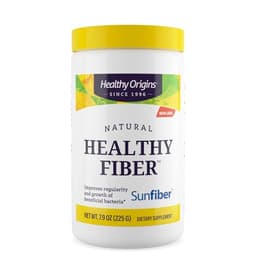
Healthy Origins Healthy Fiber (Sunfiber PHGG)
Best For
A gentle first prebiotic, especially with IBS-type bloating
Works In
Bloating benefit measured over 12 weeks
Price
$18.99
$2.40 / ounce
Pros
- ✓One scoop provides 6 g of fiber, per the brand, which matches the 6 g/day PHGG dose that improved bloating vs placebo in a 12-week IBS trial
- ✓Single ingredient, unflavored, and dissolves clear, so you get the studied fiber with nothing added
- ✓PHGG increased Bifidobacterium and normalized loose stools vs placebo in a 3-month trial
Cons
- ✗In the IBS trial it improved bloating but not overall IBS severity or quality of life
- ✗Employees of the ingredient maker co-authored the microbiota trial
- ✗Fermented fibers generally don't match psyllium for relieving constipation
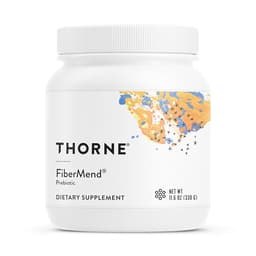
Thorne FiberMend (PHGG Blend)
Best For
People who want PHGG plus a mix of other plant fibers
Works In
Bloating benefit measured over 12 weeks
Price
$45.00
$3.88 / ounce
Pros
- ✓8 g of PHGG per scoop, above the 6 g/day dose that helped bloating in IBS
- ✓Also contains rice bran, larch arabinogalactan and pectin for a broader fiber mix
- ✓NSF Contents Certified, according to its Amazon listing
Cons
- ✗Costs far more than plain PHGG for the same main ingredient
- ✗The added fibers and green tea extract weren't part of the PHGG trials
- ✗A full scoop is more than the studied dose, so sensitive users should start with a partial scoop
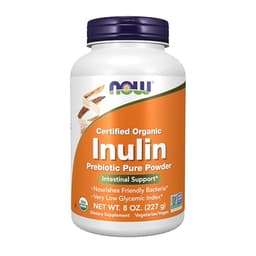
NOW Organic Inulin Powder
Best For
Low-cost bifidobacteria support for people without IBS or bloating
Works In
Stool frequency changes measured over about 4 weeks
Price
$9.90
$1.24 / ounce
Pros
- ✓Fructans such as inulin are among the most consistent bifidobacteria-boosting fibers in a meta-analysis of 64 trials
- ✓12 g/day of inulin modestly increased stool frequency in adults with constipation
- ✓Organic, single-ingredient, and the cheapest option here
Cons
- ✗The gassiest type: 10 g of oligofructose clearly increased GI symptoms in healthy adults
- ✗Inulin-type fructans worsened flatulence in an IBS meta-analysis, and fructans are high-FODMAP
- ✗The trials used specific branded inulins, not this product

Benefiber (Wheat Dextrin)
Best For
An invisible fiber top-up that stirs into any drink
Works In
Not established for prebiotic outcomes
Price
$22.98
$1.31 / ounce
Pros
- ✓Dissolves clear and tasteless in coffee, water, or food
- ✓Unflavored and easy to take daily without planning around meals or texture
- ✓Inexpensive and widely available
Cons
- ✗Almost no human trials test wheat dextrin as a prebiotic, so microbiome benefits are unproven
- ✗Fermentable and non-gelling, with no laxative effect in well-controlled research
- ✗Wheat-derived, so not suitable for people avoiding wheat
Amazon prices retrieved from the Amazon Product Advertising API on . Prices and availability are accurate as of that time and may change.
Why this order. PHGG ranks first because it has the best tolerability evidence, including in IBS, and Healthy Origins supplies it as a single ingredient at the studied dose. Thorne FiberMend uses the same core fiber but costs more and adds untested ingredients. Its 3.8 matches our fiber ranking. Inulin has stronger bifidobacteria data than either PHGG product, but it causes the most gas and fits poorly with IBS, which pulls its score down. Benefiber stays on the list because it's gentle and convenient. It ranks last because there's so little prebiotic-specific evidence for wheat dextrin, and its 3.6 matches our fiber ranking.
Best Prebiotic for IBS: Why the Type Matters
If you have IBS, prebiotics are a mixed bag. A meta-analysis of 11 randomized trials with 729 patients found no overall benefit. Global response was 54% on prebiotics and 63% on placebo, and there was no improvement in pain, bloating or quality of life. By type, the picture differed. Inulin-type fructans made flatulence worse, while non-inulin prebiotics and doses of 6 g a day or less improved it slightly. Prebiotics did increase bifidobacteria, but no included trial was at low risk of bias overall PMID: 30949662. In an older trial, 96 IBS patients took 20 g of FOS a day. Symptoms worsened early on, and by 12 weeks the results matched placebo, with 58% improved on FOS vs 65% on placebo PMID: 11101487.
The practical takeaway is to favor PHGG, keep the dose at or below 6 g, and treat inulin and FOS with caution. Fructans and GOS are the "oligosaccharides" in FODMAP. If you're sensitive to FODMAPs, or you're in the elimination phase of the low-FODMAP diet, inulin and FOS products are likely to backfire. For the treatments with the strongest IBS evidence, see our IBS treatments guide.
Do Prebiotics Cause Bloating?
Yes, often at first. A review of prebiotic tolerance found that gas and bloating are the typical side effects, while abdominal pain and diarrhea mostly occur with large doses. Large daily doses have also been linked to more reflux. Tolerance depends on the dose and on individual sensitivity, probably including IBS or reflux, and may improve with regular use PMID: 15220662. The GOS study above showed that adaptation: gas passages returned to baseline within 3 weeks PMID: 28078750. If bloating is your main complaint, a prebiotic may not be the first thing to try. Our guide to fixing bloating walks through the more common causes.
How to Start: A Prebiotic Dose Ramp-Up Schedule
The trials above suggest a sensible approach: start low, increase every week or so, and give gas a few weeks to settle. The oligofructose trial raised the dose in steps, from 5 g to 10 g to 15 g PMID: 29258261. In healthy adults, symptoms stayed mild at up to 10 g of inulin or 5 g of oligofructose PMID: 20497775.
- PHGG: In week 1, take about half a scoop (roughly 3 g) a day. From week 2, move to a full scoop (6 g) if you feel fine. For Thorne FiberMend, start with a partial scoop and work up.
- Inulin: In week 1, take 2 to 3 g a day. Add 2 to 3 g each week, and stay at or below about 10 g unless you're comfortable. If you're prone to gas, stop at 5 g.
- If gas flares: Go back to the last dose that felt fine, stay there for another week, then try again. Regular daily use is what let the gut adapt in the GOS study.
- Timing: We found no trials comparing morning and evening doses. Take it at a consistent time, and with a meal if that feels better. Mix powders into water or another drink.
Give any prebiotic 4 weeks at a steady dose before you judge it. The trials in this article ran for 3 to 12 weeks.
Who Should Avoid Prebiotics or Be Cautious
- IBS: Choose PHGG over inulin or FOS, and ramp up slowly (see above).
- Low-FODMAP elimination phase: Inulin, FOS and GOS work against the point of that phase. Wait until you're reintroducing foods.
- Suspected or diagnosed SIBO: We found no good trials of prebiotic supplements in SIBO. Adding fermentable fiber while you have bloating from bacterial overgrowth is worth discussing with your clinician first. Our SIBO guide covers diagnosis and treatment.
- Frequent reflux: Large daily doses of prebiotics have been linked to more reflux, so keep doses modest.
- Wheat avoidance: Skip Benefiber, which is made from wheat dextrin.
Prebiotic Foods: Get Some From Your Plate
You can get most of these fibers from food. Onions, garlic, leeks, asparagus, wheat and chicory contain fructans. Beans, lentils and chickpeas contain GOS. Cooked-and-cooled potatoes and rice, oats and slightly green bananas contain resistant starch. Food brings other fibers and nutrients along with the prebiotics, and eating a mix of plant foods is a lower-cost first step than a supplement. The same FODMAP caution applies: many of these foods trigger symptoms in people with IBS.
What the Evidence Doesn't Show
Evidence that prebiotics improve gut health in a way you'd feel is limited. They reliably increase bifidobacteria, but fiber trials haven't shown a change in overall microbial diversity PMID: 29757343. Responses vary a lot between people, depending on the bacteria they already have PMID: 30696735. Many trials are small, short, or funded by ingredient makers. A prebiotic is a reasonable low-risk experiment. It isn't a proven treatment for any disease.
When to See a Doctor
Don't self-treat with prebiotics if you have blood in your stool or black stools, unintended weight loss, persistent diarrhea, or severe or worsening abdominal pain. See a doctor too for a new and lasting change in bowel habits, or for symptoms that wake you at night. Talk to your clinician before starting if you have a history of bowel obstruction, recent gut surgery, or inflammatory bowel disease, or if your symptoms haven't been diagnosed.
Frequently Asked Questions
What is the best prebiotic supplement? For most people, PHGG is the best place to start. In a 12-week placebo-controlled trial, 6 g a day improved bloating in people with IBS without significant side effects, and in another trial it increased Bifidobacterium. Inulin and GOS have more data showing they increase bifidobacteria, but they tend to cause more gas.
Prebiotic vs probiotic: which is better? Neither is better across the board. A prebiotic is a fiber or other substance that your existing gut microbes use in a way that benefits health, while a probiotic adds live microbes. Probiotic benefits depend on the specific strain and condition. Prebiotics reliably increase bifidobacteria, but proof that this improves symptoms is limited. A synbiotic combines live microbes with a substrate they can use.
PHGG vs inulin: which is better? PHGG is usually better tolerated, and it's the better choice if you have IBS or bloating. Inulin has more consistent evidence for increasing bifidobacteria and modest evidence for increasing stool frequency, but it produces more gas. In an IBS meta-analysis, inulin-type fructans made flatulence worse.
Do prebiotics cause bloating? They can, especially at the start and at higher doses, because gut bacteria ferment them into gas. Gas and bloating are the most common side effects, while pain and diarrhea mostly occur with large doses. In one study, extra gas from a GOS prebiotic faded after about 3 weeks of daily use. Starting low and increasing slowly helps.
What is the best prebiotic for IBS? Evidence favors PHGG. A meta-analysis of 11 trials found that prebiotics as a group didn't improve overall IBS symptoms, and inulin-type fructans worsened flatulence, while PHGG at 6 g a day improved bloating in a 12-week trial. Some people with IBS also react to inulin, FOS, and GOS because these are FODMAPs.
When is the best time to take prebiotic fiber? We found no trials comparing different times of day, so pick a time you can stick with daily. Many people take it with a meal, which may be easier on the stomach. What the trials do support is consistency and a gradual dose increase, since gas tends to settle after a few weeks of regular use.
References
- Gibson GR, Hutkins R, Sanders ME, et al. Expert consensus document: The International Scientific Association for Probiotics and Prebiotics (ISAPP) consensus statement on the definition and scope of prebiotics. Nature Reviews Gastroenterology & Hepatology. 2017;14(8):491-502. PMID: 28611480.
- So D, Whelan K, Rossi M, et al. Dietary fiber intervention on gut microbiota composition in healthy adults: a systematic review and meta-analysis. American Journal of Clinical Nutrition. 2018;107(6):965-983. PMID: 29757343.
- McRorie JW, Chey WD. Fermented Fiber Supplements Are No Better Than Placebo for a Laxative Effect. Digestive Diseases and Sciences. 2016;61(11):3140-3146. PMID: 27680987.
- Swanson KS, Gibson GR, Hutkins R, et al. The International Scientific Association for Probiotics and Prebiotics (ISAPP) consensus statement on the definition and scope of synbiotics. Nature Reviews Gastroenterology & Hepatology. 2020;17(11):687-701. PMID: 32826966.
- Micka A, Siepelmeyer A, Holz A, et al. Effect of consumption of chicory inulin on bowel function in healthy subjects with constipation: a randomized, double-blind, placebo-controlled trial. International Journal of Food Sciences and Nutrition. 2017;68(1):82-89. PMID: 27492975.
- Buddington RK, Kapadia C, Neumer F, et al. Oligofructose Provides Laxation for Irregularity Associated with Low Fiber Intake. Nutrients. 2017;9(12):1372. PMID: 29258261.
- Bonnema AL, Kolberg LW, Thomas W, et al. Gastrointestinal tolerance of chicory inulin products. Journal of the American Dietetic Association. 2010;110(6):865-868. PMID: 20497775.
- Silk DB, Davis A, Vulevic J, et al. Clinical trial: the effects of a trans-galactooligosaccharide prebiotic on faecal microbiota and symptoms in irritable bowel syndrome. Alimentary Pharmacology & Therapeutics. 2009;29(5):508-518. PMID: 19053980.
- Mego M, Manichanh C, Accarino A, et al. Metabolic adaptation of colonic microbiota to galactooligosaccharides: a proof-of-concept-study. Alimentary Pharmacology & Therapeutics. 2017;45(5):670-680. PMID: 28078750.
- Huaman JW, Mego M, Manichanh C, et al. Effects of Prebiotics vs a Diet Low in FODMAPs in Patients With Functional Gut Disorders. Gastroenterology. 2018;155(4):1004-1007. PMID: 29964041.
- Niv E, Halak A, Tiommny E, et al. Randomized clinical study: Partially hydrolyzed guar gum (PHGG) versus placebo in the treatment of patients with irritable bowel syndrome. Nutrition & Metabolism. 2016;13:10. PMID: 26855665.
- Yasukawa Z, Inoue R, Ozeki M, et al. Effect of Repeated Consumption of Partially Hydrolyzed Guar Gum on Fecal Characteristics and Gut Microbiota: A Randomized, Double-Blind, Placebo-Controlled, and Parallel-Group Clinical Trial. Nutrients. 2019;11(9):2170. PMID: 31509971.
- Baxter NT, Schmidt AW, Venkataraman A, et al. Dynamics of Human Gut Microbiota and Short-Chain Fatty Acids in Response to Dietary Interventions with Three Fermentable Fibers. mBio. 2019;10(1):e02566-18. PMID: 30696735.
- Wilson B, Rossi M, Dimidi E, et al. Prebiotics in irritable bowel syndrome and other functional bowel disorders in adults: a systematic review and meta-analysis of randomized controlled trials. American Journal of Clinical Nutrition. 2019;109(4):1098-1111. PMID: 30949662.
- Olesen M, Gudmand-Hoyer E. Efficacy, safety, and tolerability of fructooligosaccharides in the treatment of irritable bowel syndrome. American Journal of Clinical Nutrition. 2000;72(6):1570-1575. PMID: 11101487.
- Marteau P, Seksik P. Tolerance of probiotics and prebiotics. Journal of Clinical Gastroenterology. 2004;38(6 Suppl):S67-S69. PMID: 15220662.