If you're looking for the best magnesium for constipation, the form matters more than the brand. Oxide, citrate, and glycinate all say magnesium on the label, but some stay in the bowel and pull water into the stool, while others are absorbed so efficiently that they do little for bowel movements. This guide ranks four widely available magnesium supplements by the evidence, and covers dosing and who should avoid magnesium. For the full range of options, including fiber, MiraLAX, and stimulant laxatives, see our constipation relief guide.
This article is for general education and isn't a substitute for advice from your own doctor.
Quick Answer
Magnesium oxide is the best-evidenced magnesium for constipation, with placebo-controlled trials and a conditional recommendation in the 2023 AGA-ACG guideline. Magnesium citrate is a reasonable alternative, while magnesium glycinate has little laxative effect. Stay within label doses, and check with a doctor first if you have kidney disease.
What Is the Best Magnesium for Constipation?
Magnesium oxide has the strongest evidence. The 2023 joint AGA-ACG guideline on chronic idiopathic constipation reviewed magnesium oxide alongside fiber, osmotic and stimulant laxatives, and prescription drugs. It gave magnesium oxide a conditional recommendation, the same level as fiber, lactulose, and senna, while strong recommendations went to polyethylene glycol, sodium picosulfate, and three prescription drugs PMID: 37204227.
A systematic review of over-the-counter constipation products similarly found moderate evidence (grade B) for magnesium salts, with good evidence (grade A) only for polyethylene glycol and senna PMID: 33767108. Magnesium oxide is a legitimate option, then, but not the most proven constipation treatment overall.
How Magnesium Works on Your Bowels
Magnesium's laxative effect is mostly osmotic: magnesium that isn't absorbed stays in the intestine and draws water in, softening the stool. Magnesium oxide depends on stomach acid for this. It converts to magnesium chloride in the stomach, then to magnesium bicarbonate in the intestine, which draws water into the gut PMID: 24820768. That creates a trade-off between absorption and laxative effect:
- Magnesium oxide barely dissolves. In a classic comparison it was only 43% soluble even at peak stomach-acid levels, while citrate was far more soluble, and in volunteers citrate raised urinary magnesium much more than oxide, a sign of greater absorption PMID: 2407766. Less absorption leaves more magnesium in the bowel to hold water.
- Magnesium citrate absorbs better. In a 60-day randomized trial in 46 healthy adults, citrate produced the highest blood magnesium levels, and both citrate and an amino-acid chelate were absorbed better than oxide PMID: 14596323. It's still an osmotic salt, so it can loosen stools.
- Magnesium glycinate is an amino-acid chelate marketed for high absorption. We found no clinical trials testing it for constipation, and by the mechanism above, a well-absorbed form leaves less magnesium in the bowel. That makes it a poor choice if your goal is to move your bowels.
Diarrhea is the classic side effect: it was the limiting factor when the US Institute of Medicine set a 350 mg/day upper limit for supplemental magnesium in 1997, though a 2023 review notes most newer trials using 128 to 1,200 mg a day found no significant difference in diarrhea versus controls PMID: 37487817. For constipation, you're aiming for soft, formed stools, not diarrhea.
Fiber works differently, by adding bulk and holding water in the stool. If you're weighing the two, our fiber supplement rankings explain why psyllium is the best-studied fiber.
What the Trials Show for Magnesium Oxide
A placebo-controlled trial in 34 women. Women with mild to moderate chronic constipation took magnesium oxide (0.5 g three times a day) or placebo for 28 days. Overall improvement was reported by 70.6% on magnesium oxide versus 25.0% on placebo. Magnesium oxide also increased spontaneous bowel movements, improved stool form, and shortened colonic transit time, but did not significantly increase complete spontaneous bowel movements, the ones that leave you feeling fully emptied PMID: 31587548.
A three-arm trial in 90 adults. The same group compared magnesium oxide (1.5 g a day), senna (1.0 g a day), and placebo for 28 days. Overall response rates were 68.3% with magnesium oxide, 69.2% with senna, and 11.7% with placebo, with no severe treatment-related adverse events PMID: 32969946. Note that 93% of participants were women, with an average age of 42.
A 2023 meta-analysis. Pooling randomized trials of supplements for chronic constipation, researchers found 68% responded to magnesium oxide versus 19% of controls (relative risk 3.32). Magnesium oxide added 3.72 bowel movements a week and improved stool consistency by 1.14 Bristol scale points PMID: 37243443. Only two magnesium oxide trials were included, so the evidence is consistent but small.
A 2021 review called magnesium oxide convenient, low cost, and safe, but said its use should account for dose, blood magnesium levels, drug interactions, and side effects, especially in older adults and people with kidney impairment PMID: 33525523.
One dose detail matters: the trials used 1.5 g a day of the magnesium oxide compound as a prescription treatment. Magnesium oxide is about 60% magnesium by weight, so that's roughly 900 mg of elemental magnesium. The softgel we rank provides 400 mg, and its label says no more than one a day unless a physician recommends it. Don't try to match trial doses on your own.
Magnesium Forms Compared
| Magnesium oxide | Magnesium citrate | Magnesium glycinate | |
|---|---|---|---|
| Elemental magnesium in our pick | 400 mg per softgel (Nature Made) | 250 mg per 2 softgels (Nature Made); drink powders vary by scoop size | 200 mg per 2 tablets (Doctor's Best) |
| Laxative effect | Yes, supported by placebo-controlled trials and a meta-analysis | Yes as an osmotic salt, but less direct trial evidence for chronic constipation | Minimal; no constipation trials found |
| Absorption | Low | Higher than oxide | Marketed as high; absorbed better than oxide in one trial of amino-acid chelates |
| Best use | Chronic constipation, at the lowest effective label dose | Gentle regularity support, or when a better-absorbed form is wanted | Topping up magnesium without loosening stools |
| Caution | Needs stomach acid, so it may work less well with PPIs or H2 blockers; buildup risk with kidney disease | Loose stools at higher doses; buildup risk with kidney disease | Not a constipation treatment; same kidney and drug-interaction cautions |
Our Rankings
Ratings reflect the evidence for each product's magnesium form in constipation, practical label dosing, and safety, not general benefits such as sleep.

Nature Made Magnesium Oxide Extra Strength 400 mg
Best For
Chronic constipation in adults with healthy kidney function
Works In
Trial benefits were measured over 4 weeks
Price
$21.98
$0.20 / count
Pros
- ✓Magnesium oxide is the only magnesium form with placebo-controlled constipation trials and a meta-analysis showing more bowel movements and softer stools
- ✓Conditionally recommended for chronic idiopathic constipation in the 2023 AGA-ACG guideline
- ✓Once-daily softgel with a clear label limit; 110 softgels last more than three months at one a day
Cons
- ✗The label dose is well below the prescription doses used in trials, so results at one softgel may be more modest
- ✗Needs stomach acid to work well, so the laxative effect may be weaker if you take a PPI or H2 blocker
- ✗Not suitable for people with significant kidney disease without a doctor's approval

Nature Made Magnesium Citrate 250 mg
Best For
People who want a better-absorbed magnesium with a mild loosening effect
Works In
Varies; no chronic-constipation trials of citrate softgels to set expectations
Price
$15.33
$0.13 / count
Pros
- ✓Citrate is more soluble and better absorbed than oxide in comparison studies
- ✓An osmotic magnesium salt, so it can still soften stools, especially as the dose rises toward the label amount
- ✓Two-softgel serving can be split into one softgel to start low
Cons
- ✗Much less direct clinical evidence for chronic constipation than magnesium oxide
- ✗Lower elemental magnesium per serving than the oxide softgel (250 mg per 2 softgels)
- ✗Same kidney and drug-interaction cautions as other magnesium supplements
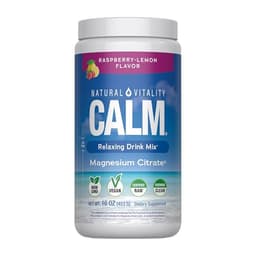
Natural Vitality Calm Magnesium Powder
Best For
People who like a warm drink and want to adjust the dose in small steps
Works In
Varies; no published trials of this product
Price
$18.99
$1.19 / ounce
Pros
- ✓Magnesium carbonate and citric acid form magnesium citrate when mixed with water, according to the brand
- ✓Powder makes it easy to start with a partial scoop and increase gradually
- ✓Doubles as a general magnesium supplement for people who don't like pills
Cons
- ✗No clinical trials of this specific product for constipation
- ✗Serving sizes and magnesium per scoop vary between Calm versions, so read your tub's Supplement Facts
- ✗Costs more per serving of magnesium than the softgels
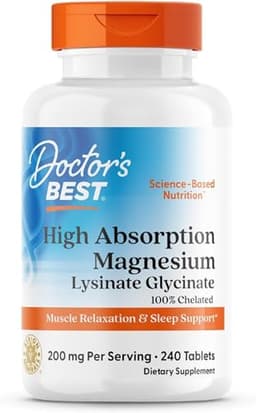
Doctor's Best High Absorption Magnesium Glycinate Lysinate
Best For
Taking magnesium without loosening stools; not for treating constipation
Works In
Not expected to relieve constipation
Price
$23.99
$0.10 / count
Pros
- ✓Chelated form marketed as well absorbed and gentle on the stomach
- ✓A sensible pick if other forms give you loose stools and you want magnesium for other reasons
- ✓200 mg elemental magnesium per 2-tablet serving, so doses are easy to adjust
Cons
- ✗We found no clinical trials of magnesium glycinate for constipation
- ✗Being well absorbed means less magnesium stays in the bowel to soften stool
- ✗Most expensive of our picks
Amazon prices retrieved from the Amazon Product Advertising API on . Prices and availability are accurate as of that time and may change.
How we ranked them. Oxide (4.4) is the only form with placebo-controlled constipation trials, a meta-analysis, and a guideline recommendation, though its label dose is below trial doses. Citrate softgels (4.0) are an osmotic, better-absorbed form with thin direct evidence. Calm (3.7) is also citrate, easy to adjust, but has no product-specific evidence and costs more. Glycinate (2.8) is a fine way to top up magnesium, but the mechanism and the lack of trials point away from it for constipation.
How Much Magnesium to Take for Constipation
Start low, follow the label, and adjust slowly.
- Use the label, not trial doses. The oxide label calls for one 400 mg softgel daily with water and a meal; the citrate label calls for two softgels (250 mg total) daily with a meal.
- Start with less if you're unsure. Begin with one citrate softgel, or a partial serving of powder, as Natural Vitality's directions suggest.
- Aim for soft, formed stools. Cut back if you get diarrhea or cramping. Trial outcomes were judged over four weeks, so give a label dose a few weeks.
- Don't stack magnesium products. Multivitamins, antacids, and sleep supplements often contain magnesium, and the oxide label warns against combining them unless a physician recommends it.
If you want a drink you can adjust by the half-scoop, Calm is the most flexible option we ranked; check your tub's Supplement Facts, since magnesium per serving differs between versions.
If you take an acid reducer
In a patient-records study, people taking an H2 blocker or proton pump inhibitor (PPI) needed higher magnesium oxide doses to control constipation and were less often well controlled at 1,000 mg a day; in the lab, magnesium oxide dissolved poorly at pH 4.5 compared with pH 1.2 PMID: 24820768. In 441 patients starting opioid pain medicine, acid suppressants reversed the laxative action of lower magnesium doses (under 2,000 mg a day) but not higher ones PMID: 27364763. If you take a PPI, a citrate form or a non-magnesium option may be more practical. Our acid reflux and GERD guide covers PPI use.
Is It Safe to Take Magnesium Every Day for Constipation?
For most healthy adults at label doses, magnesium is well tolerated. The main risks are high blood magnesium (hypermagnesemia) and drug interactions.
Kidney function matters most. Among 193 patients on daily magnesium oxide who had blood tests, 16.6% had high serum magnesium and 5.2% had hypermagnesemia; stage 4 chronic kidney disease and higher doses were risk factors, but age alone was not PMID: 31379418. In 320 hospitalized patients prescribed magnesium oxide, 23% developed elevated magnesium, with independent risk factors of reduced kidney function (eGFR 55.4 mL/min or lower), doses of 1,650 mg a day or more, and use for 36 days or longer PMID: 30805197. Those authors recommended periodic blood magnesium monitoring.
Severe cases are rare but serious. A published case describes a 53-year-old woman with normal kidney function who died of hypermagnesemia after regular use of magnesium laxatives; the authors suggest magnesium retained in a constipated gut can keep being absorbed PMID: 29661354. If constipation becomes severe, stop and seek care rather than taking more.
Drug interactions. Magnesium-containing antacids have clinically relevant interactions with tetracycline and fluoroquinolone antibiotics, and a review suggests taking the antacid 4 hours before or 2 hours after them. Bisphosphonate prescribing information carries a similar warning, though quantitative data are lacking PMID: 21942976. Ask your pharmacist how to space magnesium around prescriptions.
Check with your doctor first if you have kidney disease or heart problems, are pregnant, or take several daily medications.
Magnesium for Bloating and IBS-C
Magnesium isn't a bloating treatment. If bloating comes from being backed up, softer stools may help; if it comes from gas or food triggers, see our guide on how to fix bloating. If constipation comes with recurring abdominal pain, you may have IBS-C, and the magnesium trials above didn't enroll people with IBS-C. Our guide to IBS treatments that work covers pain-focused options.
If Magnesium Isn't Right for You
Polyethylene glycol (MiraLAX) has stronger guideline support, psyllium is a gentle daily option (compared in our best fiber supplements guide), and stimulant laxatives have a short-term role. Our constipation relief guide compares them and is the better starting point if kidney disease or your medications rule magnesium out.
When to See a Doctor
See a doctor instead of self-treating if you have blood in the stool or black, tarry stools; unintended weight loss; a new or unexplained change in bowel habits, especially after age 50; severe abdominal pain, a swollen belly, or vomiting; or constipation that doesn't improve after a few weeks of consistent treatment.
Frequently Asked Questions
What is the best magnesium for constipation? Magnesium oxide. In placebo-controlled trials, about 68 to 71 percent of people taking it improved versus 12 to 25 percent on placebo, and the 2023 AGA-ACG guideline conditionally recommends it. Citrate is a reasonable alternative with less direct evidence.
Is magnesium citrate or magnesium oxide better for constipation? Oxide has more trial evidence. Citrate absorbs better but lacks comparable modern constipation trials. Oxide needs stomach acid, so it may work less well with an acid reducer.
Does magnesium glycinate help you poop? Probably not much. Magnesium loosens stool when unabsorbed magnesium holds water in the bowel, glycinate is marketed as well absorbed, and we found no constipation trials of it.
How much magnesium should I take for constipation? Follow the label: one 400 mg Nature Made magnesium oxide softgel daily with a meal, no more unless a physician recommends it. Trials used higher prescription doses under supervision.
Is it safe to take magnesium every day for constipation? Label doses are generally well tolerated by healthy adults. Risk rises with reduced kidney function and higher doses; in one hospital study, 23 percent of patients prescribed magnesium oxide developed high magnesium levels. Ask about periodic blood tests for long-term use.
Can magnesium interact with my medications? Yes. It can reduce absorption of tetracycline and fluoroquinolone antibiotics (take magnesium 4 hours before or 2 hours after), bisphosphonate labels carry a similar warning, and acid reducers can weaken magnesium oxide. Ask your pharmacist about timing.
References
- Chang L, Chey WD, Imdad A, et al. American Gastroenterological Association-American College of Gastroenterology Clinical Practice Guideline: Pharmacological Management of Chronic Idiopathic Constipation. American Journal of Gastroenterology. 2023;118(6):936-954. PMID: 37204227.
- Rao SSC, Brenner DM. Efficacy and Safety of Over-the-Counter Therapies for Chronic Constipation: An Updated Systematic Review. American Journal of Gastroenterology. 2021;116(6):1156-1181. PMID: 33767108.
- Yamasaki M, Funakoshi S, Matsuda S, et al. Interaction of magnesium oxide with gastric acid secretion inhibitors in clinical pharmacotherapy. European Journal of Clinical Pharmacology. 2014;70(8):921-924. PMID: 24820768.
- Lindberg JS, Zobitz MM, Poindexter JR, et al. Magnesium bioavailability from magnesium citrate and magnesium oxide. Journal of the American College of Nutrition. 1990;9(1):48-55. PMID: 2407766.
- Walker AF, Marakis G, Christie S, et al. Mg citrate found more bioavailable than other Mg preparations in a randomised, double-blind study. Magnesium Research. 2003;16(3):183-191. PMID: 14596323.
- Costello R, Rosanoff A, Nielsen F, et al. Perspective: Call for Re-evaluation of the Tolerable Upper Intake Level for Magnesium Supplementation in Adults. Advances in Nutrition. 2023;14(5):973-982. PMID: 37487817.
- Mori S, Tomita T, Fujimura K, et al. A Randomized Double-blind Placebo-controlled Trial on the Effect of Magnesium Oxide in Patients With Chronic Constipation. Journal of Neurogastroenterology and Motility. 2019;25(4):563-575. PMID: 31587548.
- Morishita D, Tomita T, Mori S, et al. Senna Versus Magnesium Oxide for the Treatment of Chronic Constipation: A Randomized, Placebo-Controlled Trial. American Journal of Gastroenterology. 2021;116(1):152-161. PMID: 32969946.
- van der Schoot A, Creedon A, Whelan K, et al. The effect of food, vitamin, or mineral supplements on chronic constipation in adults: A systematic review and meta-analysis of randomized controlled trials. Neurogastroenterology and Motility. 2023;35(11):e14613. PMID: 37243443.
- Mori H, Tack J, Suzuki H. Magnesium Oxide in Constipation. Nutrients. 2021;13(2):421. PMID: 33525523.
- Ibuka H, Ishihara M, Suzuki A, et al. Antacid attenuates the laxative action of magnesia in cancer patients receiving opioid analgesic. Journal of Pharmacy and Pharmacology. 2016;68(9):1214-1221. PMID: 27364763.
- Mori H, Suzuki H, Hirai Y, et al. Clinical features of hypermagnesemia in patients with functional constipation taking daily magnesium oxide. Journal of Clinical Biochemistry and Nutrition. 2019;65(1):76-81. PMID: 31379418.
- Wakai E, Ikemura K, Sugimoto H, et al. Risk factors for the development of hypermagnesemia in patients prescribed magnesium oxide: a retrospective cohort study. Journal of Pharmaceutical Health Care and Sciences. 2019;5:4. PMID: 30805197.
- Bokhari SR, Siriki R, Teran FJ, et al. Fatal Hypermagnesemia Due to Laxative Use. American Journal of the Medical Sciences. 2018;355(4):390-395. PMID: 29661354.
- Ogawa R, Echizen H. Clinically significant drug interactions with antacids: an update. Drugs. 2011;71(14):1839-1864. PMID: 21942976.