Most people who end up searching for answers about chronic indigestion have already been told their tests are normal. The endoscopy found nothing. The ultrasound was clean. And yet three bites into dinner the fullness arrives, or a dull burning sits in the upper abdomen for hours after eating. That pattern has a name — functional dyspepsia — and a surprisingly specific evidence base, some of which contradicts what gets recommended most often.
This article is for general education and isn't a substitute for care from your own physician or gastroenterologist.
Quick Answer
Functional dyspepsia is persistent fullness, early satiety, or upper-abdominal pain with no structural cause found — the most common gastroduodenal disorder worldwide, affecting about 8% of adults. The single best-evidenced first step is testing for and treating Helicobacter pylori, which cures symptoms in roughly 1 in 9 people treated. Acid-suppressing drugs help modestly, low-dose amitriptyline helps the pain-predominant type, and among herbal options only STW 5 (Iberogast) and a peppermint-caraway oil combination have placebo-controlled trials behind them.
Sources: PMID 42613194, PMID 35022266, PMID 29161458
What Functional Dyspepsia Actually Is
Functional dyspepsia is a diagnosis of pattern, not of damage. It describes ongoing symptoms centred in the upper abdomen — fullness after a normal-sized meal, becoming full unusually early, bloating, nausea, or pain and burning in the stomach area — in someone whose investigations have not found an ulcer, a tumour, or another structural explanation.
It is also the most common disorder in its category. A population-based survey of 28,771 adults across 15 countries, using the Rome V diagnostic criteria, found functional dyspepsia to be the most prevalent gastroduodenal disorder at 8.1% — more common than irritable bowel syndrome, which came in at 8.5% of adults but attracts far more attention and far more product marketing PMID: 42613194.
The condition splits into two subtypes, and the split matters for treatment:
- Postprandial distress syndrome (PDS) — the meal-related pattern: fullness that stops you finishing a normal portion, early satiety, often bloating and nausea.
- Epigastric pain syndrome (EPS) — the pain-related pattern: burning or aching in the upper abdomen that may or may not track with meals.
Plenty of people have features of both. But as the treatment sections below show, the pain-predominant pattern responds to at least one drug that the meal-related pattern does not, which makes working out your dominant symptom more than an academic exercise.
Why It Happens
For a condition defined by the absence of findings, functional dyspepsia has a surprisingly concrete list of mechanisms. Reviews of its pathophysiology converge on several that can each produce the same symptoms by different routes PMID: 42491169 PMID: 40645018:
- Impaired gastric accommodation. The upper stomach normally relaxes to accept a meal. When that reflex is blunted, food is forced into a smaller space, producing fullness and early satiety at modest volumes.
- Visceral hypersensitivity. The nerves reporting from the stomach and duodenum signal discomfort at pressures and volumes that wouldn't register for someone else. This is why "eat less at a sitting" helps some people and does nothing for others.
- Delayed gastric emptying. Present in a minority, and a poor explanation on its own — the correlation between how slowly a stomach empties and how bad the symptoms are is weak, which is a recurring theme in the motility literature PMID: 39312926.
- Duodenal sensitivity to acid and fat, low-grade immune activation in the duodenal lining, and altered gut microbiota, all of which are active research areas rather than settled explanations.
- Altered gut-brain signalling. Functional dyspepsia is formally classified as a disorder of gut-brain interaction. That classification is not a euphemism for "psychological" — it is the reason drugs acting on nerve signalling work at doses far too low to treat mood.
The practical consequence of that list: no single treatment addresses all of these, which is exactly why response rates to any one therapy hover well short of universal.
Test for H. pylori Before Buying Anything
This is the part most often skipped, and it has the strongest evidence of anything in this guide.
An updated systematic review and meta-analysis pooled 29 randomized trials covering 6,781 Helicobacter pylori-positive patients with functional dyspepsia. Eradication therapy produced both symptom cure and symptom improvement over comparators, with a number needed to treat of 14 for cure and 9 for improvement. Among patients in whom eradication actually succeeded, the number needed to treat fell to 4.5 — better than almost any other intervention for this condition. The review graded the evidence as high quality PMID: 35022266.
Two honest caveats. Eradication therapy means a course of combination antibiotics, and adverse events were more than twice as common with treatment than without (relative risk 2.19), with withdrawals from side effects similarly raised. And the benefit applies only to people who actually carry the organism.
That is precisely why testing comes first. The joint guideline from the American College of Gastroenterology and the Canadian Association of Gastroenterology recommends a test-and-treat approach to H. pylori for patients under 60 with dyspepsia and no alarm features, reserving endoscopy for those over 60 or with warning signs PMID: 28631728. A stool antigen or breath test is inexpensive, and a positive result changes the whole plan — from managing symptoms indefinitely to a time-limited course with a real chance of lasting resolution.
What You Can Buy Over the Counter, Ranked
What follows ranks the options available without a prescription by the strength of the trial evidence behind them for this specific condition — not by popularity. Acid suppression has the largest and most recent evidence base of anything on this list: a Cochrane review of 25 randomized trials in 8,453 people found proton pump inhibitors relieved overall dyspepsia symptoms compared with placebo, with a number needed to treat of 11 on moderate-quality evidence, and found them slightly more effective than prokinetics PMID: 29161458. Prices are estimates; none of these are cures, and the honest framing for all of them is symptom management with partial response rates.
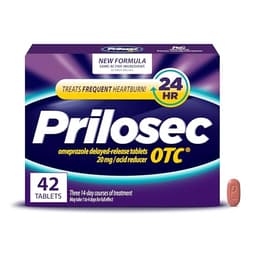
Omeprazole (Prilosec OTC)
Best For
Epigastric pain and burning, especially with overlapping reflux
Works In
2-4 weeks
Price
$17.98
$0.43 / count
Pros
- ✓A Cochrane review of 25 randomized trials in 8,453 people found PPIs relieved dyspepsia symptoms versus placebo, with a number needed to treat of 11 (moderate-quality evidence)
- ✓Available over the counter at the dose used in trials, with decades of post-marketing safety data
- ✓Slightly more effective than prokinetics in the same review, and the best-evidenced OTC drug class for this condition
Cons
- ✗The benefit is partial: most people treated will not have symptoms resolved
- ✗Evidence is stronger for the pain-predominant subtype than for meal-related fullness
- ✗Long-term continuous use carries its own risk discussion — worth revisiting with a clinician rather than taking indefinitely by default
- ✗Does nothing for the underlying accommodation or sensitivity problems
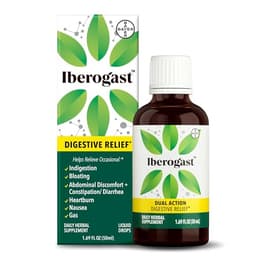
Iberogast (STW 5-II Herbal Blend)
Best For
Meal-related fullness and upper-abdominal bloating
Works In
2-4 weeks
Price
$18.97
$11.22 / fluid ounce
Pros
- ✓A meta-analysis pooling three placebo-controlled trials found STW 5 more effective than placebo for the most bothersome GI symptom (odds ratio 0.22)
- ✓A randomized double-blind trial found both STW 5 and the six-herb STW 5-II non-inferior to the prescription prokinetic cisapride over four weeks
- ✓The version sold in the US is the six-herb formulation, which omits the greater celandine associated with rare liver injury
- ✓A 2025 randomized trial of the six-herb version found lower symptom perception during a gastric gas challenge
Cons
- ✗The core efficacy trials are from 2002-2004, small, and were conducted with manufacturer involvement
- ✗Major treatment guidelines do not list it among recommended therapies
- ✗Liquid drops with a strong herbal taste; less convenient than a capsule
- ✗Rare liver-injury case reports exist for the original formulation, so anyone with liver disease should ask a clinician first
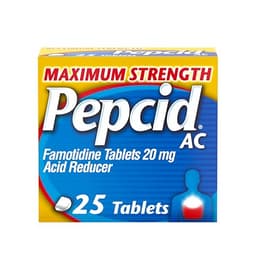
Famotidine (Pepcid AC)
Best For
Intermittent epigastric burning, or as a cheaper first trial
Works In
Within hours for a flare; 2-4 weeks for a pattern
Price
$10.98
$0.44 / count
Pros
- ✓H2 receptor antagonists were not clearly worse than PPIs for dyspepsia symptoms in the Cochrane comparison
- ✓Acts within an hour, which suits unpredictable symptoms better than a daily PPI
- ✓Inexpensive and widely available
Cons
- ✗Less trial evidence specifically in functional dyspepsia than PPIs have
- ✗Tolerance can develop with continuous daily use
- ✗As with PPIs, targets acid rather than the accommodation and sensitivity mechanisms
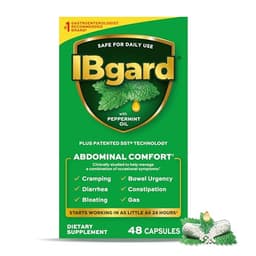
Enteric-Coated Peppermint Oil (IBgard)
Best For
Overlapping IBS symptoms alongside upper-abdominal discomfort
Works In
2-4 weeks
Price
$29.97
$0.62 / count
Pros
- ✓A peppermint-and-caraway oil combination beat placebo for both pain and discomfort in a 114-patient functional dyspepsia trial, and again in a later systematic review
- ✓Sustained-release delivery is designed to release below the stomach
- ✓Well tolerated by most people
Cons
- ✗Important mismatch: the functional dyspepsia evidence is for a fixed peppermint-plus-caraway preparation (Menthacarin), which is not what peppermint-only capsules contain
- ✗Peppermint oil's own strongest trial evidence is in IBS, not functional dyspepsia
- ✗Can worsen heartburn, which is counterproductive if reflux overlaps
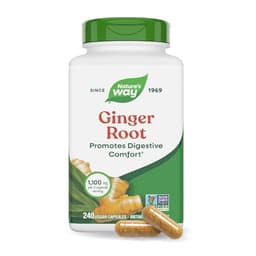
Ginger Root
Best For
People who want to try the cheapest option first
Works In
Unclear
Price
$16.65
$0.07 / count
Pros
- ✓Sped gastric emptying in a small randomized crossover study of functional dyspepsia patients
- ✓Very cheap, and a reasonable option for nausea in other contexts
- ✓Good general safety record as a food-derived ingredient
Cons
- ✗In that same trial, faster emptying did not translate into better symptom scores than placebo — the outcome that actually matters
- ✗No placebo-controlled trial supports it for functional dyspepsia symptom relief
- ✗Can interact with blood thinners at higher doses
Amazon prices retrieved from the Amazon Product Advertising API on . Prices and availability are accurate as of that time and may change.
Prescription Options Worth Asking About
Two prescription approaches have better evidence than most of what is sold over the counter, and neither is a first thought for most people.
Low-dose tricyclic antidepressants, for the pain-predominant type. The Functional Dyspepsia Treatment Trial randomized 292 patients across eight North American sites to amitriptyline 50 mg, escitalopram 10 mg, or placebo for 10 weeks. Adequate symptom relief was reported by 53% on amitriptyline versus 40% on placebo — and the benefit concentrated sharply in patients with ulcer-like, painful dyspepsia, who were more than three times as likely to respond as those on placebo (odds ratio 3.1). Escitalopram, at 38%, did nothing. Neither drug changed gastric emptying, and patients with delayed emptying did not respond at all PMID: 25921377. A later randomized trial of low-dose amitriptyline specifically in epigastric pain syndrome supports the same targeting PMID: 32166624.
The practical translation: if your dominant complaint is upper-abdominal pain rather than fullness, this is the drug class with the best odds, at a dose well below antidepressant dosing. If your dominant complaint is meal-related fullness with slow emptying, the trial evidence predicts you won't benefit.
Prokinetics, with real caveats. A network meta-analysis of 28 studies ranked metoclopramide and cinitapride highest for overall efficacy among prokinetics PMID: 37907846. Read the fine print before asking for either: metoclopramide carries a boxed warning for tardive dyskinesia, a potentially irreversible movement disorder, which is why it is not a long-term option; cinitapride is not marketed in the US; and cisapride — the comparator in the Iberogast trials below — was withdrawn from the US market over cardiac arrhythmia deaths. The prokinetic class is a live option in some countries and a largely historical one in others.
Care structure matters too. A randomized trial comparing standard gastroenterologist care with multidisciplinary treatment that added psychological and dietetic input found better outcomes for the multidisciplinary group across functional GI disorders PMID: 32679040. For a condition driven partly by gut-brain signalling, that is a more useful finding than it may first appear.
The Herbal Options That Have Actual Trials
Two deserve separate treatment, because unlike most of the supplement aisle they have been through placebo-controlled trials in this specific condition.
STW 5 (Iberogast). A meta-analysis reanalysed and pooled raw data from three placebo-controlled trials and found the preparation more effective than placebo for the severity of the most bothersome gastrointestinal symptom, with an odds ratio of 0.22 (95% CI 0.11-0.47) and adverse events no more common than placebo PMID: 15606389. A separate randomized, double-blind, double-dummy trial of 186 patients with dysmotility-type functional dyspepsia tested both the original nine-herb STW 5 and the six-herb STW 5-II against cisapride, and established non-inferiority for both herbal preparations PMID: 12055663. A 2025 randomized trial of the six-herb version in 32 patients found faster early gas evacuation and lower symptom perception during a gastric gas challenge, though no difference in measured abdominal distension PMID: 40684457. Notably, its benefit does not come from speeding up the stomach: a placebo-controlled study found no acceleration of gastric emptying PMID: 19220753. Our full Iberogast review covers the formulation difference between markets, the liver-injury history, and who it suits.
Menthacarin (peppermint plus caraway oil). A double-blind multicentre trial randomized 114 outpatients to a fixed peppermint- and caraway-oil combination or placebo for four weeks. Pain scores improved by 7.6 points versus 3.4 on placebo, and discomfort by 3.6 versus 1.3, with advantages across secondary measures PMID: 28695660. A later systematic review and meta-analysis found consistent improvement across multiple complaints in functional GI disorders PMID: 36502789. The catch for US readers is availability: the trials tested a specific proprietary combination, and a peppermint-only capsule is not the same product.
Ginger, for contrast. A randomized crossover study in functional dyspepsia patients found ginger sped gastric emptying — and produced no improvement in symptoms over placebo PMID: 21218090. It is a useful illustration of why mechanism claims and symptom outcomes need to be read separately.
Diet and Everyday Changes
The advice that follows from the mechanisms is less exciting than a supplement but costs nothing: smaller, more frequent meals rather than large ones, since impaired accommodation makes volume the trigger; reduced fat at a sitting, given duodenal sensitivity to fat; and attention to alcohol, smoking, and meal timing. International management guidance includes dietary modification as standard first-line advice, while acknowledging that high-quality trial evidence for specific diets in functional dyspepsia is considerably thinner than for IBS PMID: 42491169.
If your symptoms are as much about bowel habit and lower-abdominal bloating as upper-abdominal fullness, the overlap with IBS is worth exploring — see our guides to IBS treatments that work and how to fix bloating. If burning rises into the chest, the acid reflux and GERD guide is the better starting point.
When to See a Doctor Instead of Self-Treating
Some symptoms should not be managed with anything bought online. Seek medical assessment rather than self-treating if you have unintentional weight loss, difficulty or pain swallowing, persistent vomiting, evidence of gastrointestinal bleeding such as black stools or vomiting blood, iron-deficiency anaemia, a palpable mass, or a family history of upper-gastrointestinal cancer. New dyspepsia starting after age 60 warrants endoscopy rather than a trial of tablets, per the ACG and CAG guideline PMID: 28631728.
Also worth a visit rather than another purchase: symptoms that have persisted for months without a H. pylori test, since that test is the one step in this guide with a real chance of ending the problem rather than managing it.
Frequently Asked Questions
What is the difference between functional dyspepsia and acid reflux? They are different diagnoses with different main symptoms, though they often overlap. Functional dyspepsia centres on the upper abdomen — fullness after normal-sized meals, early satiety, bloating, or burning pain in the stomach area. Acid reflux (GERD) centres on the chest and throat: heartburn rising behind the breastbone and regurgitation. Many people have both, and treatments overlap only partly.
Does functional dyspepsia ever go away? It fluctuates rather than following a straight line, typically coming in periods of weeks to months. Most people manage it long term rather than curing it — the exception being H. pylori-positive patients in whom eradication succeeds.
Should I get an endoscopy? Not automatically. Guidelines recommend endoscopy for people over 60 with new dyspepsia, and for anyone with alarm features. For a younger adult with typical symptoms and none of those features, testing for H. pylori comes first.
Do proton pump inhibitors work for functional dyspepsia? Modestly. A Cochrane review of 25 randomized trials in over 8,000 people found PPIs relieved symptoms versus placebo, with about 11 people needing treatment for one to benefit — a real but partial effect.
Is Iberogast evidence-based for indigestion? It has more placebo-controlled trial evidence than most herbal digestive products. The caveats are that the core trials are two decades old, small, and manufacturer-involved, and that major guidelines don't list it among recommended therapies.
Can functional dyspepsia be caused by anxiety or stress? Stress and mood are genuinely part of the picture, which doesn't make symptoms imagined. It is classified as a disorder of gut-brain interaction — the reason drugs acting on nerve signalling help at doses far below those used for depression.
References
- Sperber AD, Hreinsson JP, Simrén M, et al. Rome V global epidemiology and validation survey: prevalence of disorders of gut-brain interaction and comparison with the Rome IV global epidemiology study. Gut. 2026;75(10):1887-1897. PMID: 42613194.
- Chamchoum E, Ghaleb J, Chamchoum N, et al. Functional dyspepsia: an updated review of pathophysiology, epidemiology, clinical manifestations, and international management guidelines. Sage Open Pathology. 2026;19. PMID: 42491169.
- Huang A, Lin B, Hu T, et al. Unraveling functional dyspepsia: pathophysiological mechanisms, microbiota interactions, and emerging therapeutic strategies. Pathology - Research and Practice. 2025;272:156118. PMID: 40645018.
- Shin A. Disorders of gastric motility. The Lancet Gastroenterology & Hepatology. 2024;9(11):1052-1064. PMID: 39312926.
- Ford AC, Tsipotis E, Yuan Y, et al. Efficacy of Helicobacter pylori eradication therapy for functional dyspepsia: updated systematic review and meta-analysis. Gut. 2022. PMID: 35022266.
- Moayyedi P, Lacy BE, Andrews CN, et al. ACG and CAG clinical guideline: management of dyspepsia. The American Journal of Gastroenterology. 2017;112(7):988-1013. PMID: 28631728.
- Pinto-Sanchez MI, Yuan Y, Hassan A, et al. Proton pump inhibitors for functional dyspepsia. Cochrane Database of Systematic Reviews. 2017;11:CD011194. PMID: 29161458.
- Talley NJ, Locke GR, Saito YA, et al. Effect of amitriptyline and escitalopram on functional dyspepsia: a multicenter, randomized controlled study. Gastroenterology. 2015;149(2):340-349.e2. PMID: 25921377.
- Liu J, Jia L, Jiang SM, et al. Effects of low-dose amitriptyline on epigastric pain syndrome in functional dyspepsia patients. Digestive Diseases and Sciences. 2021;66(2):521-525. PMID: 32166624.
- Qi Q, Wang N, Liu H, et al. Prokinetics for the treatment of functional dyspepsia: an updated systematic review and network meta-analysis. BMC Gastroenterology. 2023;23(1):370. PMID: 37907846.
- Basnayake C, Kamm MA, Stanley A, et al. Standard gastroenterologist versus multidisciplinary treatment for functional gastrointestinal disorders (MANTRA): an open-label, single-centre, randomised controlled trial. The Lancet Gastroenterology & Hepatology. 2020;5(10):890-899. PMID: 32679040.
- Melzer J, Rösch W, Reichling J, et al. Meta-analysis: phytotherapy of functional dyspepsia with the herbal drug preparation STW 5 (Iberogast). Alimentary Pharmacology & Therapeutics. 2004;20(11-12):1279-1287. PMID: 15606389.
- Rösch W, Vinson B, Sassin I. A randomised clinical trial comparing the efficacy of a herbal preparation STW 5 with the prokinetic drug cisapride in patients with dysmotility type of functional dyspepsia. Zeitschrift für Gastroenterologie. 2002;40(6):401-408. PMID: 12055663.
- Aguilar A, Alcala-Gonzalez L, Barber C, et al. Effect of STW 5-II (Iberogast-N) on tolerance to gastric gas in patients with functional dyspepsia. The IBO-2 study. Neurogastroenterology & Motility. 2025;37(11):e70123. PMID: 40684457.
- Braden B, Caspary W, Börner N, et al. Clinical effects of STW 5 (Iberogast) are not based on acceleration of gastric emptying in patients with functional dyspepsia and gastroparesis. Neurogastroenterology & Motility. 2009;21(6):632-638. PMID: 19220753.
- Rich G, Shah A, Koloski N, et al. A randomized placebo-controlled trial on the effects of Menthacarin, a proprietary peppermint- and caraway-oil-preparation, on symptoms and quality of life in patients with functional dyspepsia. Neurogastroenterology & Motility. 2017;29(11). PMID: 28695660.
- Madisch A, Frieling T, Zimmermann A, et al. Menthacarin, a proprietary peppermint oil and caraway oil combination, improves multiple complaints in patients with functional gastrointestinal disorders: a systematic review and meta-analysis. Digestive Diseases. 2023;41(3):522-532. PMID: 36502789.
- Hu ML, Rayner CK, Wu KL, et al. Effect of ginger on gastric motility and symptoms of functional dyspepsia. World Journal of Gastroenterology. 2011;17(1):105-110. PMID: 21218090.